
Landschap met boerderijen en vee — History & Facts
What secret hides in the quiet of the canvas? Beneath the serene surface of Wijnand Nuijen's Landschap met boerderijen en vee, a profound yearning lingers, echoing the deep connection between humanity and nature. Look to the left, where golden fields stretch endlessly, punctuated by small, modest farms that speak of simplicity and toil. Notice how the gentle light bathes the scene, casting soft shadows that lend a palpable warmth to the landscape. The muted greens and browns harmoniously blend, creating a sense of belonging while inviting the viewer to wander through the rolling hills and take in the pastoral tranquility.
Each brushstroke seems to resonate with the whisper of the wind, lending a vivid realism to this idyllic setting. Yet, within this tranquil atmosphere, the painting encapsulates a tension between solitude and unity. The farmers and their livestock, though depicted in a harmonious embrace with the land, hint at a sense of longing for a more profound connection—to the earth, to one another, and perhaps to the fleeting nature of life itself. The distant mountains, shrouded in mist, suggest both the beauty and the unknown, enticing the viewer to reflect on their own place within such landscapes of yearning. Between 1823 and 1839, when this piece was created, Nuijen was deeply entrenched in the Dutch Romantic movement, characterized by its emphasis on emotion and the sublime beauty of nature.
He painted during a time when industrialization threatened to overshadow traditional rural life, and this artwork reflects that juxtaposition between the pastoral ideal and a society in transition. In these years, Nuijen’s brush became a vessel for nostalgia, capturing not only the landscape but also the heart of a changing world.
More Artworks by Wijnand Nuijen
Browse all →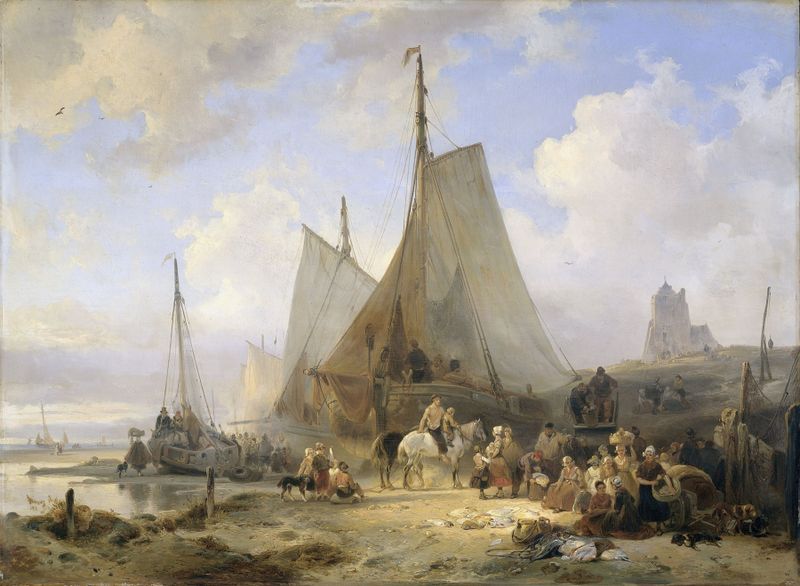
Fishing Boats on the Beach with Fishermen and Women Sorting the Catch
Wijnand Nuijen
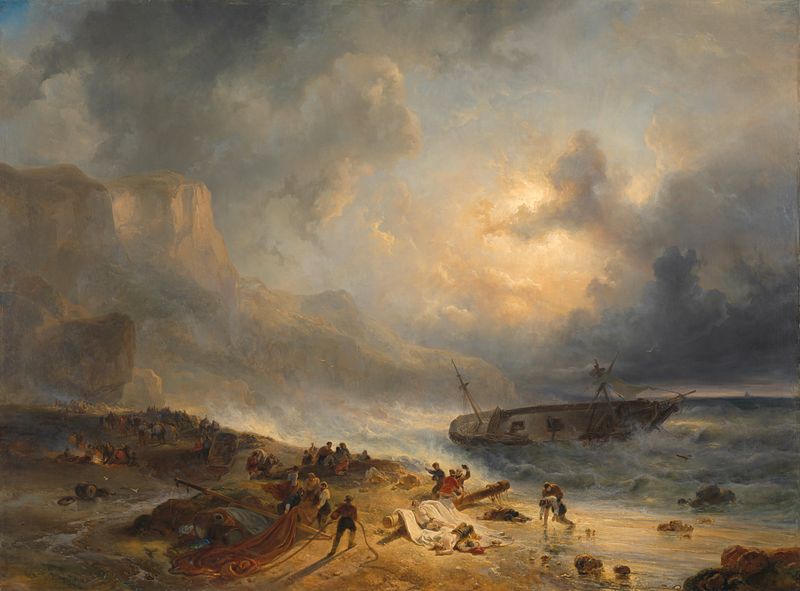
Shipwreck off a Rocky Coast
Wijnand Nuijen

Shipwreck off a Rocky Coast
Wijnand Nuijen

Schepen bij laag water in een Franse haven
Wijnand Nuijen

Schepen bij laag water in een Franse haven
Wijnand Nuijen

River Landscape with Ruin
Wijnand Nuijen
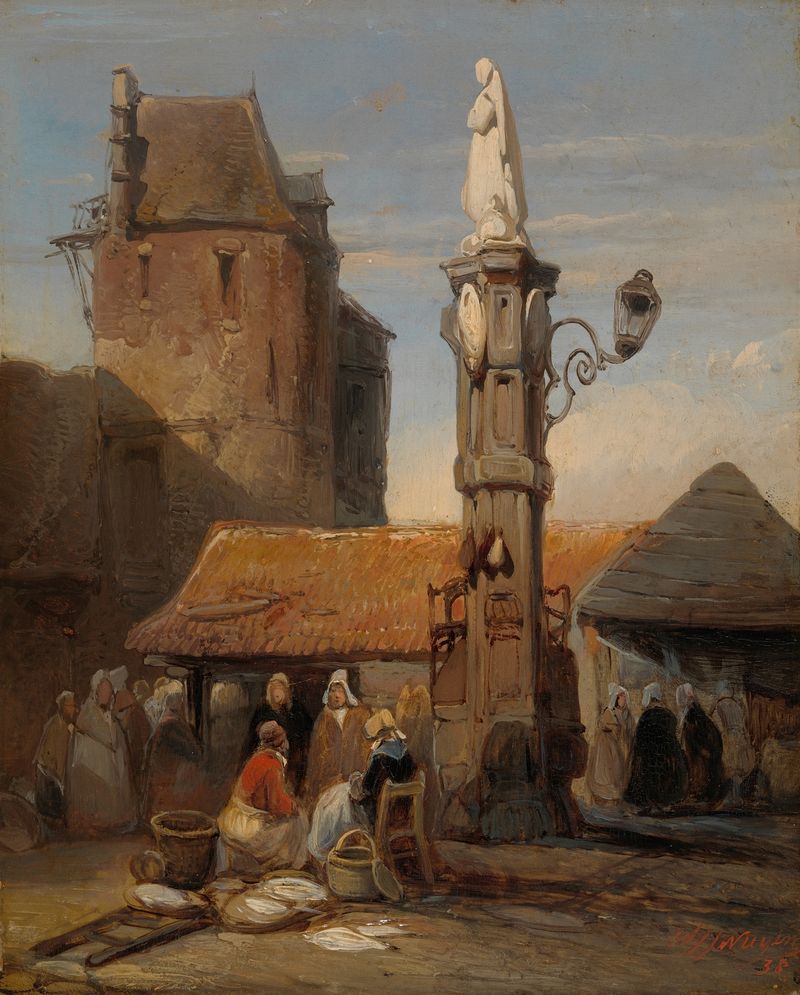
A fish market
Wijnand Nuijen

River Scene
Wijnand Nuijen





