Landschap met weg — History & Facts
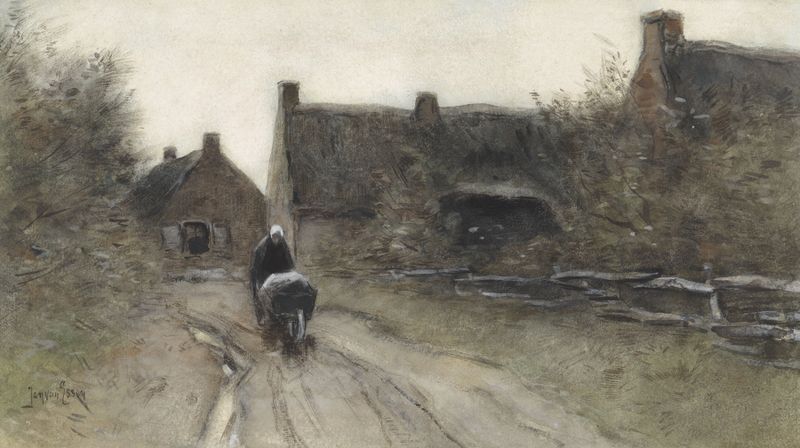
In the realm of landscapes, obsession transforms mere earth into a living narrative, whispering tales of nature and humanity alike. Look to the left at the winding path that curls through the serene countryside, a beckoning invitation inviting viewers to traverse its gentle curves. Notice how the rich greens and earthy browns of the foliage blend seamlessly with the soft blues of the sky, creating a harmonious balance that draws the eye deeper into the scene. The artist employs a delicate brushstroke that captures both the intricate details of each leaf and the broader strokes of the horizon, evoking a sense of tranquility amidst movement. Beneath this serene façade lies an emotional tension—the juxtaposition of the smooth, inviting path against the wild, untamed edges of the landscape.
The path represents a journey, but its meandering nature hints at uncertainty, a reminder that life’s path is not always straight or clear. The vibrancy of the colors reflects a deep connection to the earth, yet the subtle shadows lurking in the corners suggest an underlying obsession with nature’s chaos, hinting at a complex relationship between humanity and the untamed world. Created during the transitional period of the early 20th century, Landschap met weg emerged from the hands of Jan van Essen, who painted it in the 1930s. At this time, Europe was grappling with immense political and social changes, and artists were beginning to explore new ways of expressing their realities.
Van Essen’s works embodied the search for beauty amidst turmoil, reflecting both personal and collective struggles through the lens of the natural world.