Dorpsgezicht met vrouw met kruiwagen — History & Facts
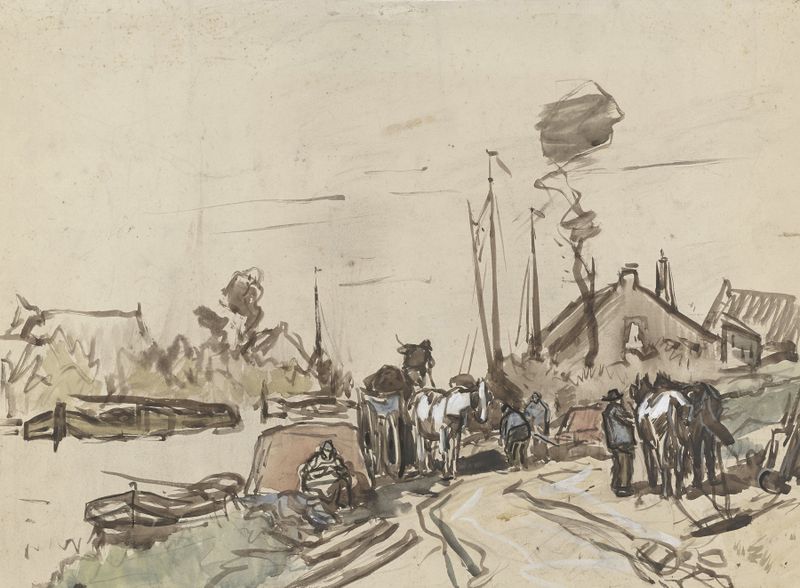
In the silence between brushstrokes, stories linger, echoing the unspoken connections of daily life. Look to the left at the woman, bent slightly at the waist as she pushes her wheelbarrow through the idyllic village scene. Her sturdy posture is a testament to labor, the soft earth beneath her feet almost cradling her. The muted palette of greens and browns envelops the canvas, invoking a sense of calm and routine, while the delicate, almost ethereal light filters through the trees, casting gentle shadows that dance around her figure. Yet within this tranquil setting lies an undercurrent of tension.
The solitude of the woman, juxtaposed against the bustling backdrop of the village, raises questions of isolation amidst community. The wheelbarrow itself serves as a symbol of toil, perhaps hinting at the burdens carried silently within life’s mundane tasks. Subtle details, like the fading color of the village houses or the distant sound of laughter, suggest a world moving on while she remains still, reflecting the often-unnoticed strength of everyday existence. Jan van Essen painted this work during the mid-1930s in the Netherlands, a time when the country was grappling with the aftermath of World War I and the encroaching shadows of World War II.
The art scene was infused with a sense of realism and introspection, and van Essen sought to portray the beauty in ordinary life. This piece embodies his dedication to capturing the intimate moments of village existence, spotlighting the resilience of uncelebrated heroes in a rapidly changing world.