Landskap — History & Facts
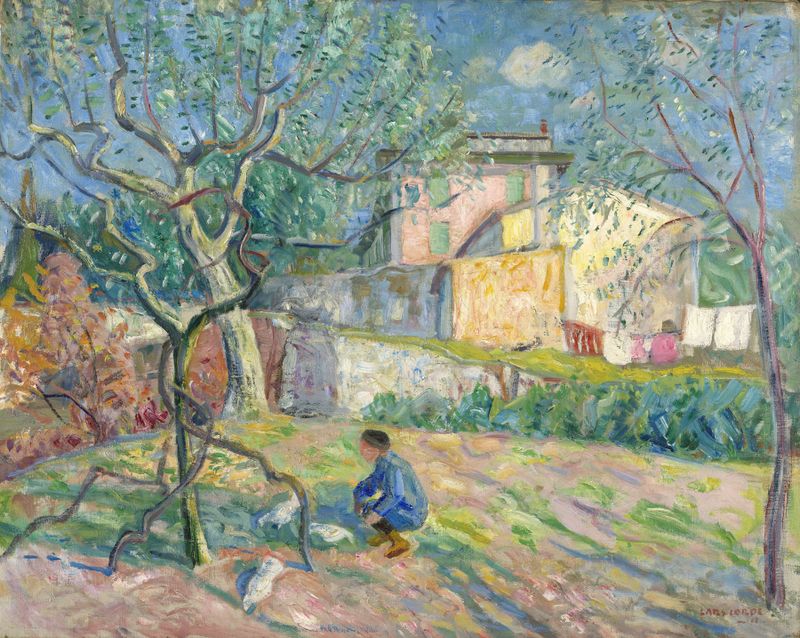
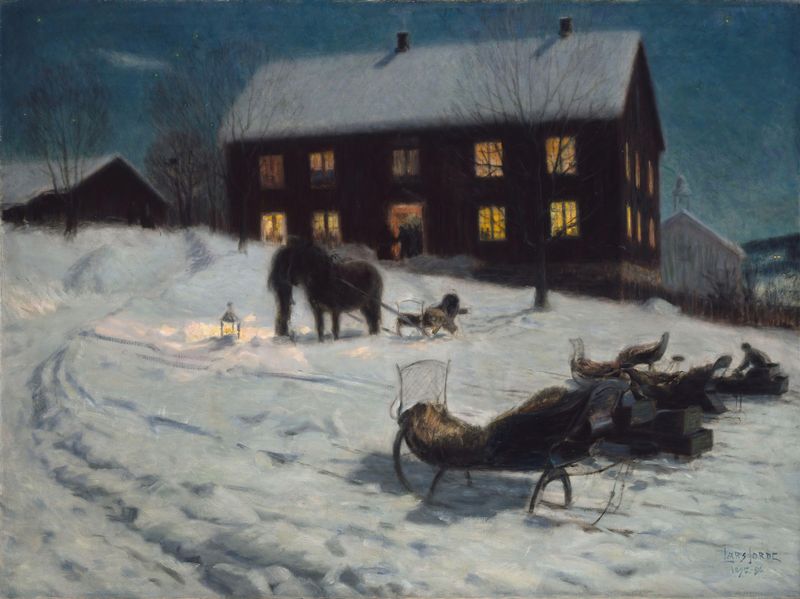
In Landskap, the stark contrast between serenity and turmoil beckons the viewer to delve beneath the surface of nature’s allure. It evokes contemplation of the violent forces that shape our world, urging us to question what lies hidden in the splendor of landscapes. Look to the left at the majestic mountain towering over the horizon, its peaks kissed by a soft glow of the setting sun. The vibrant greens of the foreground intertwine with the dark, brooding shadows lurking behind, suggesting an underlying tension in the scene.
The brushwork, both fluid and deliberate, creates a dynamic interplay between light and shadow, while the varied hues breathe life into the canvas, revealing the artist’s intricate understanding of color and form. Beneath its tranquil exterior, Landskap reflects the violence of nature—both its beauty and its destruction. The swirling clouds hint at an impending storm, a reminder of nature’s unpredictable temperament. The juxtaposition of peaceful meadows and looming mountains evokes a sense of fragility; even the most idyllic landscapes are shaped by unseen forces that can erupt at any moment.
This intricate balance of aesthetics and raw power invites viewers to confront their own feelings of vulnerability in the face of nature’s might. In 1896, Lars Jorde painted this piece during a time of artistic exploration and change in Norway. The natural landscape was a significant source of inspiration for many artists, as they sought to capture its essence following the romantic movement. Jorde, embracing this trend, worked in a period marked by growing nationalism and a renewed appreciation for local environments, reflecting the complex relationship between beauty and tumult that defined much of his career.