Landskap med kor — History & Facts
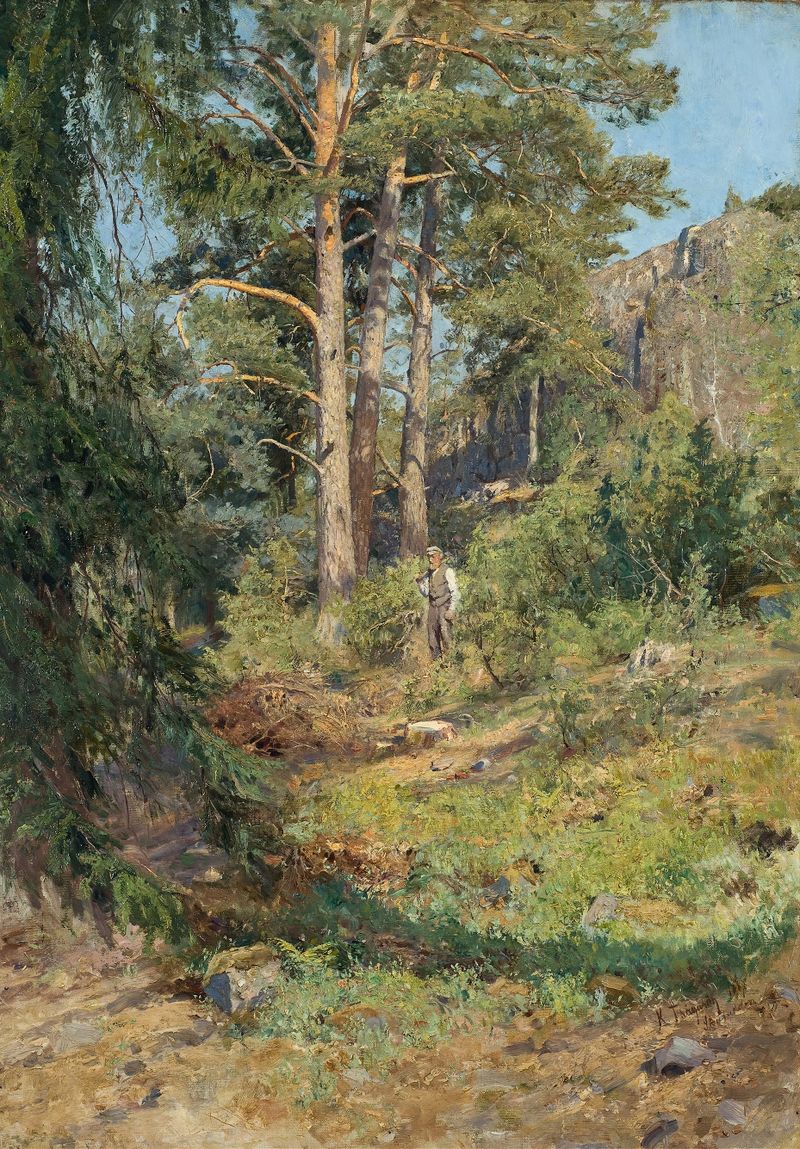
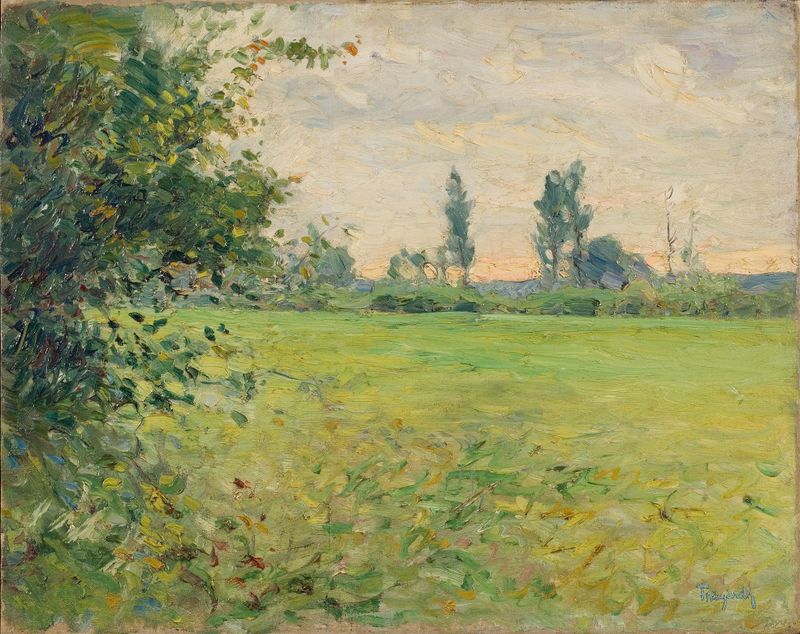
When did color learn to lie? Beneath the calm surface of this pastoral landscape lies a tension that beckons exploration, urging us to peer deeper into the tranquility of nature. Look to the center of the composition, where a small herd of cows grazes peacefully, their soft shapes easing into the lush greens and golden yellows of the fields. Notice how the light dances across the canvas, illuminating the cows’ glossy coats while casting gentle shadows that suggest an unseen presence lurking just beyond the serene façade. The sky overhead—a kaleidoscope of blues and whites—contrasts the pastoral scene with an unsettling vibrancy, hinting that all is not as idyllic as it seems. The juxtaposition of the idyllic setting with the lurking shadows evokes a sense of madness beneath the surface.
The cows, seemingly the epitome of rural tranquility, may also symbolize the confinement of existence, their docile nature evoking questions about freedom within the bounds of pastoral life. Fragments of darker greens and muted browns weave through the composition, hinting at the encroaching chaos of the world beyond this pastoral haven. These subtle shifts in color and tone challenge our perception of the idyllic, inviting us to ponder the disquiet that often accompanies beauty. Created between 1890 and 1896, this piece emerged during a time of great change in European art, as artists began to explore naturalism alongside impressionist techniques.
Carl Trägårdh, navigating a period marked by transitions in social landscapes, approached his work with both reverence for the natural world and an awareness of the underlying unease in human existence. As he captured this bucolic moment, he mirrored the duality of life—the serene exterior set against the chaos that often lies just beneath.