Countryside near Grez-sur-Loing — History & Facts
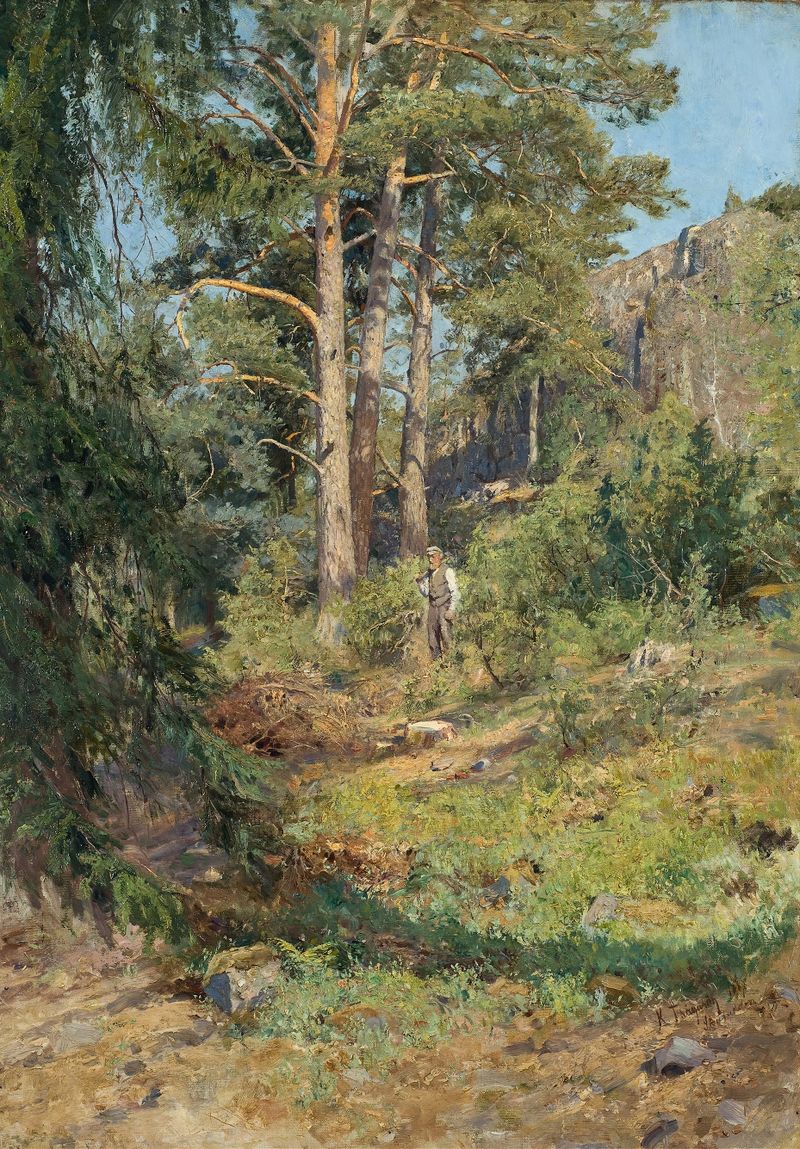
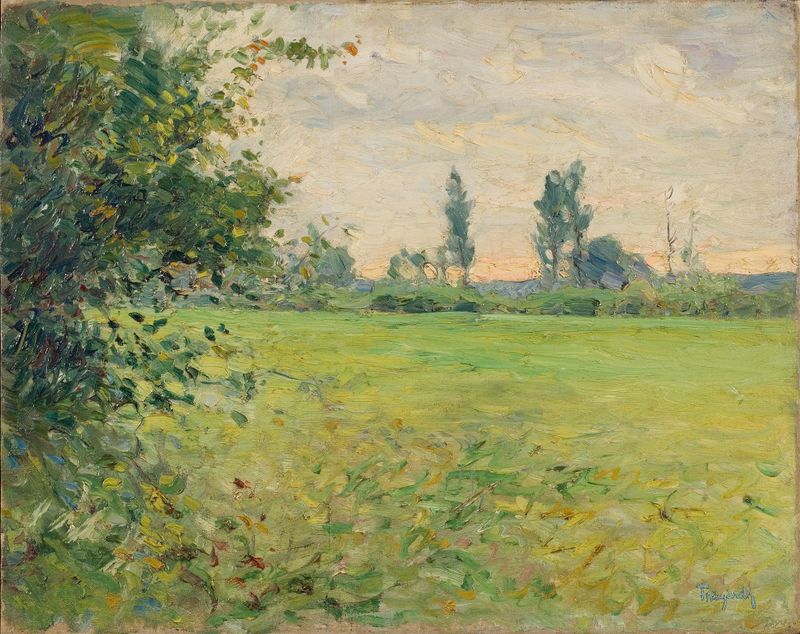
This sentiment resonates deeply in the pastoral charm of this work, inviting contemplation on the fragile balance between serenity and struggle inherent in nature. Begin your exploration by looking to the left at the soft, golden fields, where light bathes each blade of grass in a warm embrace. The brushstrokes are delicate, almost ethereal, evoking the gentle caress of a breeze. As your gaze moves toward the horizon, notice how the sky transitions from deep cerulean to wisps of amber, suggesting an imminent dusk filled with possibility.
The composition is masterfully balanced, drawing the eye through an inviting pathway that beckons the viewer deeper into the tranquil scene. Yet, beneath this idyllic surface lies an undercurrent of emotional tension. The contrast between the vibrant colors of the fields and the more muted tones of the distant trees hints at the complexities of life—beauty intertwined with a sense of longing. The solitary figure in the distance, barely discernible, serves as a reminder of human presence amidst nature’s vastness, evoking questions of solitude and connection.
This juxtaposition between vibrancy and somberness highlights the very essence of transcendence, where beauty becomes a vehicle for deeper reflection. Carl Trägårdh painted this piece in 1889 while residing in Grez-sur-Loing, a spot frequented by many impressionist artists of the time. This period marked a turning point in his career, as he sought to blend traditional techniques with a more contemporary approach. The late 19th century was a time of artistic experimentation, and Trägårdh’s work reflects his desire to capture fleeting moments of beauty, forever entwined with the complexities of human emotion.