L’arrivée des balles de coton au Port Saint Nicolas, Paris — History & Facts
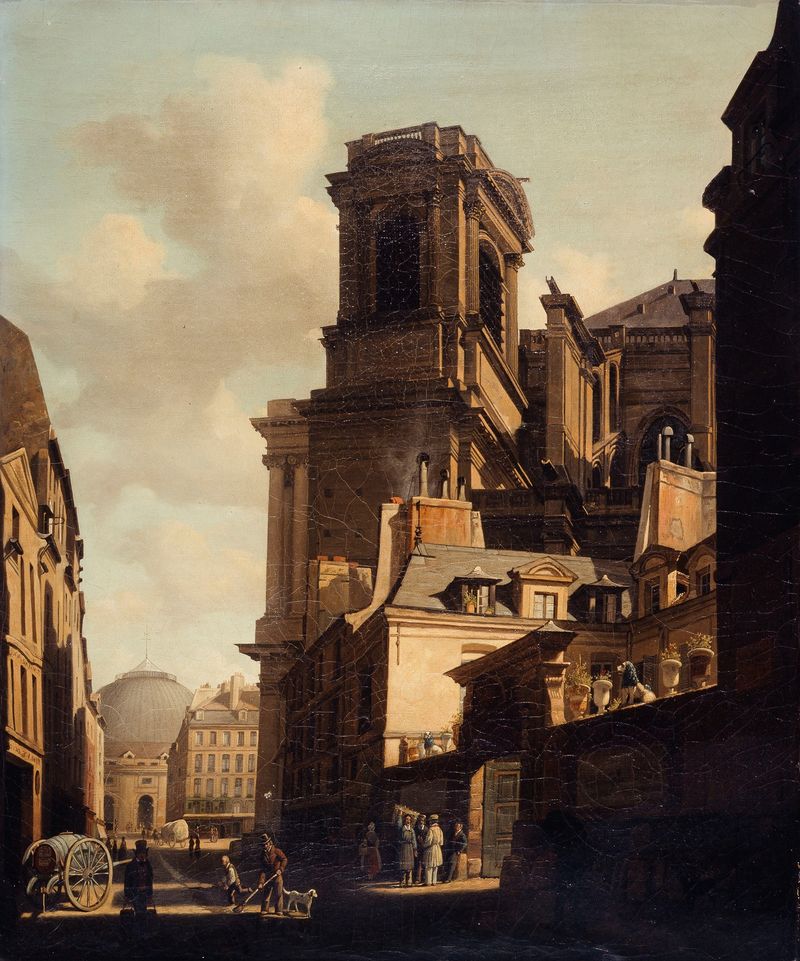
What if silence could speak through light? In L’arrivée des balles de coton au Port Saint Nicolas, Paris, a palpable loneliness lingers among the bustling activity of the port, where vibrant colors clash with shadows of isolation. Look to the center, where the cotton bales are stacked high, their textures almost tangible against the contrasting dullness of the dock. Notice how the sunlight spills over the scene, illuminating the workers who toil in muted tones, their movements almost lost in the grandeur of their task. The composition uses diagonal lines from the bales to the figures, drawing the viewer's eye through the painting, creating a rhythm that echoes the labor's relentless pace. As you explore further, the contrasts deepen—between the rich, soft cotton and the hard, unyielding surfaces of the port; between the multitude of workers and their shared sense of solitude.
Each figure is enveloped in their world, contributing to a collective effort yet standing apart, as if their individual stories are silenced by the enormity of their surroundings. The warm light that bathes the scene holds a bittersweet quality, hinting at fleeting moments of connection overshadowed by the relentless grind of daily life. In 1835, when this piece was created, Lambert Nollé was emerging as a notable painter in Paris, capturing the life of the city during its industrial transformation. The early 19th century was filled with the tension of progress and disconnection—an era where the promise of modernity often came at the cost of personal isolation.
Nollé's work reflects this dichotomy, offering a glimpse into a pivotal moment in art and society.