
Late Autumn, Saco River — History & Facts
When did color learn to lie? The hues of autumn often mask deeper truths, fluttering like leaves caught in a gentle breeze, beckoning us closer to their vibrancy. Look to the foreground where the Saco River curls gracefully, a silver ribbon weaving through a tapestry of warm golds and russets. The sun filters through the branches, illuminating the water’s surface in a delicate dance of light and shadow. Notice how the painter deftly employs a palette that vibrates with life; each brushstroke captures not just color, but the very essence of change, as if the scene itself breathes in sync with the shifting season. Delve into the contrasts present in this work—the tranquil water juxtaposed against the fiery foliage evokes a profound sense of serenity tinged with melancholy.
The shadows, elongated and deep, suggest the encroachment of winter, a quiet reminder of time’s relentless passage. The way the trees stand tall yet seem to bow under the weight of their vivid leaves presents a tension between beauty and transience, urging us to reflect on our own fleeting moments. Alfred Thompson Bricher created Late Autumn, Saco River during a transformative period for American art, between 1861 and 1897. Living in the midst of a growing appreciation for natural landscapes, he was influenced by the Hudson River School, which celebrated the American wilderness.
His work reflects not just the aesthetic ideals of his time, but his personal journey in capturing the ethereal beauty of nature, as well as the introspective quality that marked the era.
More Artworks by Alfred Thompson Bricher
Browse all →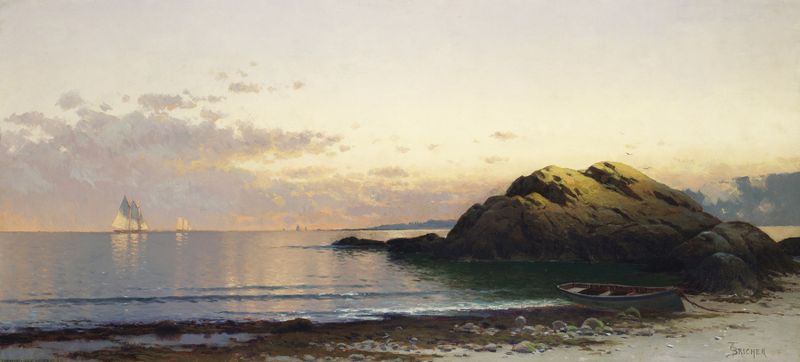
New England Coast
Alfred Thompson Bricher
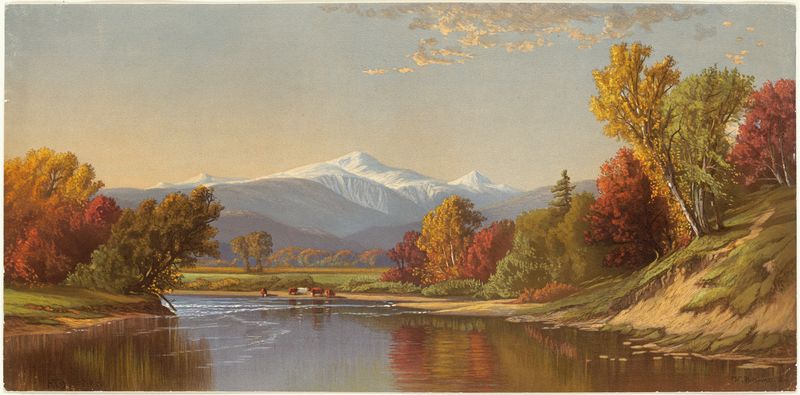
Late Autumn in the White Mountains
Alfred Thompson Bricher
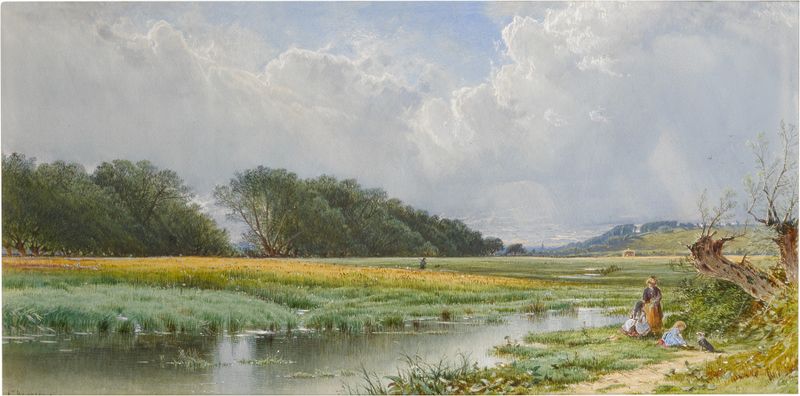
On the Meadows of Old Newburyport
Alfred Thompson Bricher

Along the Maine Coast
Alfred Thompson Bricher
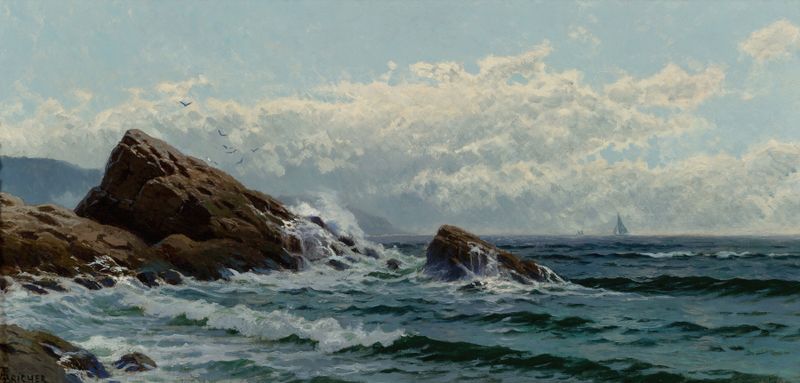
Crashing Waves
Alfred Thompson Bricher

At Water’s Edge
Alfred Thompson Bricher
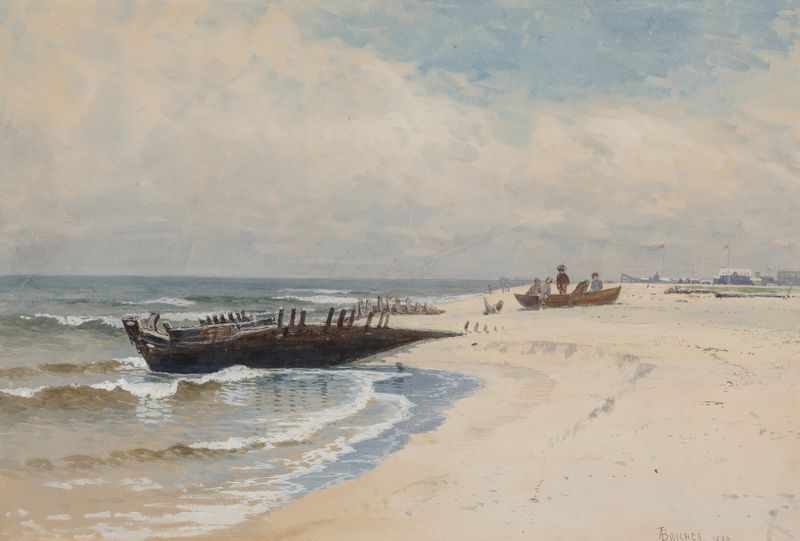
Low Tide
Alfred Thompson Bricher
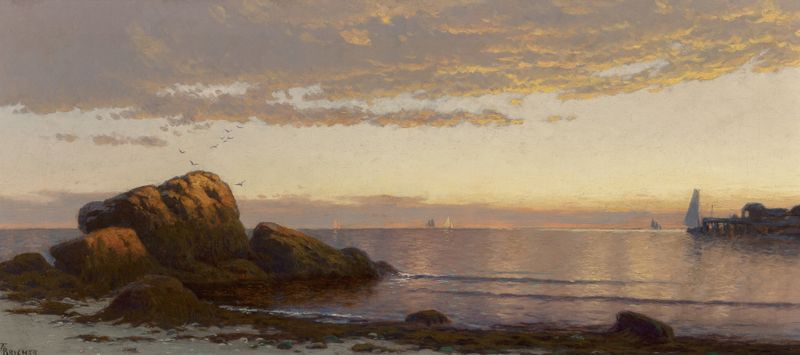
Sunset on the Coast
Alfred Thompson Bricher

Castle Rock, Nahant, Massachusetts
Alfred Thompson Bricher

On the Meadows of Old Newburyport
Alfred Thompson Bricher





