L’avenue Junot — History & Facts
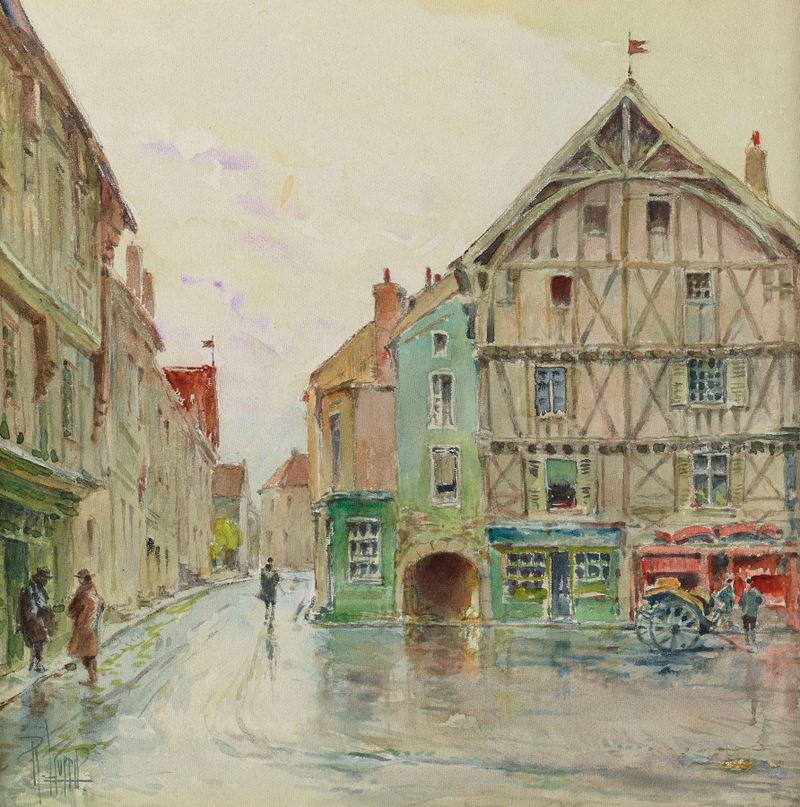
In L’avenue Junot, Réné Leverd encapsulates the paradox of chaos and order within the lush embrace of a Parisian street. Each brushstroke invites contemplation of the hidden narratives threading through moments of beauty, revealing the tumult beneath the surface. Look to the left, where the dappled light filters through the foliage, casting intricate patterns on the cobblestone path. The vibrant greens and warm earth tones create a harmonic balance, yet the erratic splashes of color suggest an unsettling undercurrent.
Notice how the trees bend slightly, as if responding to an unseen force, drawing the eye deeper into the avenue’s embrace. The composition, with its vivid contrasts, pulls the viewer into a world that feels both inviting and chaotic. As you delve deeper, observe the play of shadows that hints at the life behind the vibrant scene. The juxtaposition of light and dark suggests a tension between serenity and turmoil, inviting reflection on the duality of urban existence.
The foliage, rich and alive, contrasts sharply with the cold, hard edges of the buildings, echoing the chaos of the city that looms just beyond the idyllic scene. Each element speaks to the complexity of life in a bustling metropolis, where beauty often conceals underlying struggles. Réné Leverd painted L’avenue Junot during a transformative period in his life, likely in the early 20th century while living in Paris. The city was a crucible of artistic innovation, yet also a landscape of upheaval as the world grappled with the consequences of modernity.
In this context, Leverd's work reflects not only his personal journey but also the larger conversations about beauty and chaos that permeated the artistic landscape of his time.