Le Balcon au bout de la petite galerie du Louvre — History & Facts
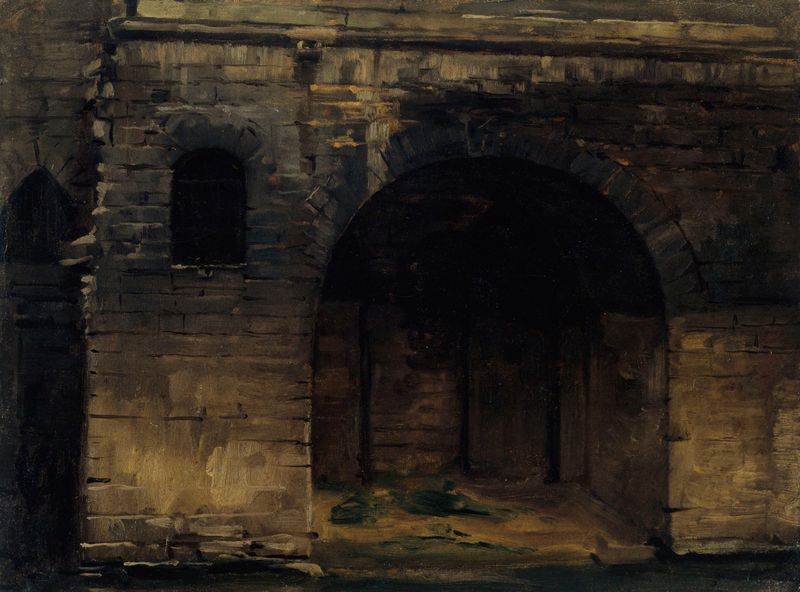
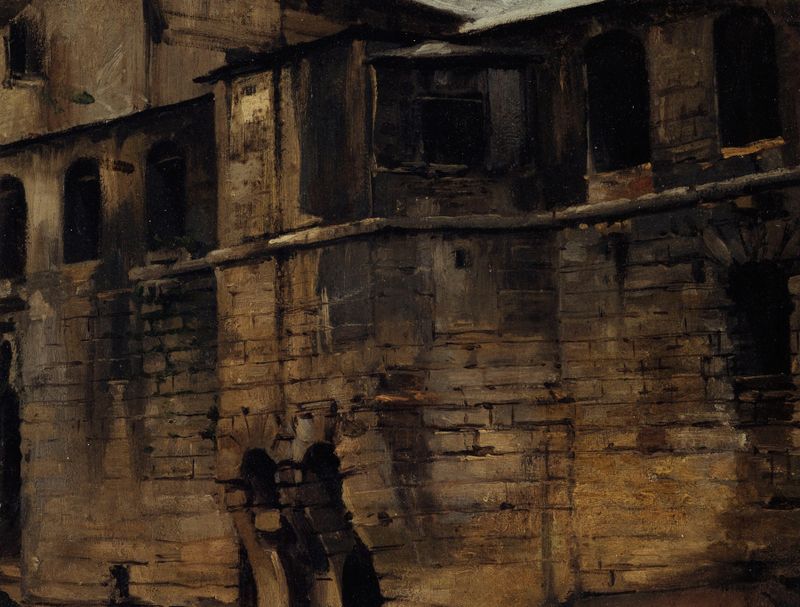
Could a single brushstroke hold eternity? In Le Balcon au bout de la petite galerie du Louvre, silence speaks volumes through the careful arrangement of figures and the quiet elegance of their surroundings. Look to the left at the balcony's edge, where soft light filters through the spaces, illuminating the thoughtful faces of its occupants. The delicate application of paint creates a sense of depth, drawing the eye across the canvas—each figure is distinct yet connected by a shared moment of contemplation. Rich, muted tones dominate the palette, evoking a sense of timelessness and stillness that underscores the painting's serene atmosphere. In the foreground, a young woman gazes into the distance, her expression a blend of longing and introspection.
Nearby, a man appears lost in thought, perhaps pondering the weight of art and existence. The juxtaposition of their expressions hints at their divergent inner worlds, while the steady architecture of the Louvre stands unwavering behind them, a silent witness to their reverie. Here, Mélingue captures a fleeting moment, transforming it into a profound reflection on the nature of silence and art. Created in 1872, this work emerged during a transformative period for French art, as Impressionism began to take root.
At the time, Mélingue was establishing his career in Paris, navigating the tension between traditional academic painting and the innovative approaches of his contemporaries. Amid this dynamic, Le Balcon au bout de la petite galerie du Louvre serves as a testament to the introspective power of art, inviting viewers into a still moment amidst the clamor of change.