
Les Cagnards de l’Hôtel-Dieu — History & Facts
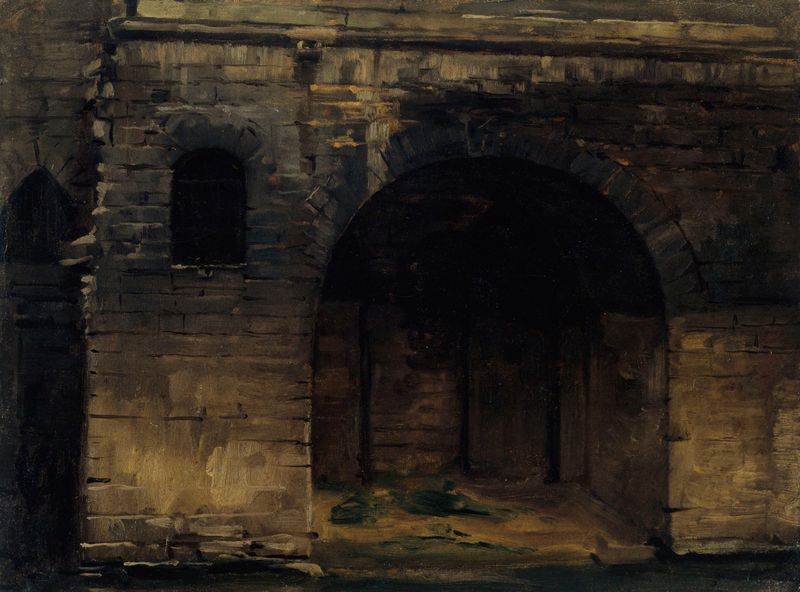
Under the brush, chaos becomes grace. In Les Cagnards de l’Hôtel-Dieu, the essence of life and struggle is distilled into a poignant moment of transcendence amidst hardship. Focus on the upper left corner, where soft, muted colors meld with the deeper shadows, creating an ethereal glow that illuminates weary faces. The figures seated within the Hôtel-Dieu emanate a palpable sense of vulnerability, yet their upward gazes hint at resilience.
Notice how the brushstrokes dance across the canvas, each stroke brimming with emotion, while the ochre and sepia tones evoke a sense of nostalgia and warmth, contrasting the stark reality of their existence. The composition reveals a remarkable tension between despair and hope. The figures, draped in simple garments, appear lost in thought, facing their uncertain futures; yet, their expressions also reflect an unspoken bond and shared humanity. This interplay of light and shadow not only encapsulates their struggles but also speaks to the enduring spirit that transcends their immediate suffering, suggesting that in the depths of hardship, grace can emerge. In 1874, Lucien Mélingue painted this significant work during a transformative period in France, where the social landscape was marked by strife and change.
The artist, influenced by the realism movement, sought to capture the raw essence of human experience, emphasizing empathy and connection in a rapidly evolving world. This piece reflects not only his personal journey but also his commitment to portraying the often-overlooked stories of society's most vulnerable.
More Artworks by Lucien Mélingue
Browse all →
More Historical Art
Browse all →
The Night Watch Militia Company of District II under the Command of Captain Frans Banninck Cocq
Rembrandt van Rijn

Lincoln Memorial
Henry Bacon

The Third of May 1808
Francisco de Goya

Isaac and Rebecca, Known as ‘The Jewish Bride’
Rembrandt van Rijn

The Charge of the Mamelukes (1814)
Francisco de Goya

De vier ruiters van de apocalyps
Albrecht Dürer