
Les Cagnards de l’Hôtel-Dieu en 1874 — History & Facts
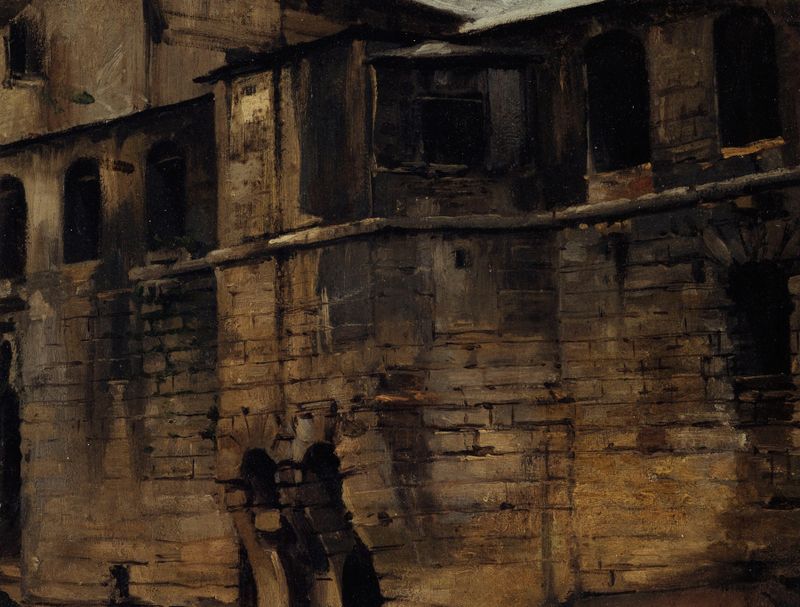
Can paint confess what words never could? In Les Cagnards de l’Hôtel-Dieu en 1874, the artist captures a haunting stillness, inviting viewers into a world where absence speaks louder than presence. Look to the foreground, where a series of hospital beds stand solemnly, each draped in muted colors that evoke a sense of weariness. The soft, diffused light filters through the modest windows, illuminating the pale faces of the occupants, their expressions etched with a mix of hope and despair. Notice how the artist’s brushwork creates a delicate play of shadows and highlights, emphasizing the stark contrast between the warmth of the light and the coldness of human suffering. Delve deeper, and you’ll find layers of meaning woven into the fabric of the scene.
The empty spaces between the beds suggest the void left by absent loved ones, hinting at the isolation felt by the sick. The quietness of the environment contrasts with the busy world outside, embodying the tension between life and mortality. Each figure conveys a solitary story, inviting reflection on the fragility of existence and the resilience of the human spirit. In 1874, Mélingue created this work amidst a shift in the French art world, moving towards realism and social commentary.
As France grappled with the aftermath of the Franco-Prussian War, artists sought to represent the human condition authentically. This piece reflects not only the artist's keen observation of hospital life but also the larger societal struggles of his time, marking a significant moment in the evolution of modern art.
More Artworks by Lucien Mélingue
Browse all →
More Historical Art
Browse all →
The Night Watch Militia Company of District II under the Command of Captain Frans Banninck Cocq
Rembrandt van Rijn

Lincoln Memorial
Henry Bacon

The Third of May 1808
Francisco de Goya

Isaac and Rebecca, Known as ‘The Jewish Bride’
Rembrandt van Rijn

The Charge of the Mamelukes (1814)
Francisco de Goya

De vier ruiters van de apocalyps
Albrecht Dürer