
Le Loing à Saint-Mammès — History & Facts
When did color learn to lie? In the hands of an artist, it spins a tale of serenity and rapture, revealing the ecstasy of nature unveiled through brush and hue. Look closely at the horizon, where the soft blues of the sky kiss the reflective waters below. The gentle curves of the landscape draw your gaze outward, leading to the distant banks framed by lush greens and golds. Notice how the light filters through the wispy clouds, casting a tranquil glow across the scene, while the delicate brush strokes evoke a sense of movement, as if the wind whispers secrets to the river. Beneath the surface of this idyllic representation lies a contrast between calmness and the potential for chaos.
The tranquil river seems to flow effortlessly, yet its current reminds us of life's unpredictability. The boat bobbing gently on the water hints at human presence, suggesting that while nature is eternal, our time upon it is fleeting—a poignant reminder of our own impermanence amidst the beauty. Painted in 1883 in Saint-Mammès, Sisley was deeply immersed in the Impressionist movement, seeking to capture the ephemeral essence of light and atmosphere. At this point in his life, he faced financial struggles yet remained committed to his vision of portraying nature's beauty, pioneering the use of color and light in ways that would influence generations to come.
More Artworks by Alfred Sisley
Browse all →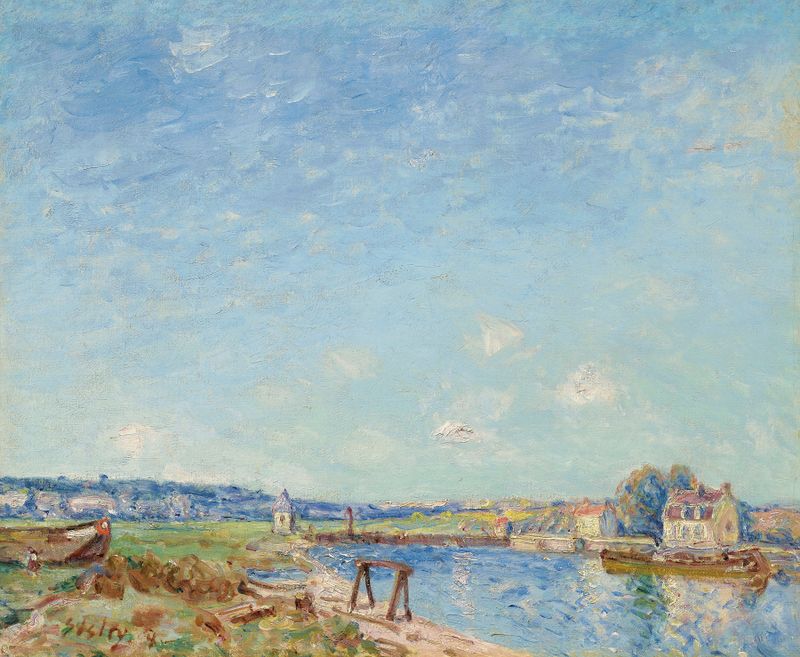
Le Loing à Saint-Mammès
Alfred Sisley
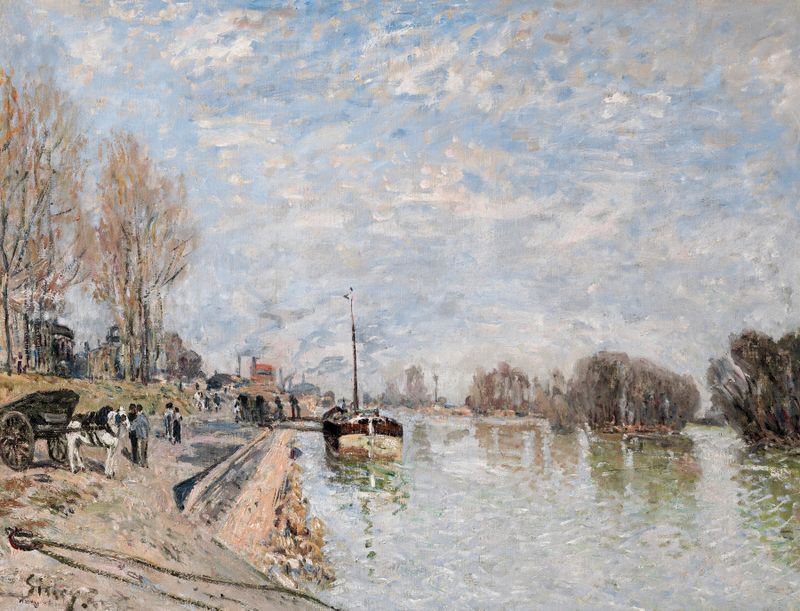
La Seine à Suresnes
Alfred Sisley
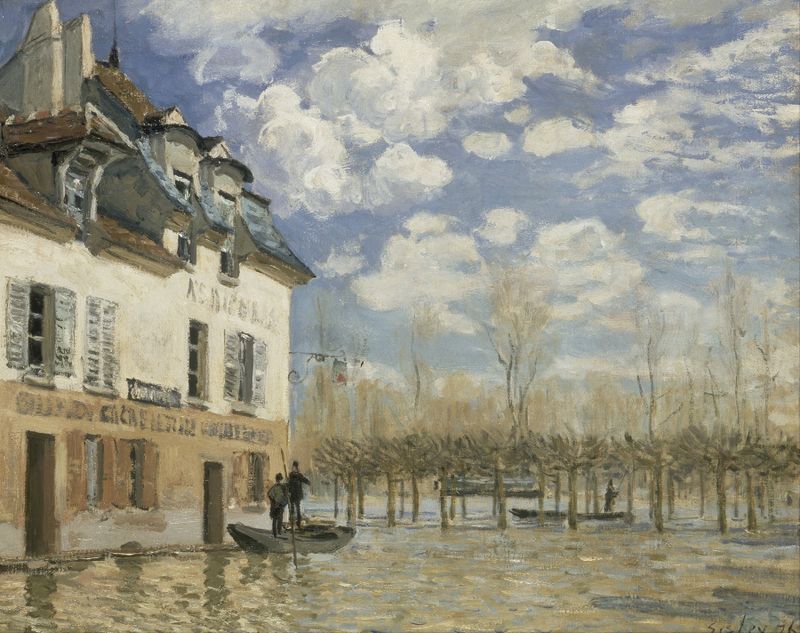
Boat in the Flood at Port Marly
Alfred Sisley
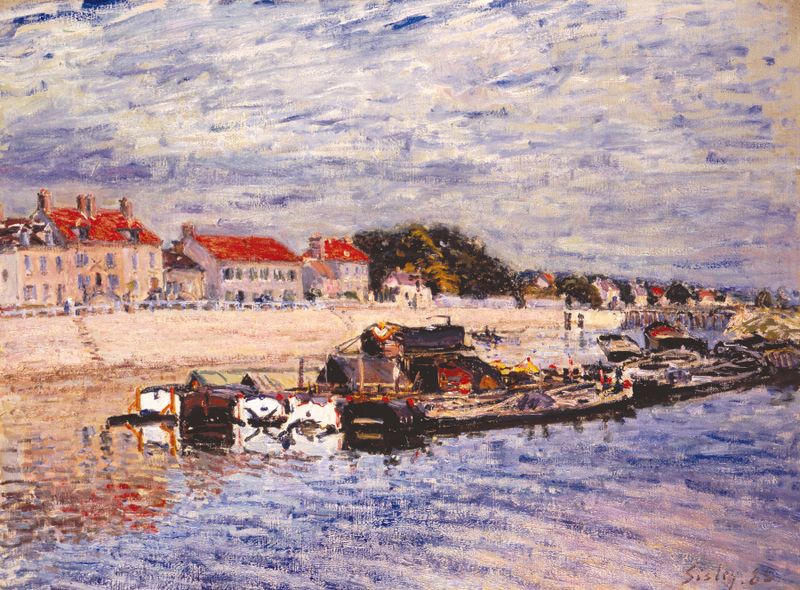
Barges on the Loing at Saint-Mammès
Alfred Sisley

L’allée des peupliers au bord du Loing
Alfred Sisley

Molesey Weir, Hampton Court
Alfred Sisley
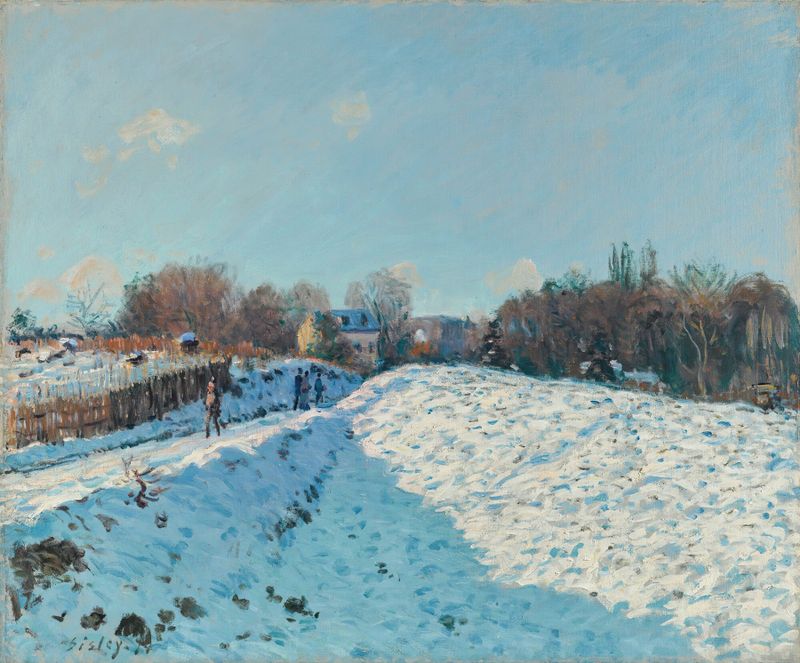
Effet De Neige À Louveciennes
Alfred Sisley
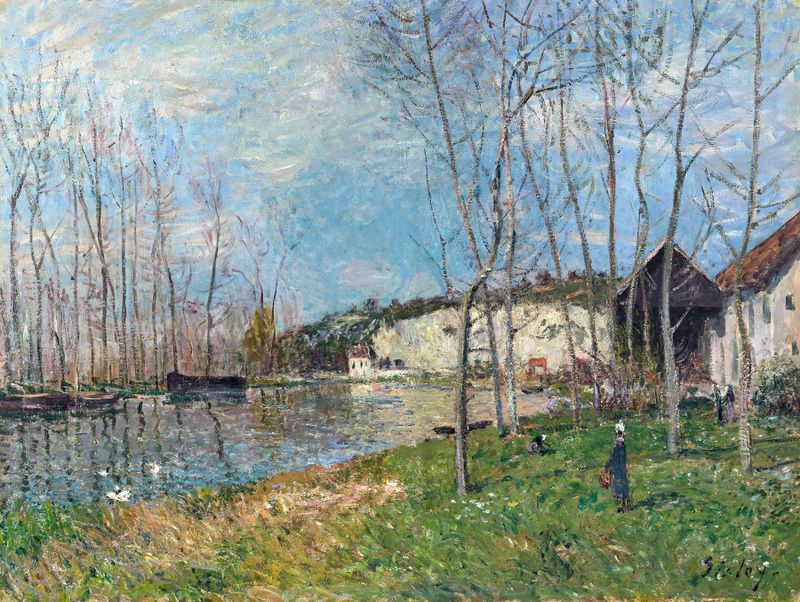
Printemps au bord du Loing
Alfred Sisley
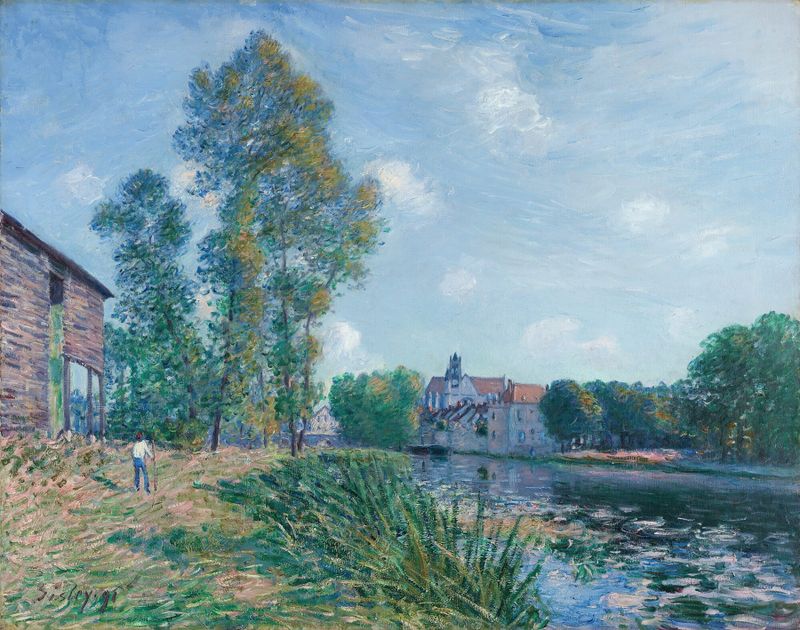
Le Loing À Moret, En Été
Alfred Sisley
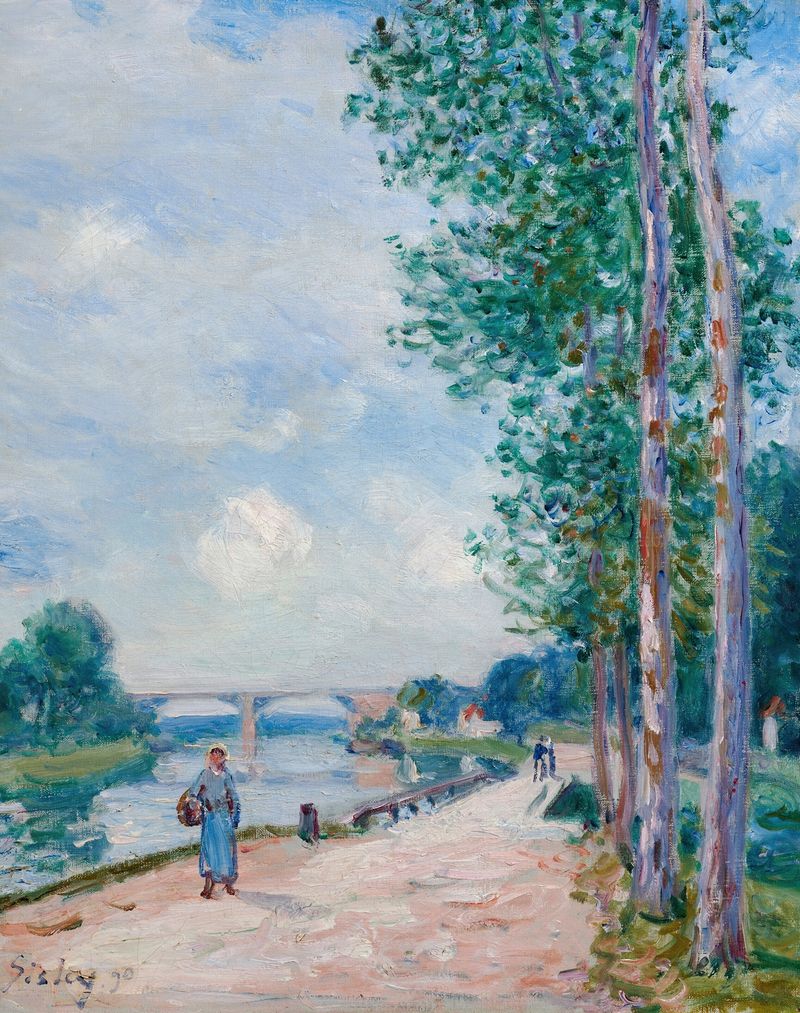
Les bords du Loing près de Moret
Alfred Sisley





