
Le lot aux pieds des falaises de Saint-Cirq-Lapopie — History & Facts
In the heart of nostalgia lies a palpable fear of the ephemeral, an anxiety that clings to the edges of memory. Look to the foreground of Le lot aux pieds des falaises de Saint-Cirq-Lapopie, where the lush green fields stretch out like a forgotten story waiting to be told. Notice how the dappled light filters through the foliage, casting intricate patterns on the earth below. The vibrant hues of greens and golds contrast sharply with the looming cliffs in the background, their ruggedness embodying both stability and threat.
The painter employs deft brushstrokes to evoke movement, inviting the viewer's eye to dance across the canvas, tracing the contours of land and shadow. In this serene landscape, a tension emerges between the idyllic setting and the imposing cliffs, suggesting a fear of nature’s duality—its beauty and its potential for devastation. The interplay of light and dark symbolizes the fragility of life and memory, echoing the existential dread that time ravages all. Small details, like the wind rustling through the grass or a shadow creeping along the rock face, serve as reminders of the impermanence of this peaceful moment, urging reflection on what is to come. Henri Martin painted this piece in 1920 while living in France, a time when the world was still recovering from the devastation of World War I.
This period marked a significant shift in artistic expression, as artists sought to capture the complex emotions of loss and renewal. The vibrant colors and tranquil scene are not just a depiction of a place but a response to a world yearning for solace amidst the echoes of conflict.
More Artworks by Henri Martin
Browse all →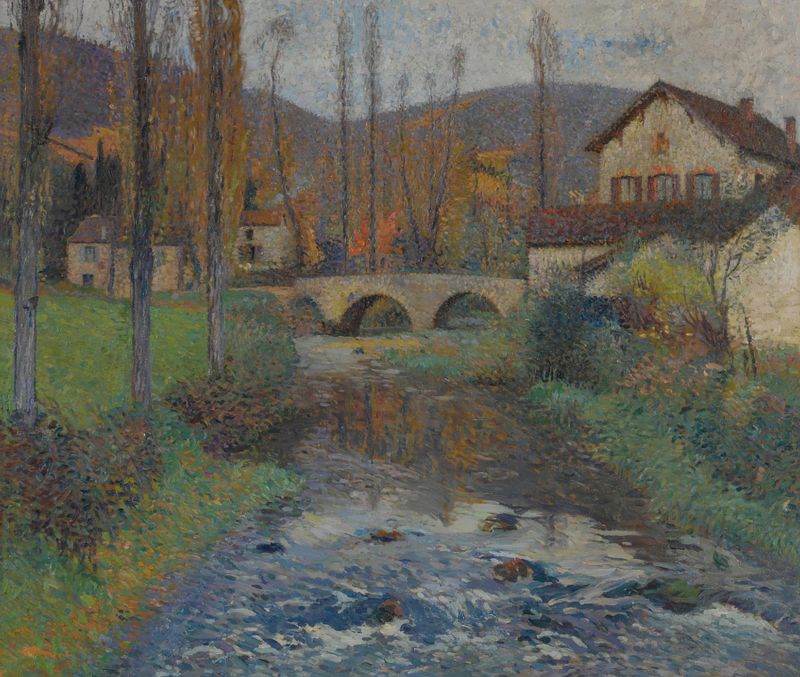
Le Pont du Labastide-du-Vert
Henri Martin

Le Pont de Labastide du Vert
Henri Martin

La Vallée Du Lot, Près De Saint-Cirq Lapopie
Henri Martin

Derniers Rayons, Une Ferme Dans Le Lot
Henri Martin

Vue de Labastide-du-Vert
Henri Martin
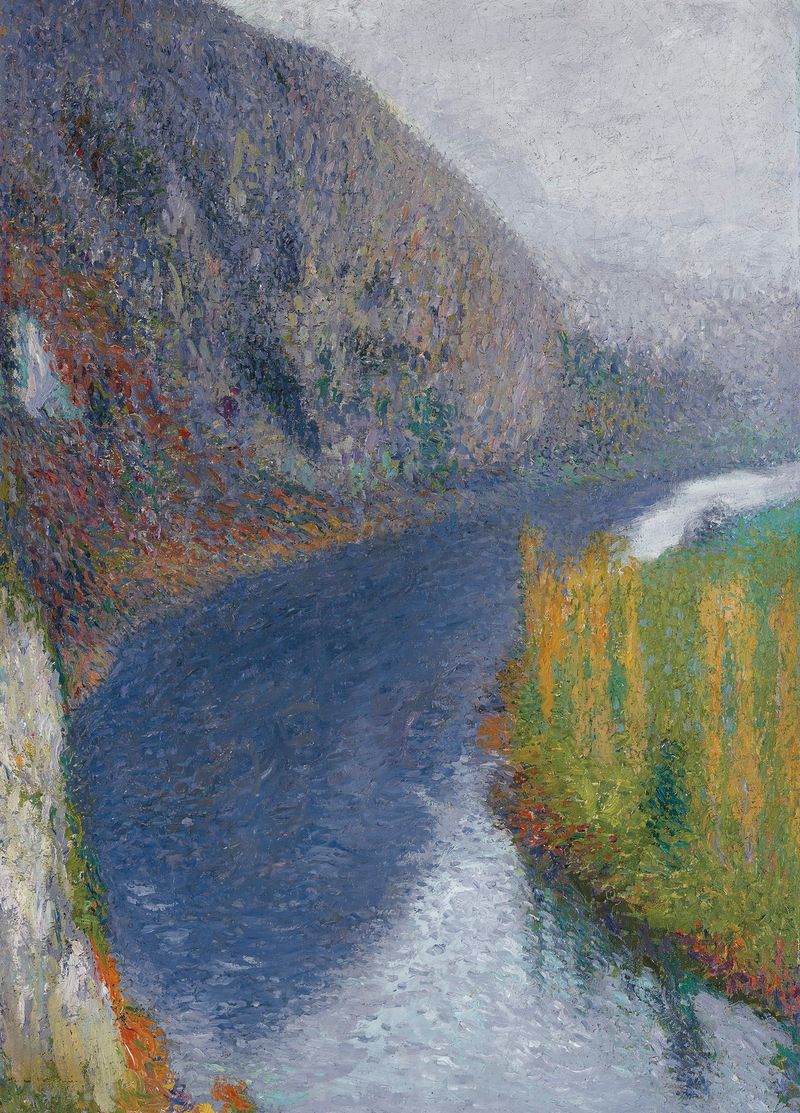
Le Lot au pied des falaises de St-Cirq-Lapopie
Henri Martin

L’église de Labastide-du-Vert avec le pont et la rivère, un soir d’automne
Henri Martin

Berger et ses moutons dans les causses
Henri Martin
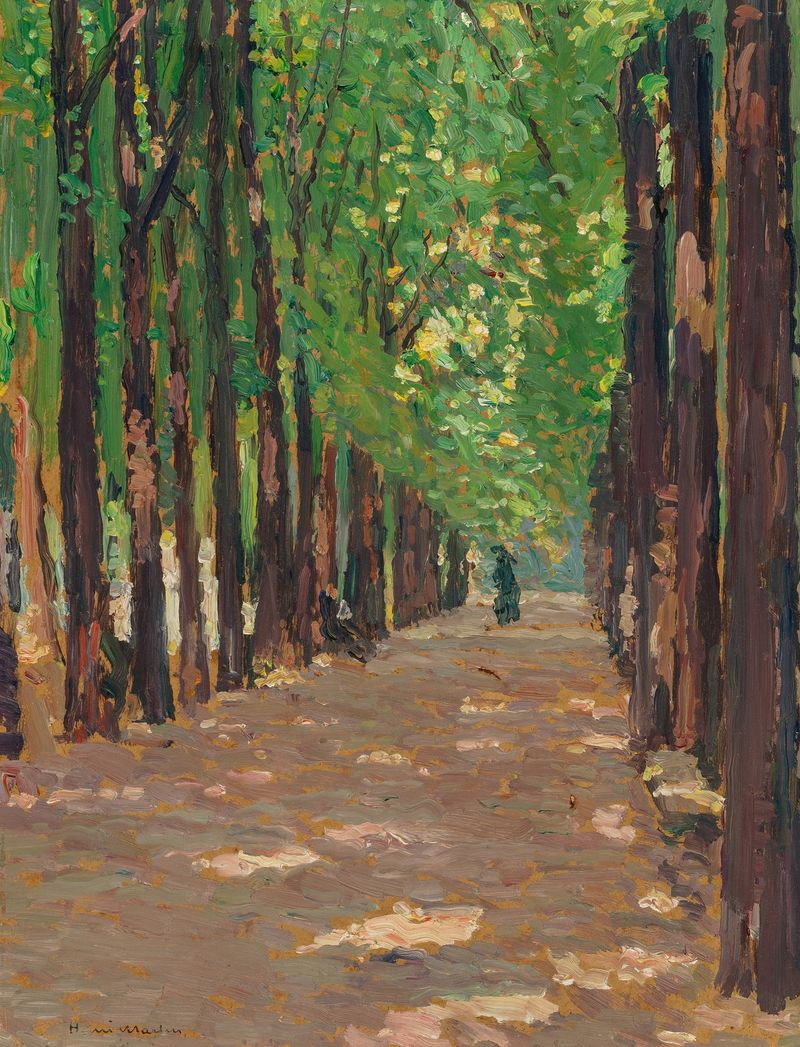
Une allée dans le Parc du Château de Versailles
Henri Martin
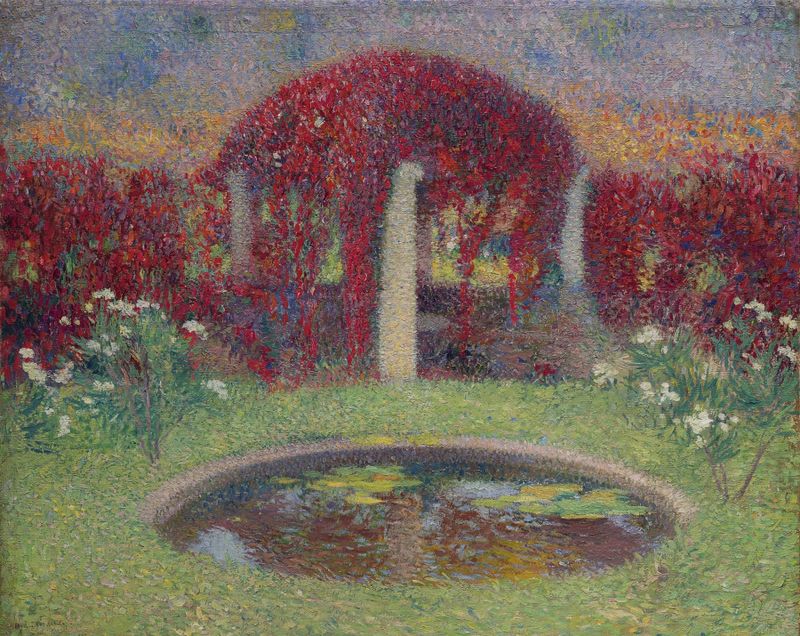
Le Bassin et le tonnelle
Henri Martin





