
Le Monastère — History & Facts
Could beauty survive in a century of chaos? In Le Monastère, the quiet grandeur of a monastery stands as a testament to resilience amid the tumult of the early 19th century, inviting viewers to contemplate the interplay of faith and tranquillity. Look to the left, where the stone facade of the monastery rises majestically against the backdrop of a soft, pastel sky. Notice how the warm sunlight bathes the structure in a golden hue, softly illuminating the intricate details of the architecture, while shadows play delicately on the ground, creating a sense of movement as if the walls themselves breathe. The gentle curves of the nearby trees echo the monastic forms, drawing your gaze toward the horizon where nature and humanity intertwine. Yet, beneath this surface serenity lies a subtle tension.
The juxtaposition of the sturdy, unyielding stone and the ephemeral light suggests an ongoing struggle between permanence and transience. The trees, swaying softly in the breeze, contrast sharply with the solid structure, reminding us of the fleeting moments of life that surround this sanctuary. Additionally, the absence of people invites contemplation; it’s as if the monastery exists in a world momentarily paused, urging the viewer to ponder the solitude and introspection that such a place can evoke. In 1828, while residing in France, the artist captured this scene during a period marked by personal and societal upheaval.
The Romantic movement was gaining momentum, emphasizing emotion and nature's beauty, which influenced his approach. Brascassat sought to convey both the majesty and vulnerability of religious architecture, reflecting not only his artistic evolution but also the broader quest for stability and solace in a rapidly changing world.
More Artworks by Jacques-Raymond Brascassat
Browse all →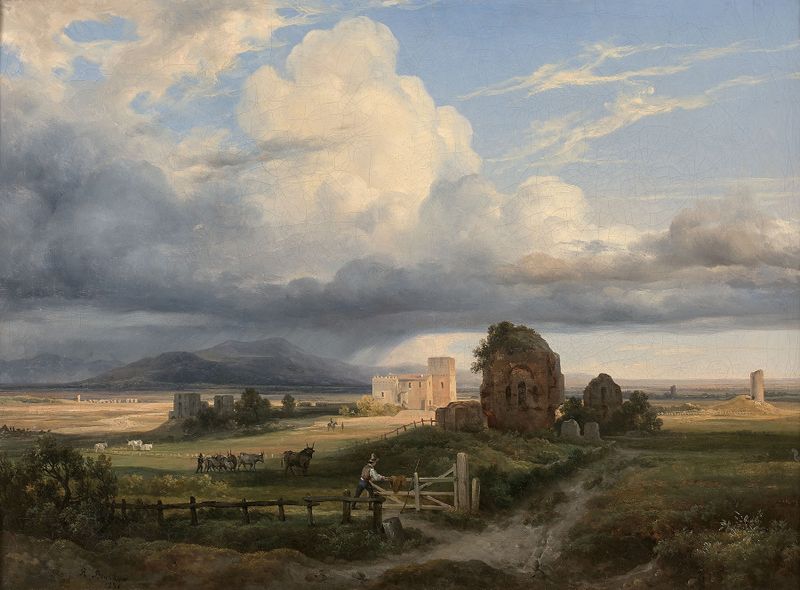
Vacher et son troupeau dans la campagne romaine, dans les environs de la via Appia
Jacques-Raymond Brascassat

Puits
Jacques-Raymond Brascassat

Paysage d’Italie
Jacques-Raymond Brascassat

Tour en bordure de mer
Jacques-Raymond Brascassat

Cascade et rochers
Jacques-Raymond Brascassat

Le Vieux chêne
Jacques-Raymond Brascassat

View of Bordeaux
Jacques-Raymond Brascassat
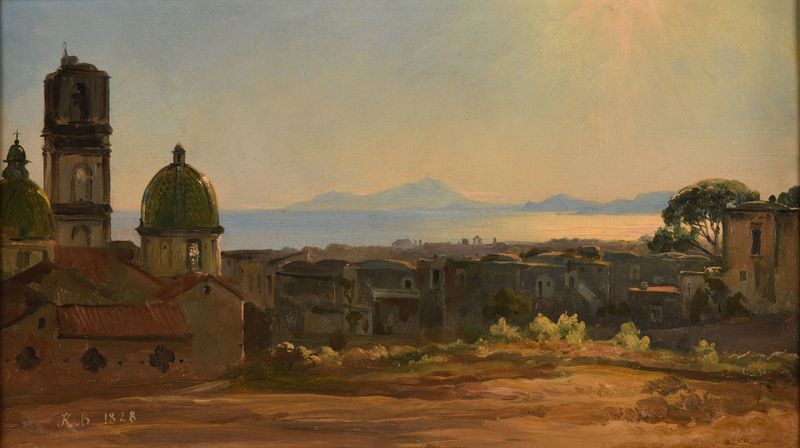
Vue de ville d’Italie
Jacques-Raymond Brascassat
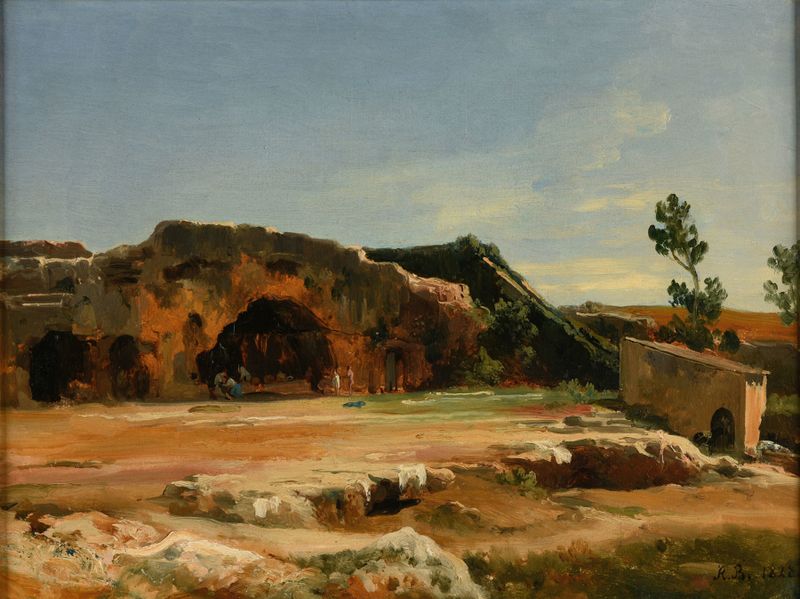
Grotte du Nymphée (Syracuse)
Jacques-Raymond Brascassat
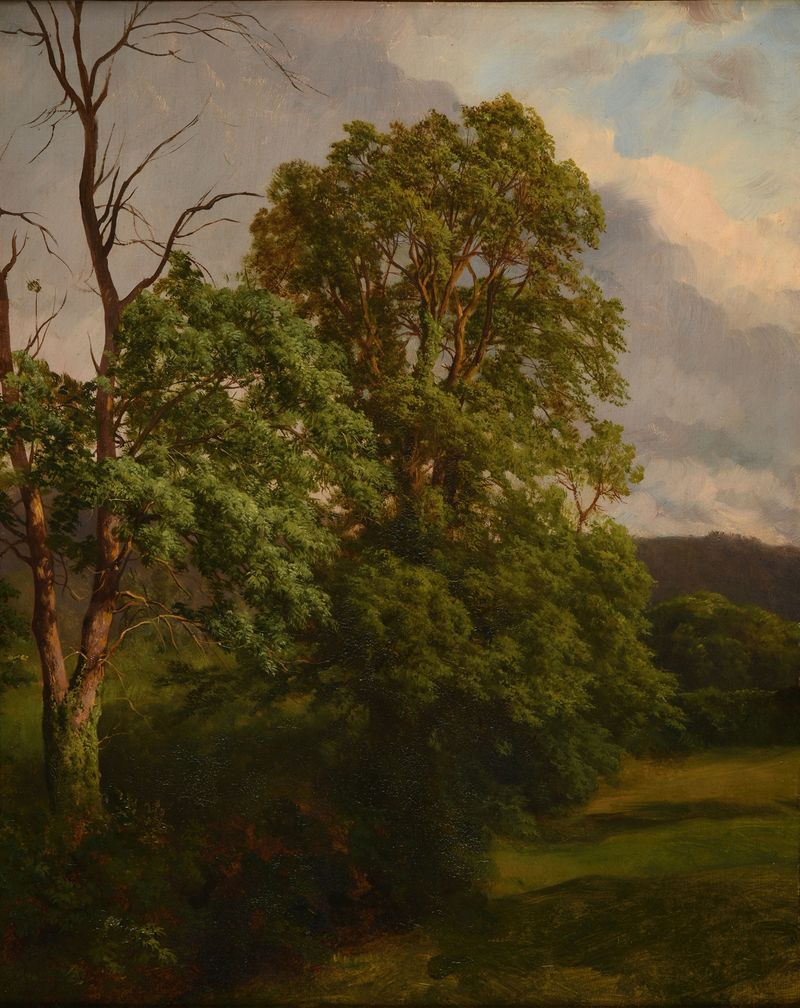
Les Chênes
Jacques-Raymond Brascassat
More Architecture Art
Browse all →
The statue of Liberty
Frédéric Auguste Bartholdi

View of Houses in Delft, Known as ‘The Little Street’
Johannes Vermeer

View of Houses in Delft, Known as ‘The Little Street’
Johannes Vermeer

The Cathedral in Rouen. The portal, Grey Weather
Claude Monet

The yellow house
Vincent van Gogh

The Church in Auvers-sur-Oise, View from the Chevet
Vincent van Gogh