Le moulin de la Galette — History & Facts
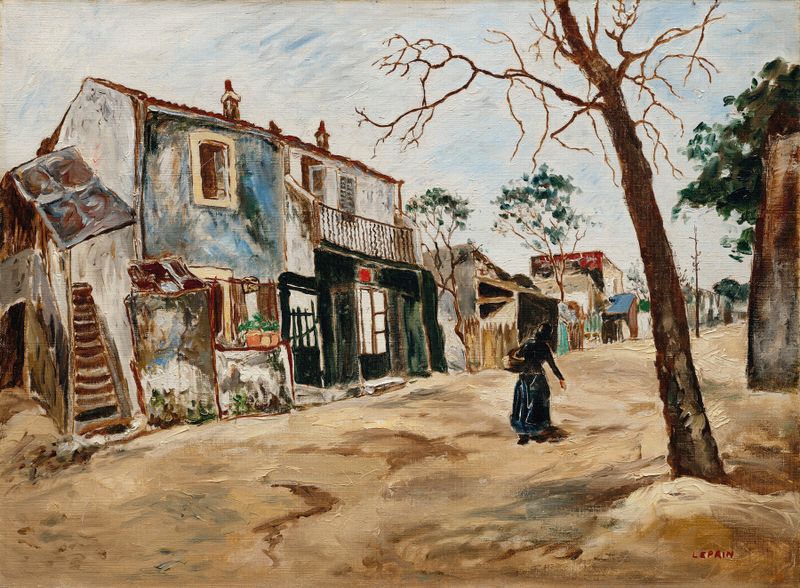
In a world bustling with vibrancy, it is the spaces left untouched that often speak the loudest. Marcel Leprin’s Le moulin de la Galette invites us into the heart of a bygone Paris, where life unfolds amidst the echoes of laughter and shadowy whispers. Look to the left at the swirling, vibrant hues that dance across the canvas, reminiscent of a lively afternoon at the windmill. The brushstrokes pulse with energy, beckoning the eye to follow the winding paths of revelers.
Notice how the warm sunlight spills through the trees, illuminating the faces of the patrons, their expressions a blend of joy and contemplation, suggesting both connection and solitude. The balance of color creates a dynamic rhythm, reflecting the playful yet fleeting essence of such moments. Yet beneath the surface, a tension brews between the exuberance of the scene and the void that lingers around the edges. Shadows loom, hinting at unspoken stories or lost dreams.
The stillness at the corners of the painting contrasts with the vivacious activity at its center, revealing the paradox of existence in public spaces—the joy interlaced with isolation. Each figure is part of a tapestry, yet each is also a solitary entity, underscoring the complexity of human experience. In 1920, Leprin was navigating the aftermath of the Great War, a time when the art world was beginning to embrace new movements and styles. He painted this piece in Paris, a hub of artistic innovation and cultural renewal, where the lively scenes of Montmartre served as both backdrop and muse.
The spirit of the era and the artist’s personal reflections infused Le moulin de la Galette with layers of meaning, bridging the gap between celebration and the echo of what was lost.