Le Pont de la Tournelle, l’Ile Saint-Louis et l’Estacade, vus de l’île Louviers. — History & Facts
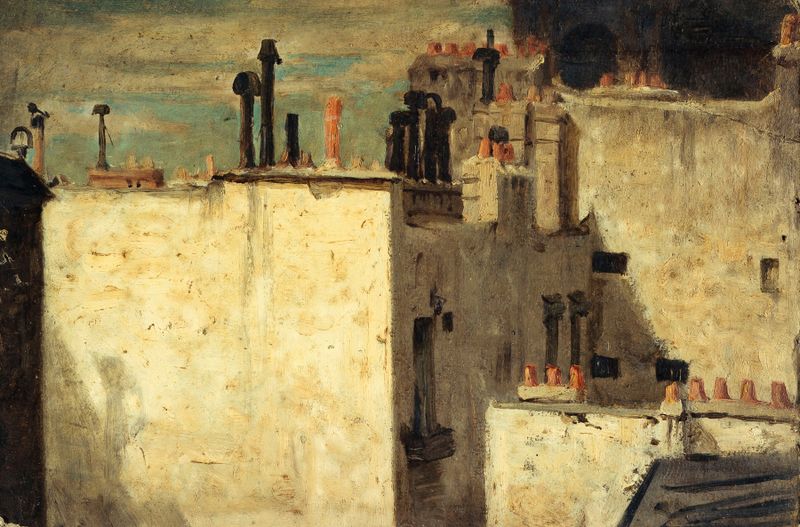
This transformation captures the essence of Le Pont de la Tournelle, l’Ile Saint-Louis et l’Estacade, vus de l’île Louviers — a moment where nature and architecture intertwine, breathing life into the serene landscape. Look to the left at the graceful arch of the bridge, its structure elegantly mirroring the gentle curvature of the river below. The muted palette of greens and browns contrasts with soft whispers of blue in the water, creating a tranquil atmosphere that invites contemplation. Notice how the light dances on the surface, suggesting movement and time, while the delicate strokes emulate the rustling leaves overhead.
Cuisin's deft technique draws the eye through the composition, guiding us from the ornate bridge to the calm island and beyond. Beneath the surface, this painting speaks to the duality of progress and nature. The bridge symbolizes human achievement, a monumental link to the bustling life of the city, while the surrounding landscape remains untouched, embodying a delicate balance between civilization and the wild. Shadows hint at the passing hours, suggesting that even in this picturesque moment, change is inevitable.
The harmonious coexistence of these elements reflects the artist's desire to explore transformation, both in the physical world and within the hearts of those who behold it. In 1877, Cuisin painted this scene amidst a burgeoning Paris, where Impressionism was gaining momentum and artists were increasingly drawn to landscapes. Living in a time of rapid industrial change, Cuisin captured a moment of tranquility, juxtaposing the rise of urban life with the enduring beauty of nature. This painting stands as a testament to his awareness of transformation, both on the canvas and in the world around him.