Les bords de la Seine, près du palais de justice, effet de nuit. — History & Facts
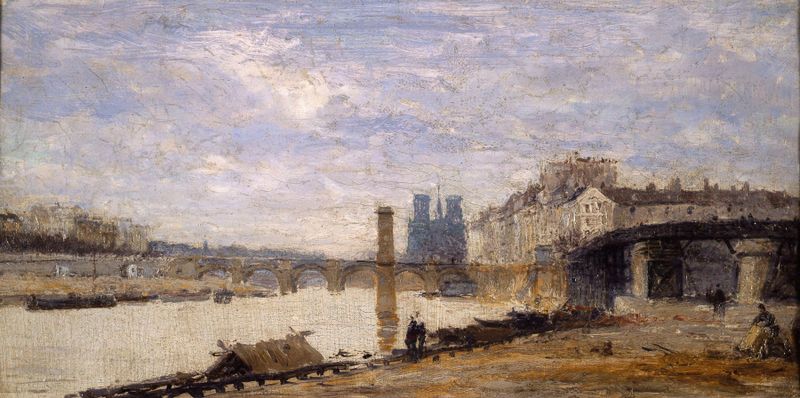
Could a single brushstroke hold eternity? In Les bords de la Seine, près du palais de justice, effet de nuit, the essence of faith materializes through the shimmering reflections upon the water, beckoning us to contemplate our place within the ever-flowing river of time. Look to the left at the luminous outlines of the Palais de Justice, bathed in a silvery glow that contrasts sharply with the deep indigo of the night sky. The skillful interplay between light and shadow draws your gaze to the flowing Seine, where delicate ripples dance beneath the moonlight, creating a mesmerizing tapestry of color. Notice how the brushwork varies from soft strokes that evoke the serenity of the water to more vigorous, textured applications that suggest the energy of life surrounding this historic landmark. Beneath the tranquil surface lies a profound dialogue between nature and civilization.
The serene water reflects not only the architectural beauty above but also serves as a metaphor for faith—the belief in things unseen, the promise of continuity amid change. The juxtaposition of hard-edged structures against fluid, shifting water speaks to the tension between permanence and transience, urging the viewer to reflect on the deeper currents that shape our existence. Charles-Emile Cuisin painted this piece in 1870 amidst the backdrop of a rapidly evolving Paris, a city caught between the old and the new. During this period, Impressionism was gaining momentum, challenging traditional artistic conventions, and Cuisin was deeply influenced by this movement.
His focus on capturing the ephemeral qualities of light and atmosphere aligns with the broader artistic exploration of the time, portraying the ever-changing beauty of the Parisian landscape as it transitioned into modernity.