
Le quai Malaquais — History & Facts
Can paint confess what words never could? In Le quai Malaquais, the essence of longing permeates every brushstroke, capturing a moment where time feels suspended and emotions hang delicately in the air. Focus on the shimmering surface of the water, where soft ripples reflect the muted colors of the buildings lining the riverbank. Notice how the light dances across the canvas, imbuing the scene with a warmth that contrasts beautifully with the cool tones of the sky. The composition draws the eye from the foreground, where a solitary figure stands gazing into the distance, to the enchanting skyline that beckons with stories untold.
Each element is harmonious; the artist’s deft use of color creates a dreamlike quality that invites the viewer to linger. Within this tranquil moment lies a deeper narrative; the lone figure embodies solitude, suggesting a yearning for connection amidst a bustling world. The interplay of light and shadow not only enhances the scene but also reflects emotional depth — a reminder of the weight of unspoken desires. The gentle curves of the buildings juxtaposed against the straight lines of the bridge hint at the duality of human experience: stability and vulnerability. In 1910, Frank Myers Boggs created this work while residing in Paris, a time when the city was a vibrant hub of artistic innovation.
Influenced by the Impressionists, Boggs sought to encapsulate the fleeting beauty of urban life, blending traditional techniques with a personal touch. This painting not only captures a moment in time but also serves as a testament to the artist's intimate connection with his surroundings and the emotions they evoked.
More Artworks by Frank Myers Boggs
Browse all →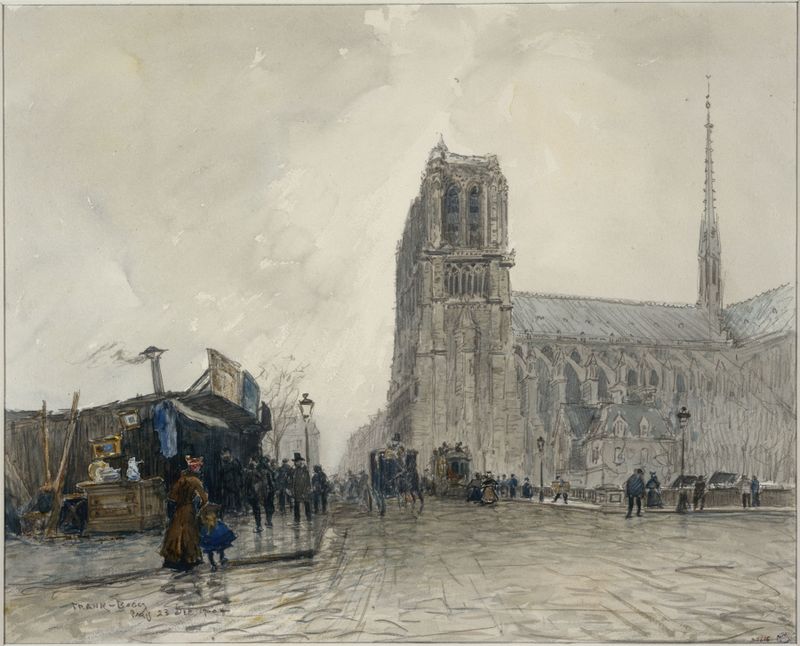
Notre-Dame vue du Pont au Double
Frank Myers Boggs
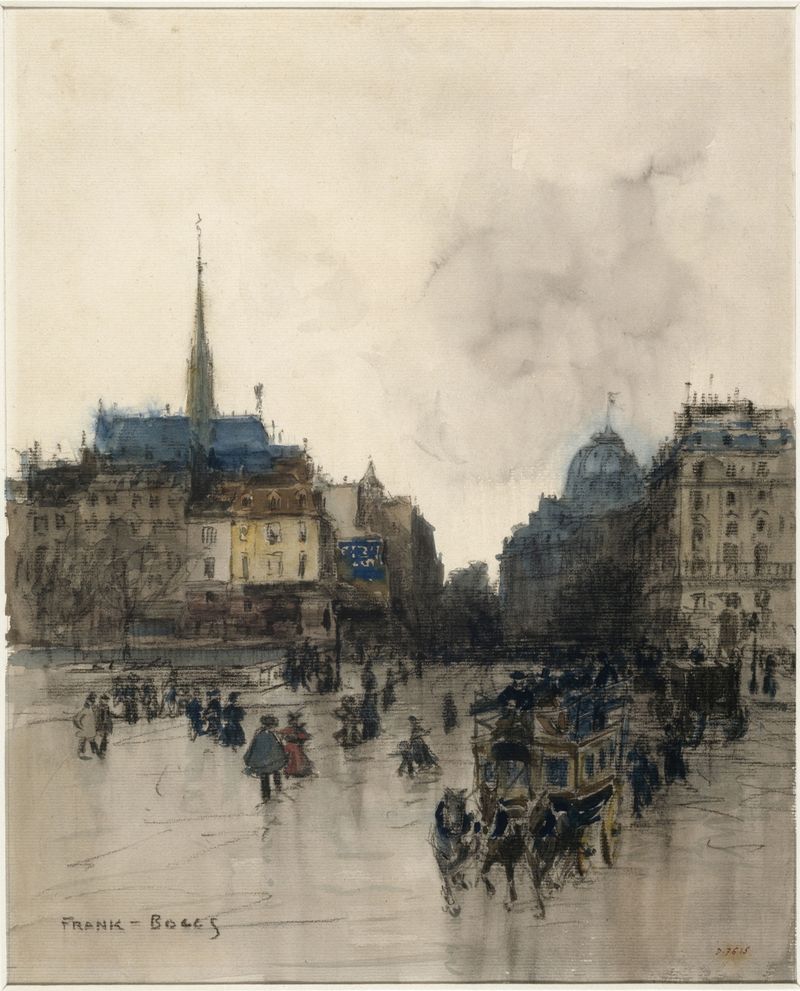
Le pont Saint-Michel
Frank Myers Boggs
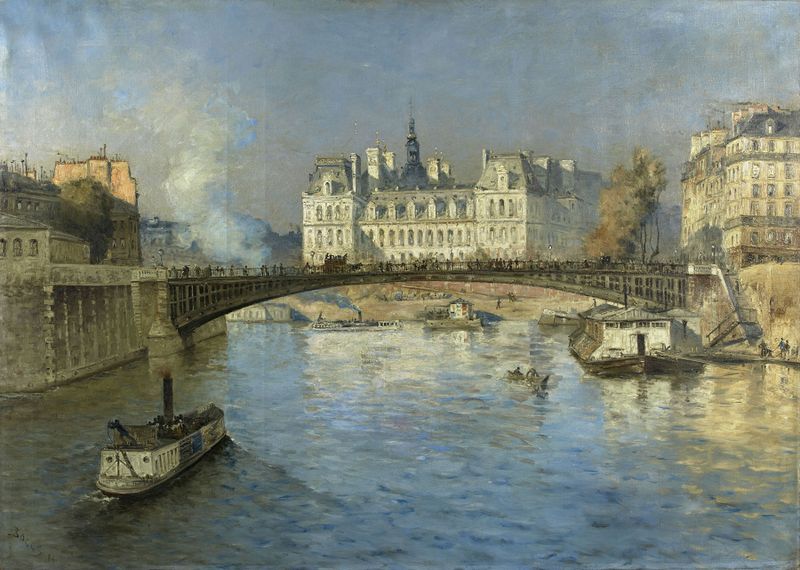
Paris, la Seine et l’Hôtel de Ville
Frank Myers Boggs
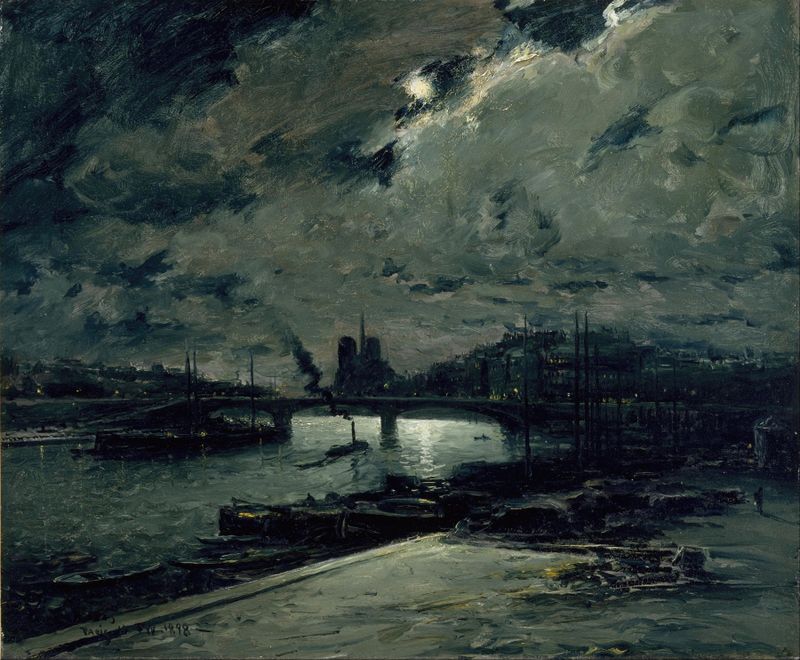
Quai de la Seine, Paris, au Clair de Lune
Frank Myers Boggs
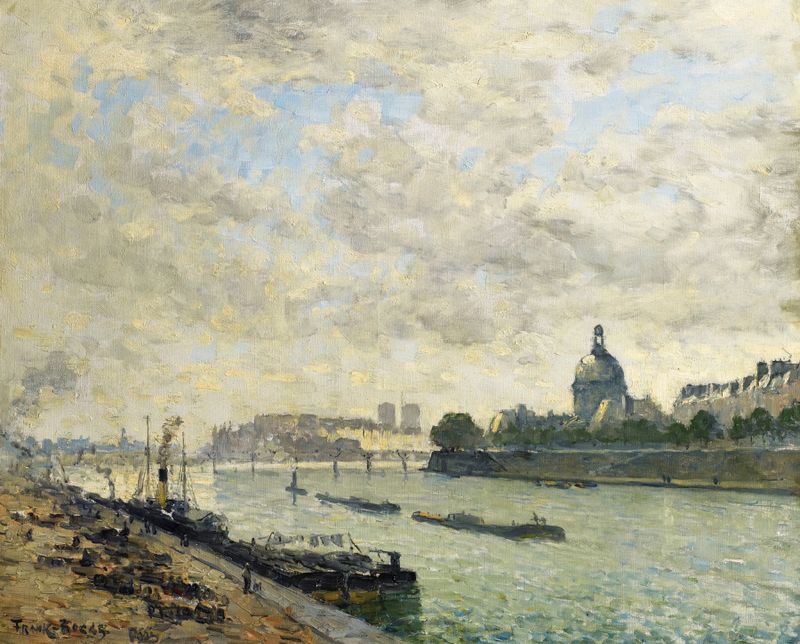
Les quais de Seine à Paris
Frank Myers Boggs
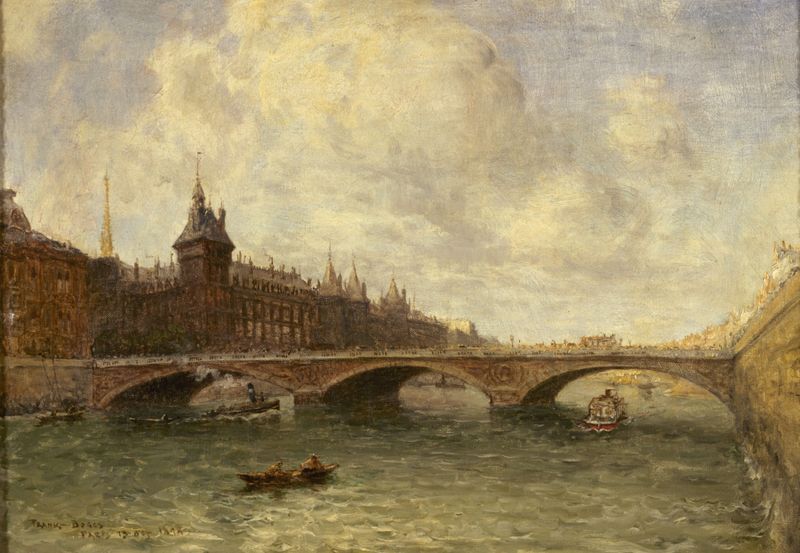
Le pont au change et le quai de l’horloge
Frank Myers Boggs
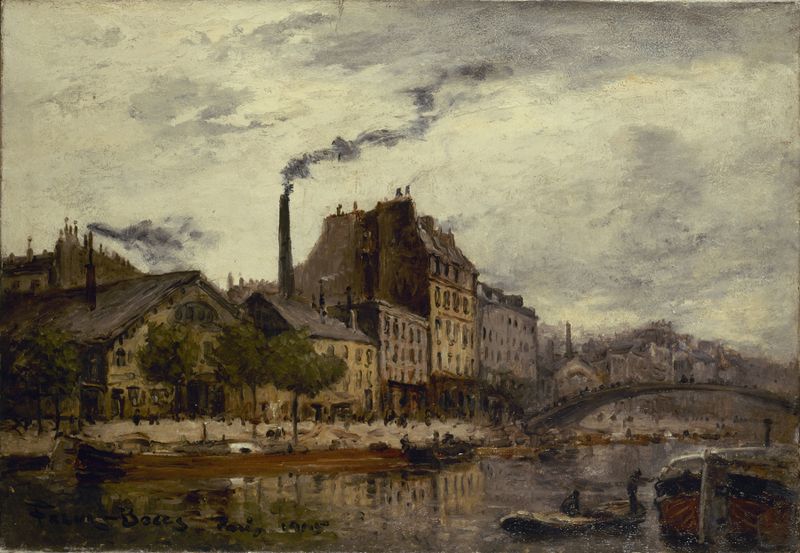
La démolition de l’ancien pont de la Tournelle
Frank Myers Boggs
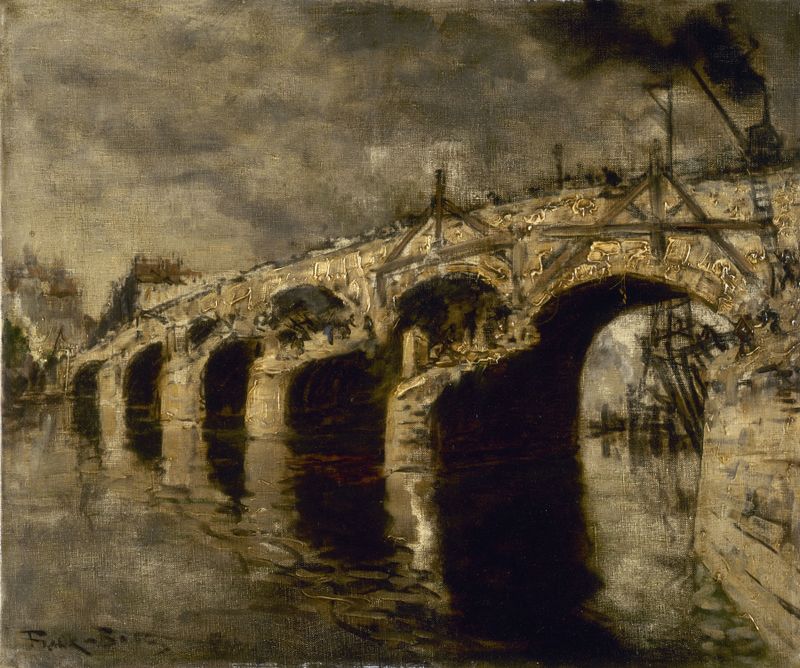
La démolition de l’ancien pont de la Tournelle
Frank Myers Boggs

La tour Saint-Jacques
Frank Myers Boggs
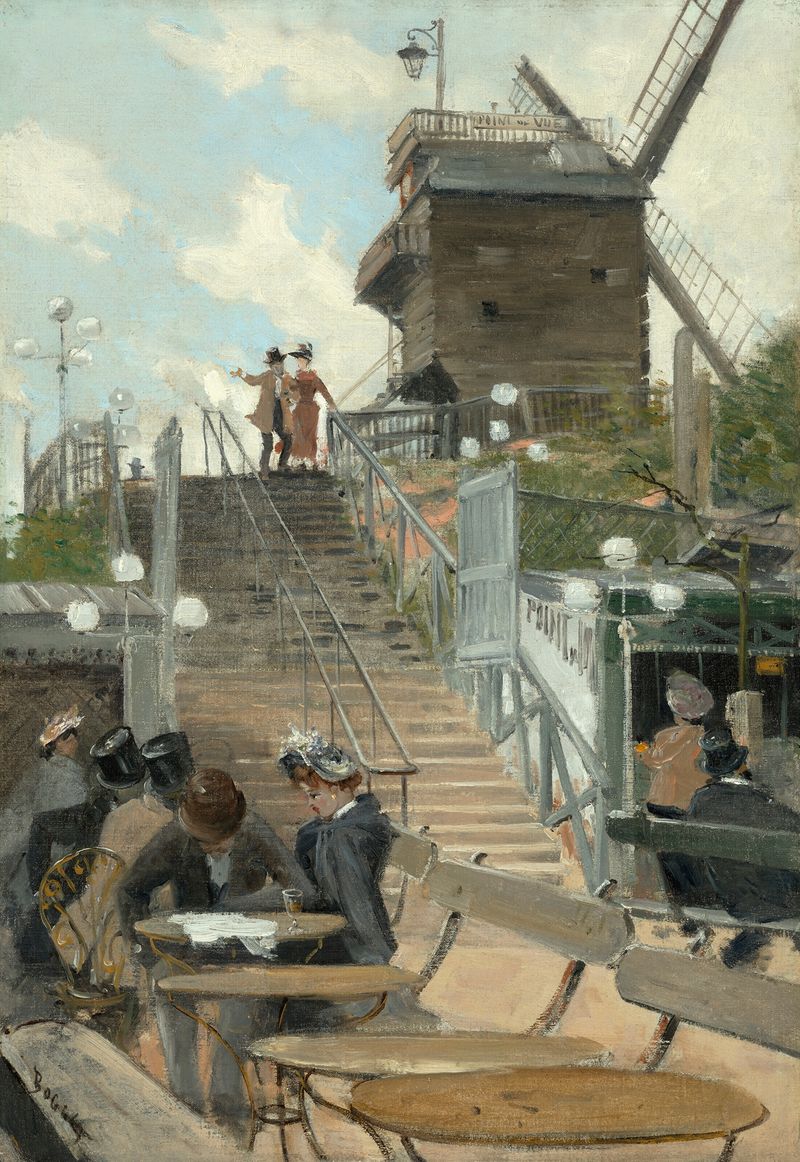
Le Moulin de la Galette
Frank Myers Boggs





