Le Sacré-Coeur, Montmartre — History & Facts
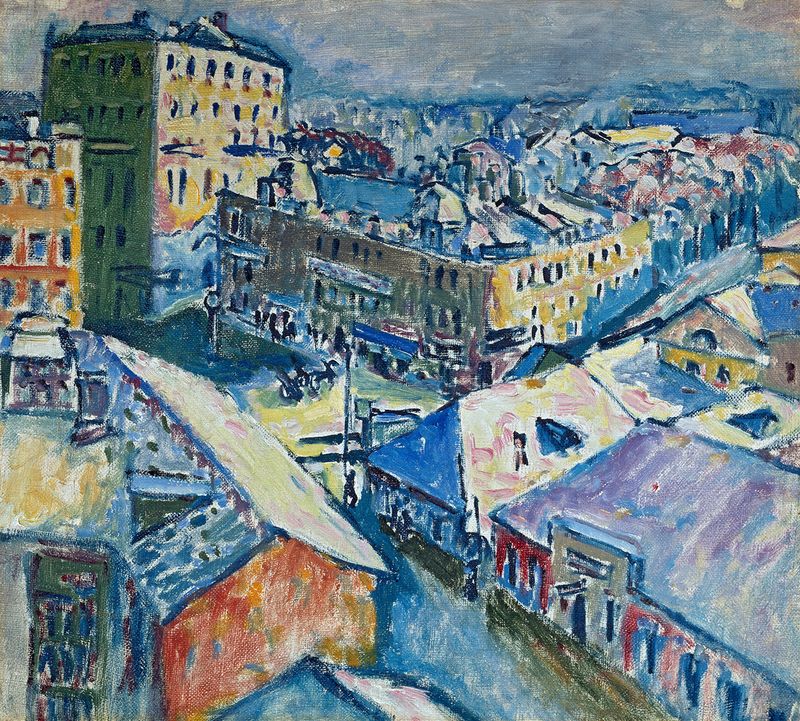
In the hush of Montmartre, a story of silence unfurls, inviting us to delve into deeper meanings beneath the surface. Look to the vibrant hues that intertwine throughout the canvas, where bold strokes create an abstract interpretation of the iconic basilica. The dome rises majestically, bathed in the soft light of a setting sun which casts a warm glow, juxtaposing the cool blues of the surrounding sky. Notice the way the brushwork dances, inviting your gaze to wander through a landscape that feels at once familiar and dreamlike, as though you are peering into a reverie rather than a mere depiction of a building. The painter captures an emotional tension that resonates beyond the architecture.
The golden tones, while exuding warmth and beauty, hint at an underlying layer of melancholy, suggesting a history woven into the very stones of the structure. Furthermore, the empty streets below amplify a sense of isolation, as if the basilica stands alone in its grandeur, echoing the solitude of the artist’s own experience. This interplay of colors and the stillness of the setting create a dialogue between beauty and sorrow, inviting viewers to reflect on their own encounters with silence. Roger Fry created this work in 1920, during a period when he was deeply immersed in the Post-Impressionist movement.
Living in London, Fry had already established himself as a leading art critic and painter, and his experiences with the avant-garde art scene shaped his approach to capturing the essence of Montmartre. This painting reflects both his appreciation for the architectural beauty of Paris and a personal exploration of emotional depth, marking a time when the world was grappling with the aftermath of the Great War.