
Le Siège de Paris, 1871 — History & Facts
Where does light end, and longing begin? In Le Siège de Paris, a world of illusion unfolds, inviting viewers to confront the depths of human experience amid chaos. Look to the upper left where the soft, golden light cascades over the clouds, revealing a city shrouded in both beauty and despair. The artist’s brushstrokes capture the tumult of the moment, blending harmonious hues with darker undertones. Focus on the figures at the forefront: their postures, poised between defiance and resignation, speak volumes.
Each character is rendered with meticulous detail, their faces etched with emotion, drawing you into the shared weight of their reality. Hidden within this scene lies the tension of hope and hopelessness. Notice the contrasting colors—the vibrant blues of the uniforms against the somber greys of the landscape—revealing the clash of ideals and the raw nature of survival. The juxtaposition of the majestic cityscape against the foreboding atmosphere creates a poignant dialogue about the fragility of civilization.
The illusion of safety crumbles as the looming threat of conflict turns to a silent roar, echoing in the hearts of those depicted. Created during the tumultuous times surrounding the Franco-Prussian War, this work reflects the artist's response to the events shaking Paris. Painted amidst the dramatic political landscape of the early 1870s, Girardet captures a pivotal moment in history, a time when art served as both commentary and refuge. The struggle for existence, mirrored in the brushstrokes and shadows, tells a story that resonates far beyond its frame.
More Artworks by Jules Girardet
Browse all →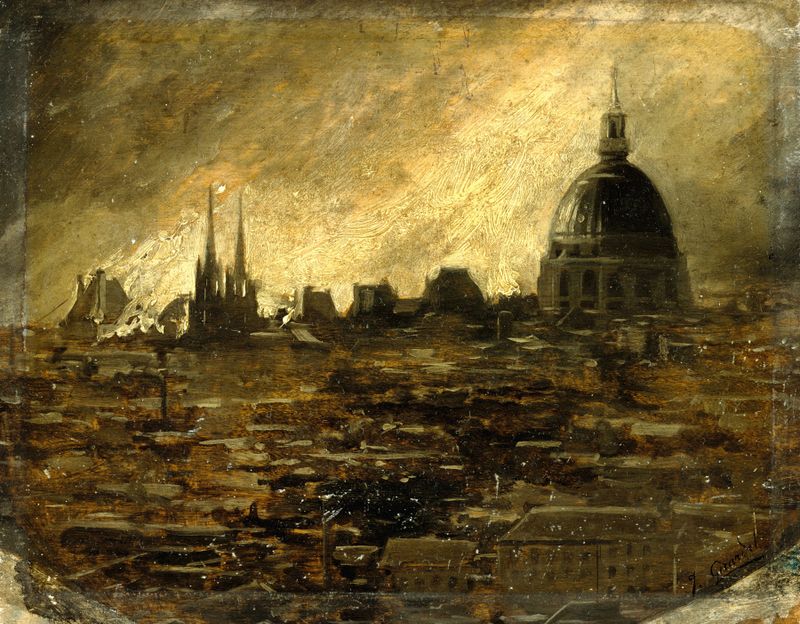
More Historical Art
Browse all →
The Night Watch Militia Company of District II under the Command of Captain Frans Banninck Cocq
Rembrandt van Rijn

Lincoln Memorial
Henry Bacon

The Third of May 1808
Francisco de Goya

Isaac and Rebecca, Known as ‘The Jewish Bride’
Rembrandt van Rijn

The Charge of the Mamelukes (1814)
Francisco de Goya

De vier ruiters van de apocalyps
Albrecht Dürer