Le Triomphe de l’Hiver — History & Facts
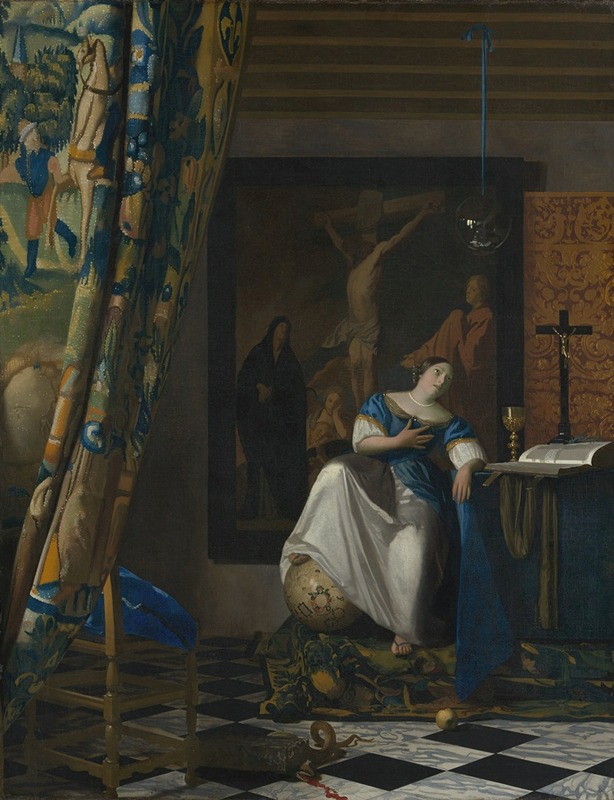
Could a single brushstroke hold eternity? In Le Triomphe de l’Hiver, the artist invites us to contemplate the divine interplay between the human and the seasonal—where winter reigns supreme, and nature's somber beauty takes center stage. First, look to the left at the figure draped in flowing garments, embodying the essence of winter’s chill. The cool blues and whites of the palette draw your gaze, capturing the crispness of frost and the stillness of snow. Notice how the flurries of snowflakes cascade around the scene, accentuating the graceful movement of figures and creating a rhythmic balance throughout the composition.
The intricate detailing in the foliage reveals a mastery of technique, where each brushstroke contributes to a greater narrative. Delve deeper into the contrasts presented in the artwork. The warm hues of the surrounding figures stand in juxtaposition to the coldness of winter, embodying a struggle not just for survival but for celebration amidst adversity. The wreaths and offerings in the foreground hint at a divine favor that winter brings, suggesting that even in the harshest of seasons, life continues to thrive.
This duality between desolation and festivity evokes a profound sense of reverence for nature’s cyclical dance. During the late 16th century, while crafting this piece, Caron thrived in the flourishing court of France under Catherine de’ Medici. The political landscape was complex, marked by religious wars, yet the art world was burgeoning with new ideas about beauty and nature. This period of creative exploration influenced his depiction of winter, allowing him to weave together themes of divine celebration and the inexorable passage of time.