
L’Eglise de Moret (le soir) — History & Facts
In the quietude of twilight, Sisley captures a moment where time appears to hold its breath, a collective obsession with the transient beauty of nature and architecture. Look to the center of the canvas, where the silhouette of the church rises against a backdrop of swirling purples and blues, its steeple reaching for the heavens. Notice how the warm glow of the setting sun bathes the scene, casting gentle shadows that dance along the cobblestones, inviting you to step inside this serene village moment. The delicate brushwork evokes a soft, impressionistic haze, blurring the line between reality and reverie, while the palette sings of the evening sky's transformation. As the light wanes, a deeper emotional tension unfolds.
The juxtaposition of the sturdy church against the ephemeral twilight suggests a struggle between permanence and transience, faith and fleeting moments. The characters of the landscape—trees, water, and building—whisper secrets of a world caught in Sisley’s obsession with light and atmosphere, each element pulsating with a life that feels both intimate and universal. In 1894, Sisley painted this evocative landscape while living in France, grappling with personal and financial challenges. Despite the disillusionment he faced in an increasingly commercial art world, he remained devoted to his impressionistic vision, seeking solace in the beauty of everyday scenes.
It was a pivotal moment, where the artist's deep connection to nature and his unique style flourished amidst the shifting tides of modernity.
More Artworks by Alfred Sisley
Browse all →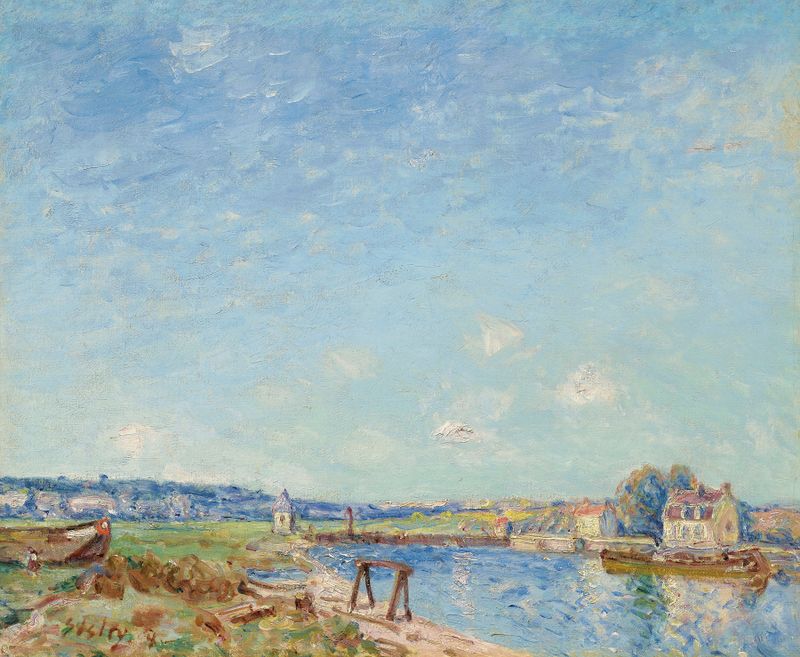
Le Loing à Saint-Mammès
Alfred Sisley
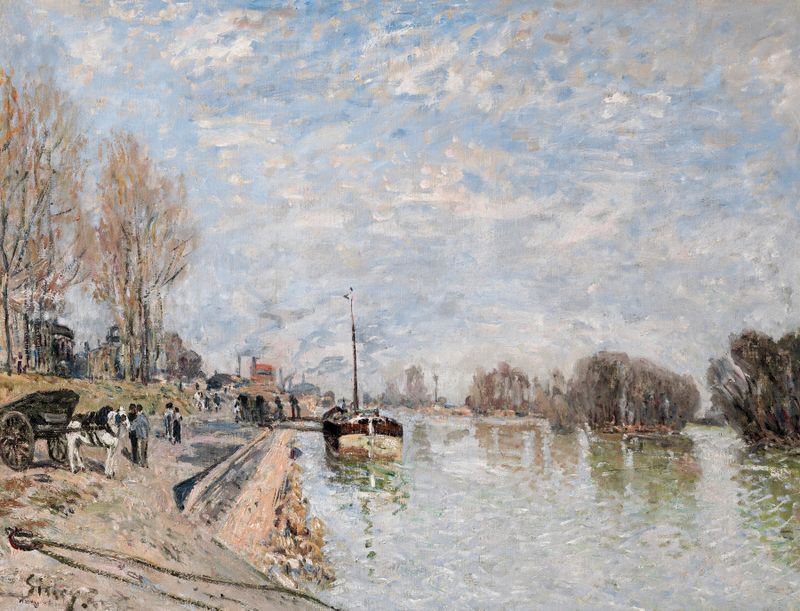
La Seine à Suresnes
Alfred Sisley
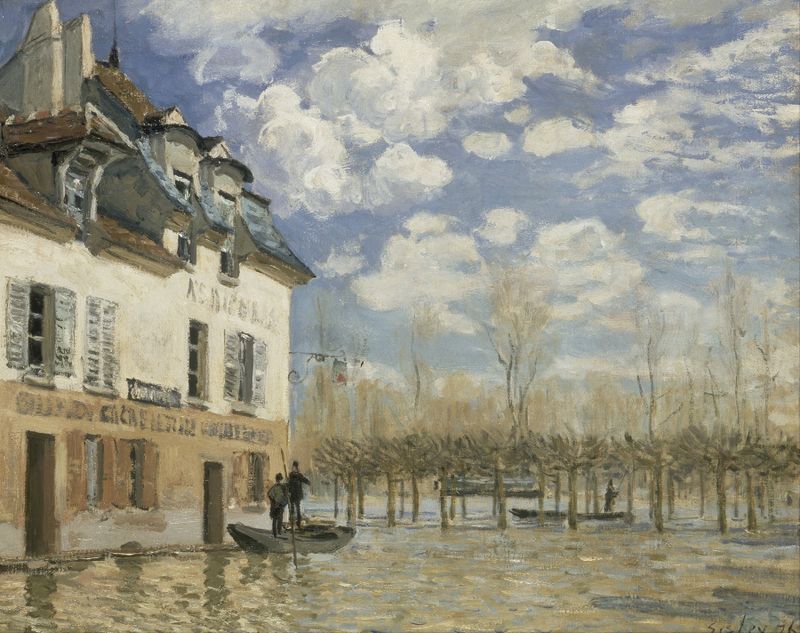
Boat in the Flood at Port Marly
Alfred Sisley
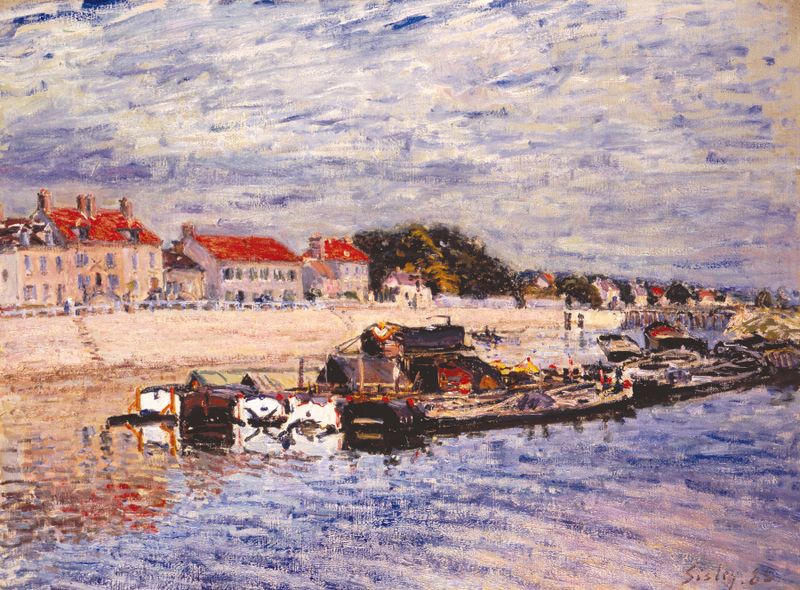
Barges on the Loing at Saint-Mammès
Alfred Sisley

L’allée des peupliers au bord du Loing
Alfred Sisley

Molesey Weir, Hampton Court
Alfred Sisley
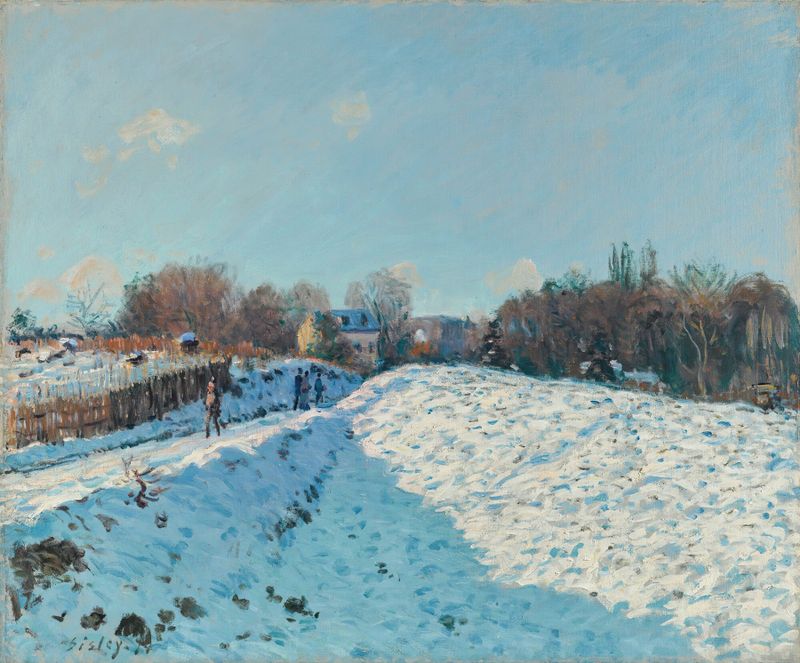
Effet De Neige À Louveciennes
Alfred Sisley
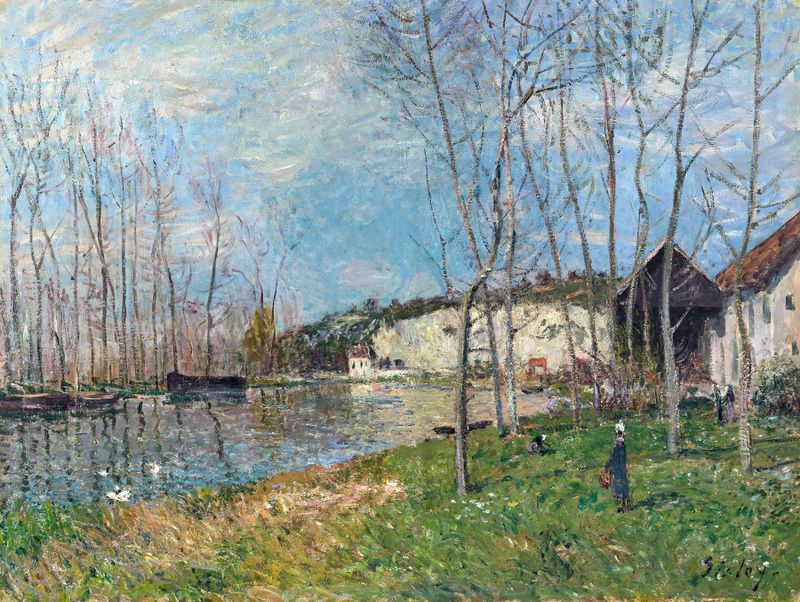
Printemps au bord du Loing
Alfred Sisley
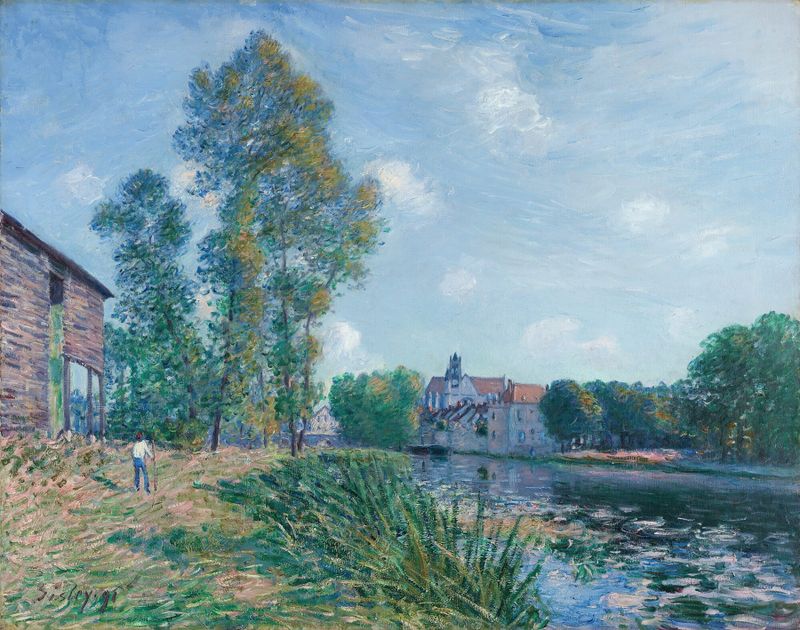
Le Loing À Moret, En Été
Alfred Sisley
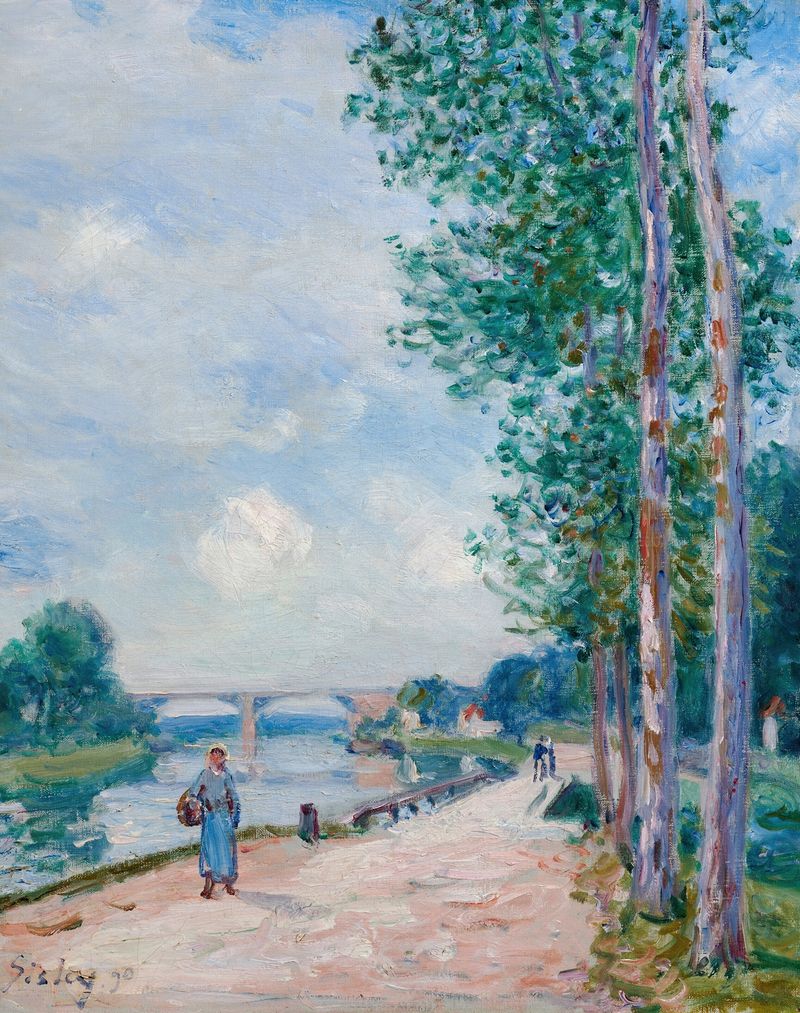
Les bords du Loing près de Moret
Alfred Sisley





