Lerici — History & Facts
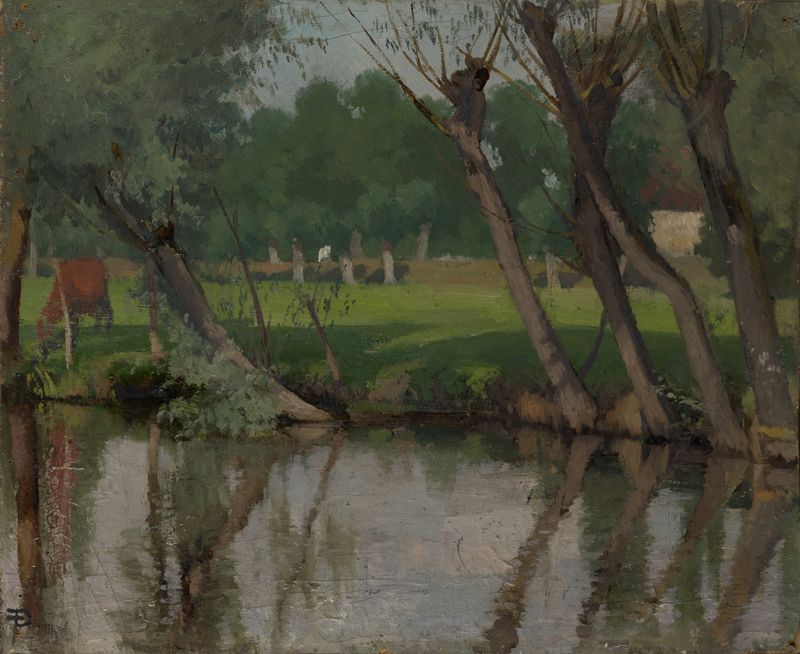
This notion resonates within the delicate contours and vivid hues of this captivating piece, where movement is both celebrated and mourned. The artwork invites a reflection on the transient nature of life, encapsulated in the undulating waves and the vibrant landscape that unfolds before us. Look to the right at the shimmering sea, where each brushstroke suggests a gentle caress of the water's surface, dancing under the warm embrace of sunlight. The soft palette of blues and greens harmonizes beautifully with the sun-kissed cliffs, drawing the eye across the canvas.
Notice how the artist employs a dynamic composition, with swirling lines that evoke a sense of fluidity, bringing the painting to life as if it were a snapshot of nature in motion. Beneath the surface, there lies an interplay of tranquility and turmoil. The vibrant colors suggest joy, yet the tumultuous waves hint at an underlying chaos, perhaps symbolizing the struggle between serenity and unrest. The presence of distant ships serves as a reminder of the human quest for exploration, while the cliffs stand resolute, embodying the weight of time and permanence that contrasts sharply with the fleeting beauty of the moment. In 1882, Preiswerk was immersed in the artistic circles of Europe, influenced by the likes of the Impressionists and their celebration of light and movement.
During this time, he sought to convey the emotional resonance of landscapes, reflecting both the natural environment and his own inner experiences. This painting emerged from a period of personal exploration, marked by a desire to capture not just what is seen, but what is felt through the beauty of nature.