
Les Andelys. Matin. Été — History & Facts
Can beauty exist without sorrow? In Les Andelys. Matin. Été, the interplay of vibrant hues and serene landscapes suggests a complex legacy where joy and melancholy coexist. Look to the left at the shimmering river, its surface dappled with reflection and light.
The brushwork is distinct, each stroke a playful dance that guides your gaze to the harmonious blend of blues and greens. Notice how the sun bathes the scene in a soft glow, illuminating the quaint houses nestled against the riverbank, while the trees stand tall, guardians of time and memory. The balance between the vivid colors and tranquil composition invites you into a moment suspended in the warmth of summer. Yet, beneath this idyllic façade lies a deeper tension.
The river, a symbol of passage, evokes the transience of life, reminding viewers that beauty is often accompanied by impermanence. The vibrant colors may suggest joy, but the solitary figures, almost lost in the vastness of nature, hint at a longing for connection. The juxtaposition of the lively landscape with the stillness of the figures embodies a yearning for legacy — the desire to leave something beautiful behind, even amidst the inevitable passage of time. In 1923, Paul Signac was living in Paris, drawing inspiration from the post-impressionist movement and the evolving world of modern art.
His works, characterized by a technique known as pointillism, reflect his deep engagement with color theory and the pursuit of capturing light's essence. This painting, created during an era of significant change, encapsulates his ongoing exploration of nature and emotion, immortalizing a fleeting moment that resonates with both beauty and the weight of existence.
More Artworks by Paul Signac
Browse all →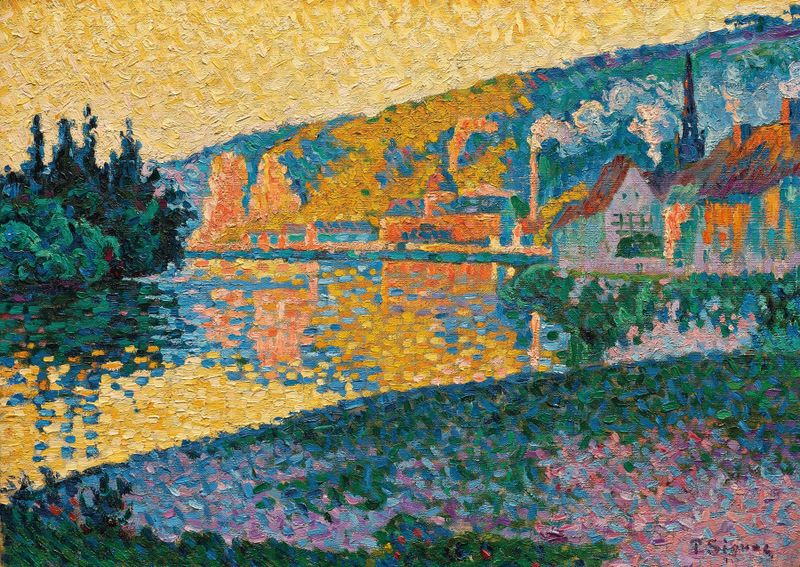
Les Andelys. Soleil couchant
Paul Signac
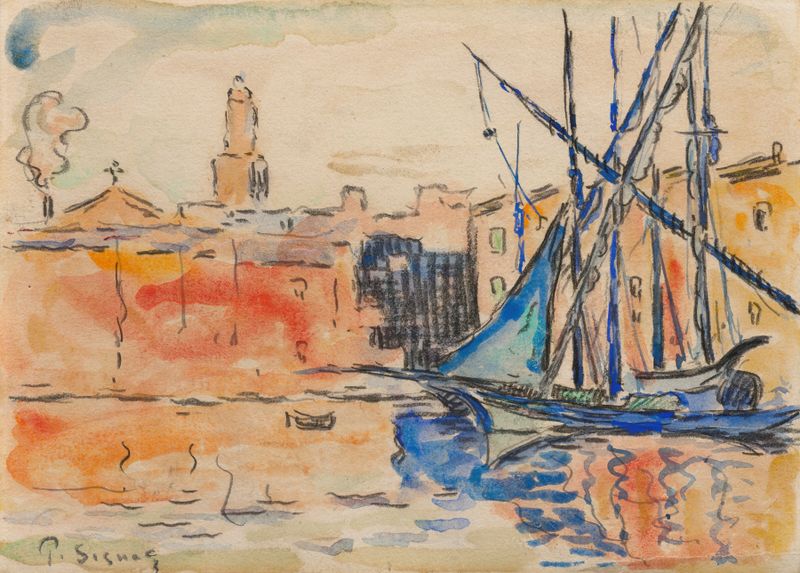
Saint-Tropez, le port
Paul Signac
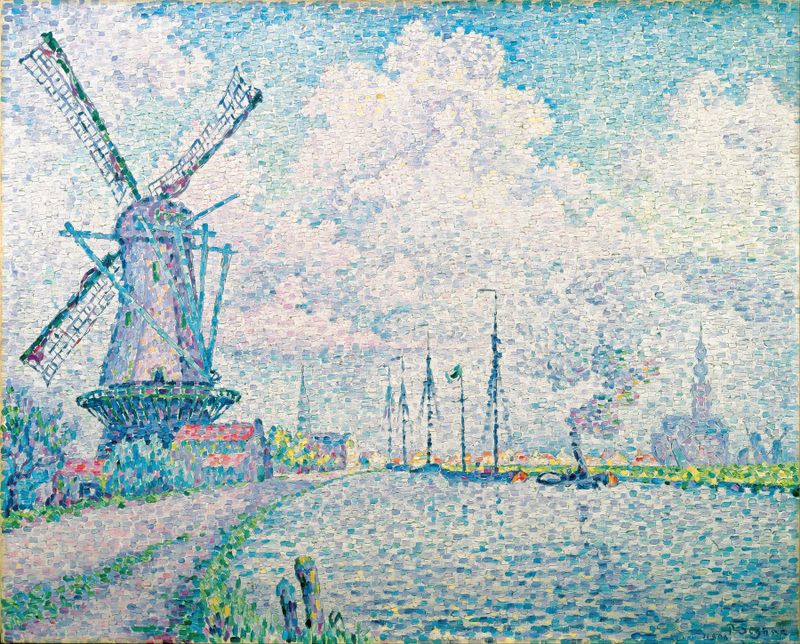
Canal of Overschie
Paul Signac
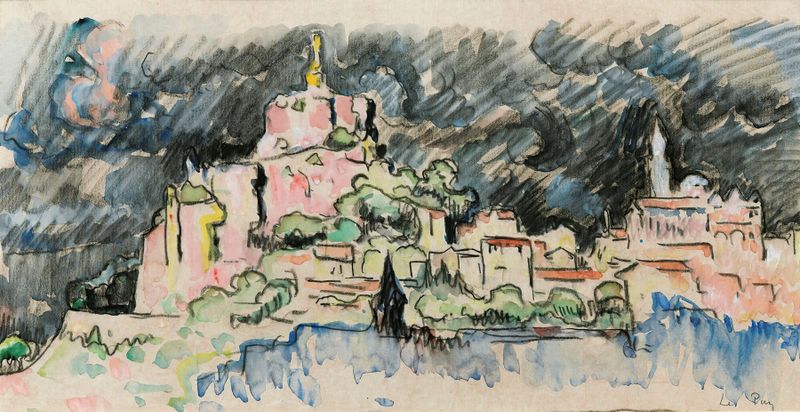
Le Puy-En-Velay, Ciel D’orage
Paul Signac
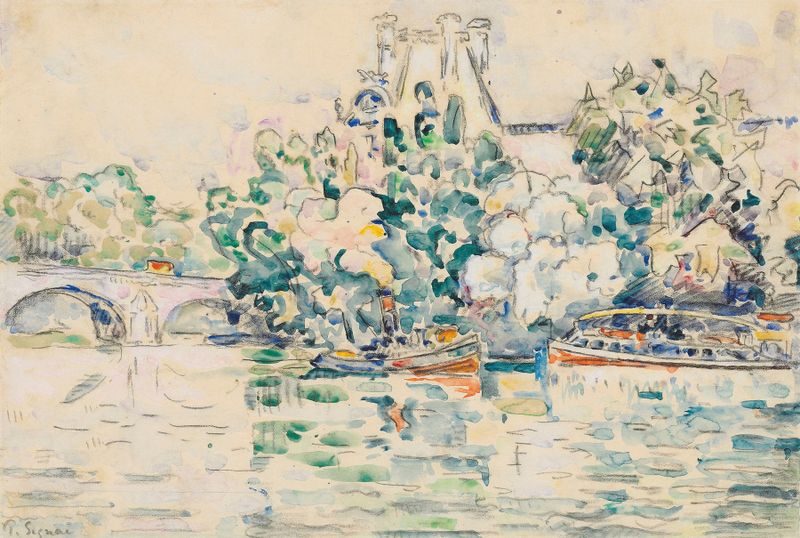
Paris, La Seine au Pont-Royal
Paul Signac
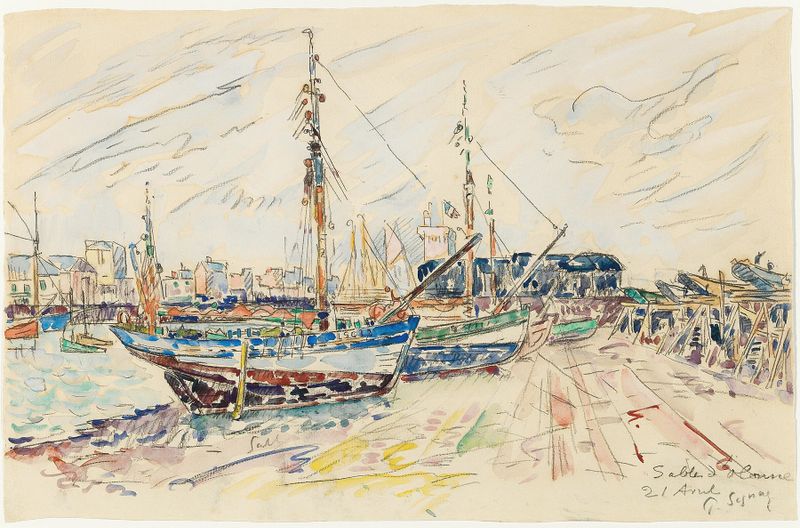
Sables d’Olonne
Paul Signac
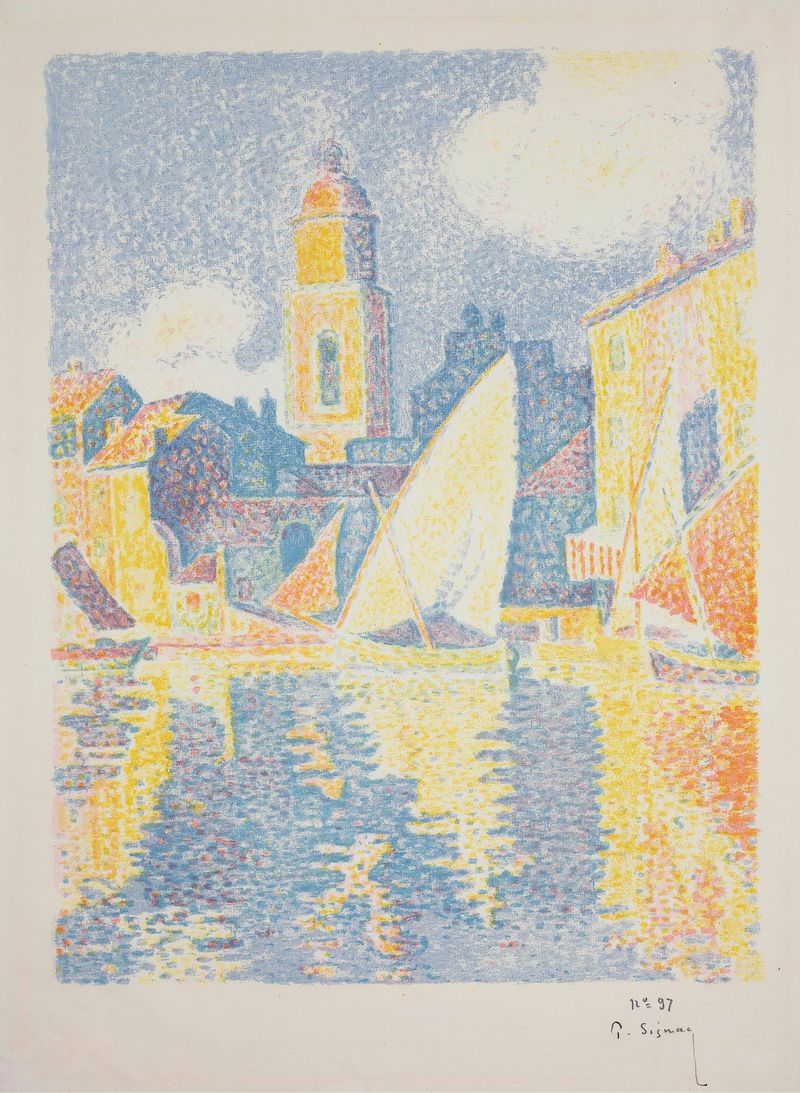
The Port of St. Tropez
Paul Signac
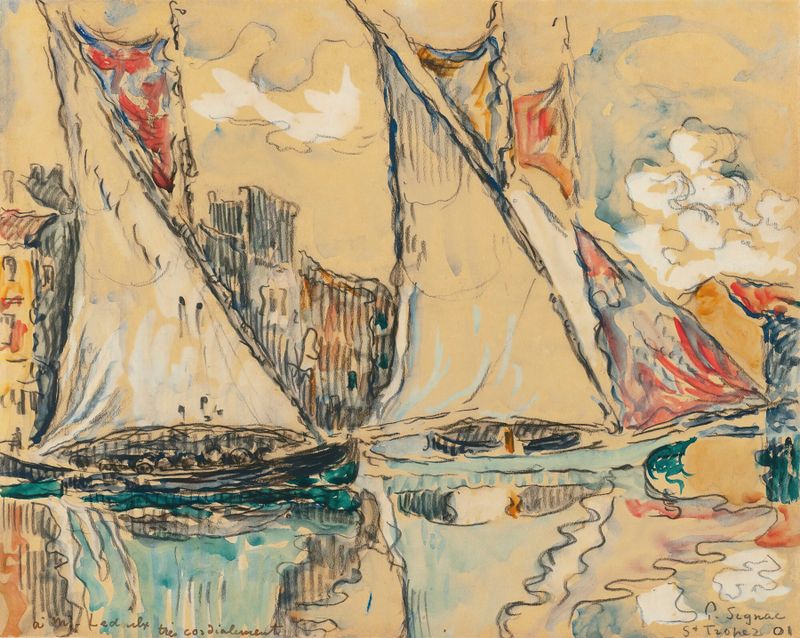
Saint-Tropez, Voiles Au Sec
Paul Signac
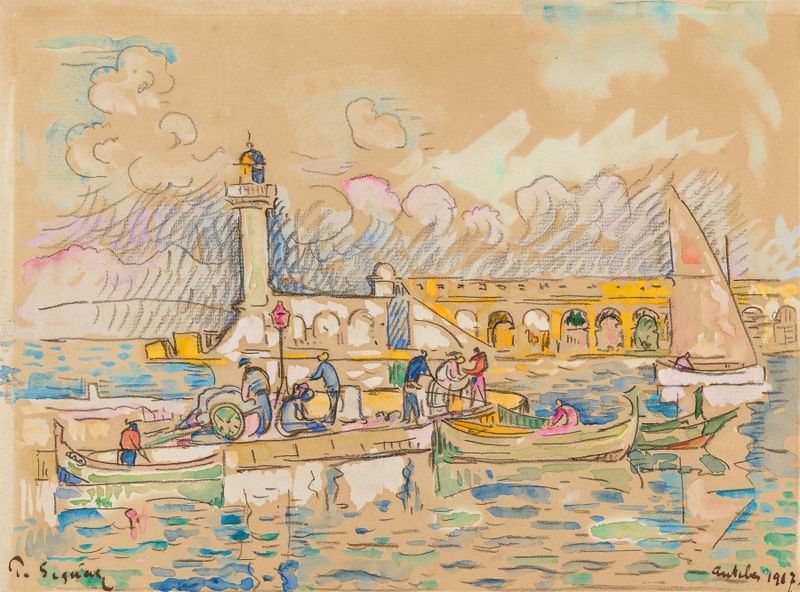
Antibes
Paul Signac

Saint-Tropez
Paul Signac





