Les Bouleaux. Hiver — History & Facts
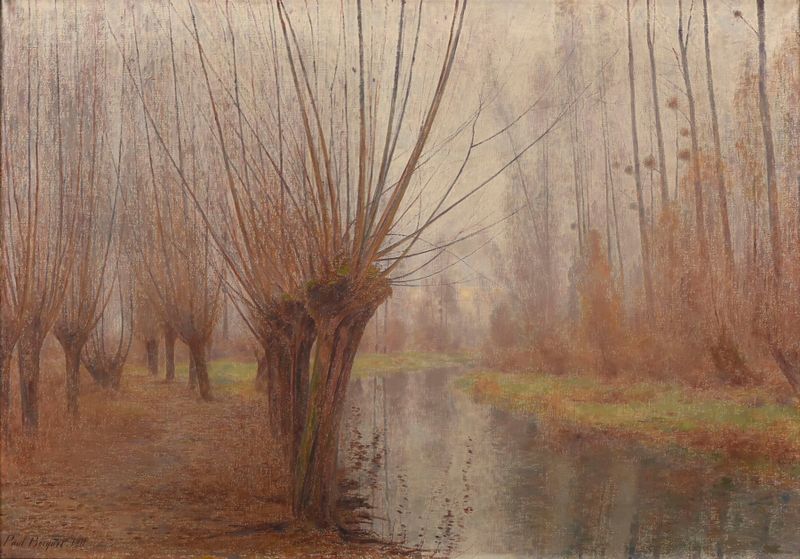
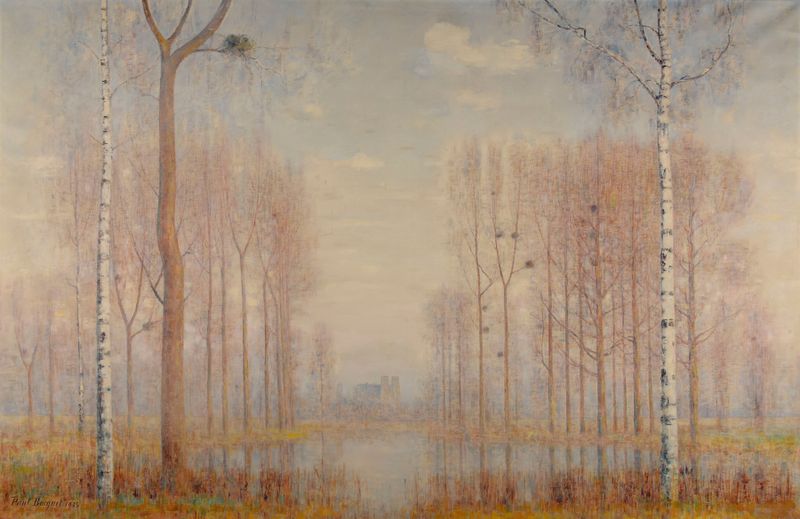
In Paul Bocquet's Les Bouleaux. Hiver, the stillness of winter captures a tension that speaks volumes. The landscape, stripped bare, is both haunting and serene, prompting reflections on violence wrought by nature and time. Look to the foreground, where the white, ghostly trunks of the birch trees rise starkly against the muted backdrop of snow and somber sky.
Notice how the branches, seemingly delicate, twist and curl, as if caught in a dance with the wind. The artist's palette—a blend of cool blues, soft grays, and the stark, piercing white of the snow—creates a chilling atmosphere that enhances the feeling of isolation. The composition is meticulously balanced, drawing the viewer’s eye up the trunks to where they converge, suggesting a symbiotic relationship between strength and fragility. There is an underlying contrast present in this serene winter scene; the tranquility of the snowy landscape belies the violent forces that shape it—both natural and existential.
The shadows play across the snow, introducing a quiet drama that evokes thoughts of life’s relentless struggle, the fight for survival in harsh conditions. Each tree, while seemingly identical, tells a story of resilience, endurance, and the scars left by past winters. Bocquet painted Les Bouleaux. Hiver in 1905, during a time when French landscape art was evolving, embracing Impressionism while hinting at modernity.
He was inspired by the natural world, but also influenced by the broader societal shifts that characterized the early 20th century. This period was marked by a growing tension between tradition and innovation, as artists sought to convey the complexity of human experience through nature's quiet yet fierce narratives.