Paysage champenois — History & Facts
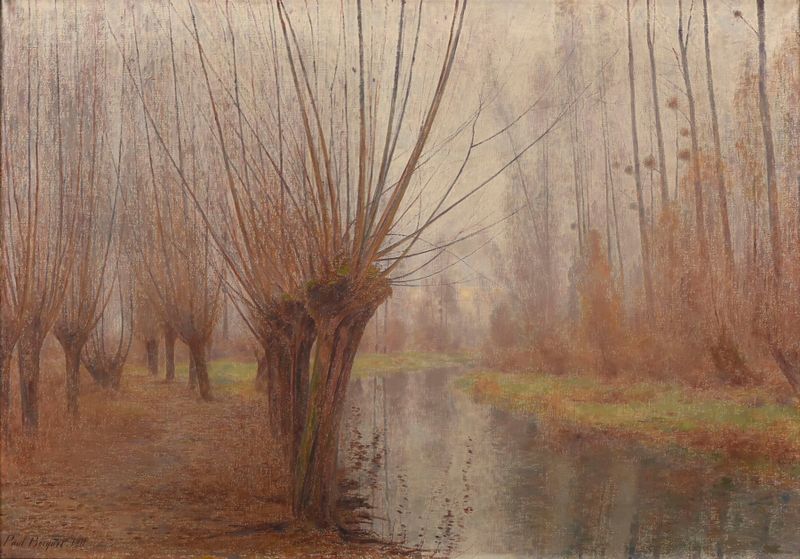
Could a single brushstroke hold eternity? In Paysage champenois, the artist encapsulates not just a moment in nature, but the very essence of time itself. Each hue and texture whispers stories of seasons passed, inviting viewers to ponder the fleeting yet constant march of life and landscape. Focus on the verdant fields that stretch across the canvas, where a soft interplay of greens and yellows draws the eye. Notice how the sunlight bathes the scene, creating a delicate balance between shadow and luminosity.
The gentle brushstrokes in the sky echo the motion of passing clouds, while the earthy tones beneath ground the piece in a tangible reality. The composition leads you into the depths of the landscape, where the horizon tantalizingly beckons, urging you to explore further. Hidden within this tranquil scene are contrasts of permanence and transience. The vibrant colors evoke the vibrancy of life, yet the subtle fading of hues at the edges suggests the inevitability of change.
Look closely at the swathes of golden light — they embody moments that flicker like memories, powerful yet ephemeral. This duality invites contemplation of how beauty exists both in its flourishing and its eventual decline. In 1935, Paul Bocquet painted Paysage champenois during a time when Europe was grappling with the shadows of economic upheaval and shifting cultural landscapes. Working in France, Bocquet was engaged in a broader movement that sought to capture the beauty of everyday life amidst chaos, reflecting a desire to find solace in nature.
This piece emerges as a gentle reminder of the enduring power of the landscapes around us, even as time relentlessly moves forward.