Les Labours — History & Facts
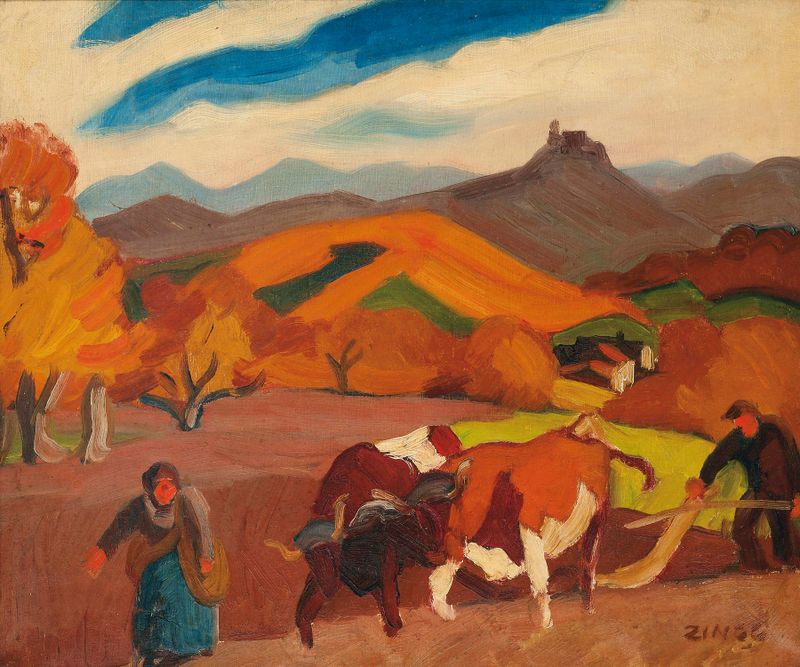
In Les Labours, the vibrant hues sing a quiet song, inviting viewers to pause and reflect on the world captured within the frame. Color becomes a language of its own, speaking truths that words often fail to convey. Look to the left where rich greens envelop the landscape, guiding the eye toward the luminous golds of ripe fields. Notice how the light dances across the surface, illuminating the texture of the soil and the weary figures working diligently against a backdrop of deep, cerulean sky.
Each stroke of the brush serves to highlight not just the labor but the relationship between the workers and the land, blending their efforts into the very fabric of nature itself. Amidst the labor, a tension emerges between the earth’s bountiful colors and the muted tones of human struggle. The juxtaposition of the vibrant landscape against the toil of the individuals captures a paradox — beauty coexists with hardship. The figures, though small within the grand expanse, embody resilience, drawing us into a narrative that speaks of both the weight and the reward of labor. Zingg created Les Labours during a time when he was establishing his reputation in the early 20th century, likely influenced by the rising interest in rural themes and the Impressionist movement's focus on natural light and color.
Working in France, he was part of a wave of artists seeking to express the profound connection between humanity and the earth, capturing not just scenes but the essence of existence itself.