Scène de labour — History & Facts
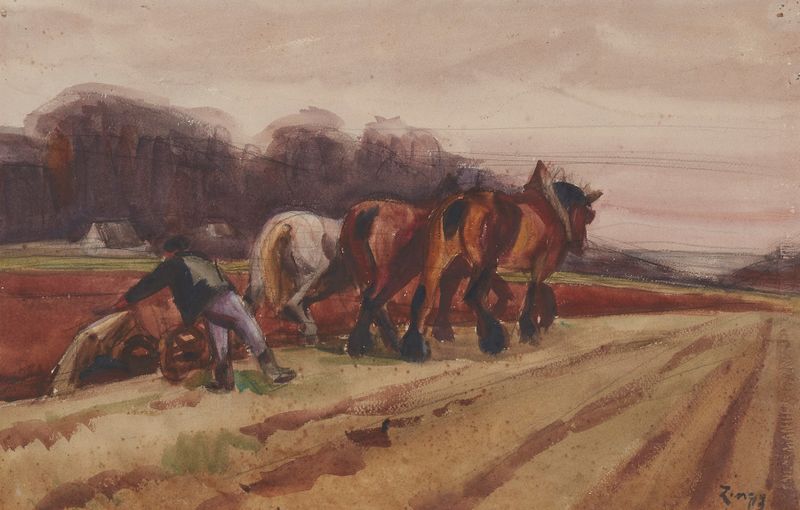
Where does light end, and longing begin? In the delicate brushstrokes of Scène de labour, one can almost feel the weight of the day’s labor and the promise of dusk hovering in the air. Focus your gaze on the luminous golden fields that stretch beneath a vast expanse of sky. The sun, a radiant orb, casts long shadows, illuminating the figures working diligently in the foreground. Notice how the light captures every detail, from the dusty brown of the earth to the rich hues of green in the distant trees.
This masterful play of light not only highlights the toil of the laborers but envelops them in a warm embrace, blurring the lines between effort and serenity. As you explore the scene further, reflect on the juxtaposition of labor and leisure. The workers, bent over their tasks, depict a deep connection to the land, yet the gentle fading light hints at a day approaching its end—a metaphor for the transient nature of life. The distant hills, bathed in a softer light, suggest hope beyond the immediate struggle, encouraging contemplation of the rhythm between toil and tranquility. Created during an era of burgeoning Impressionism, the artist captured this piece in a period marked by social change and a growing appreciation for rural life.
Working primarily in France, Zingg sought to depict the honest beauty of labor, reflecting both the hardships and the rewards that came with it. This artwork stands as a poignant testament to the relationship between humanity and the natural world in a time when such connections were becoming increasingly precious.