
Les laveuses — History & Facts
What if beauty was never meant to be finished? In Les laveuses, Henry Moret captures a fleeting moment of grace amidst the toil of daily life, where the vibrancy of color collides with the rawness of labor. The women, engaged in their task, embody both strength and fragility, hinting at the deeper violence of their unyielding struggle against nature and circumstance. Look to the left at the vibrant strokes of blue and green that form the serene backdrop of water and vegetation. Notice how the light dances across the women’s flowing garments, drawing your gaze to their determined expressions as they bend over their work.
The contrasting textures—a soft, flowing fabric against the rugged, unforgiving rocks—showcase Moret's mastery of light and shadow, creating a dialogue between the serenity of the landscape and the laborious task at hand. Each brushstroke bears witness to the scenes of life lived on the edges of beauty. Delving deeper, the juxtaposition of joy and suffering emerges in the women's gestures; their hands, though immersed in the mundane act of washing, reveal a deeper fight against the elements. The vibrant colors serve as both an escape and a reminder of the violence inherent in their struggle, where nature's beauty coexists with the harsh realities of existence.
The painting invites contemplation on the dualities of life—the delicate harmony and the underlying turmoil that often goes unnoticed. In 1907, Moret was steeped in the ambiance of post-impressionism, painting in Brittany, where local scenes of everyday life flourished. His works from this period reflect a profound engagement with the interplay of color and form, as well as a keen awareness of the socio-economic challenges faced by the rural populace. This painting, much like his others, sought to celebrate the ordinary while wrestling with the complexities of representation in an evolving artistic landscape.
More Artworks by Henry Moret
Browse all →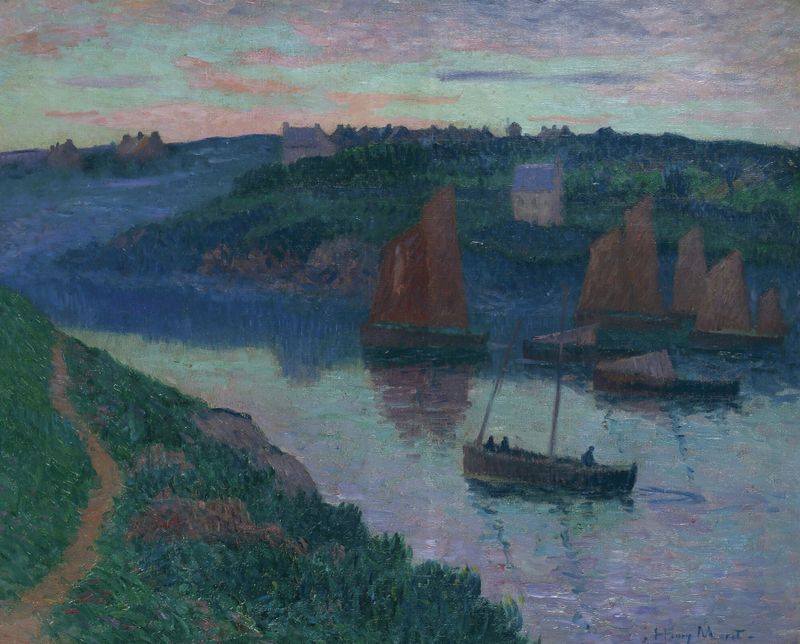
Bateaux De Pêche En Bretagne
Henry Moret
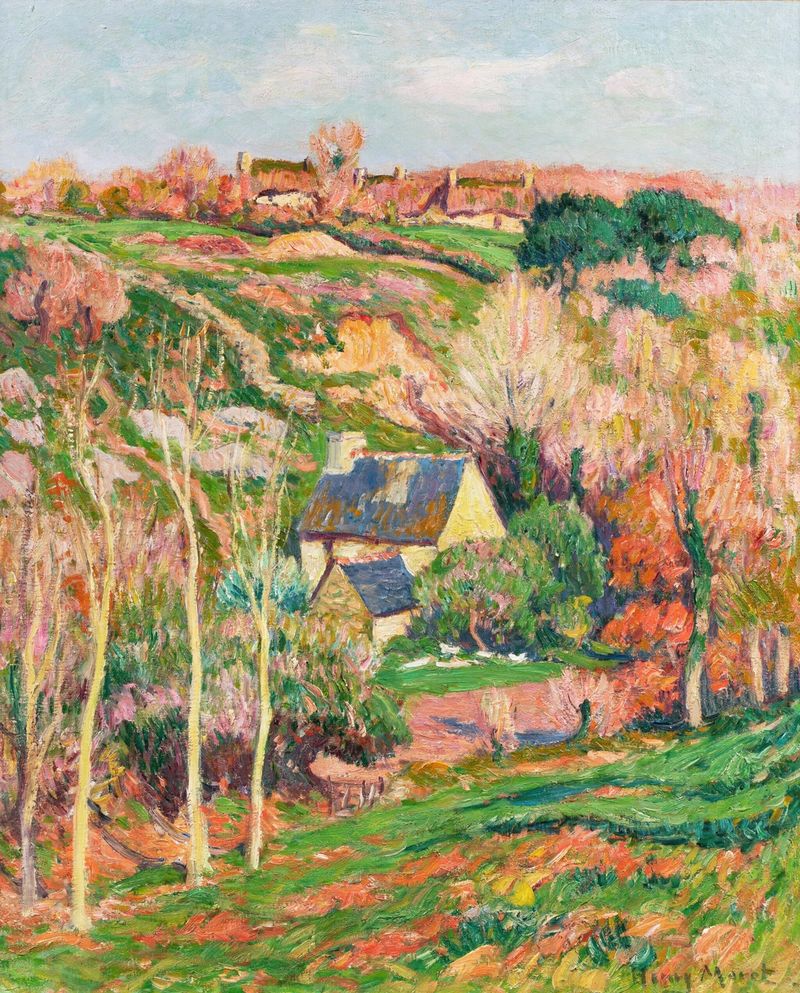
Fermes en Bretagne
Henry Moret
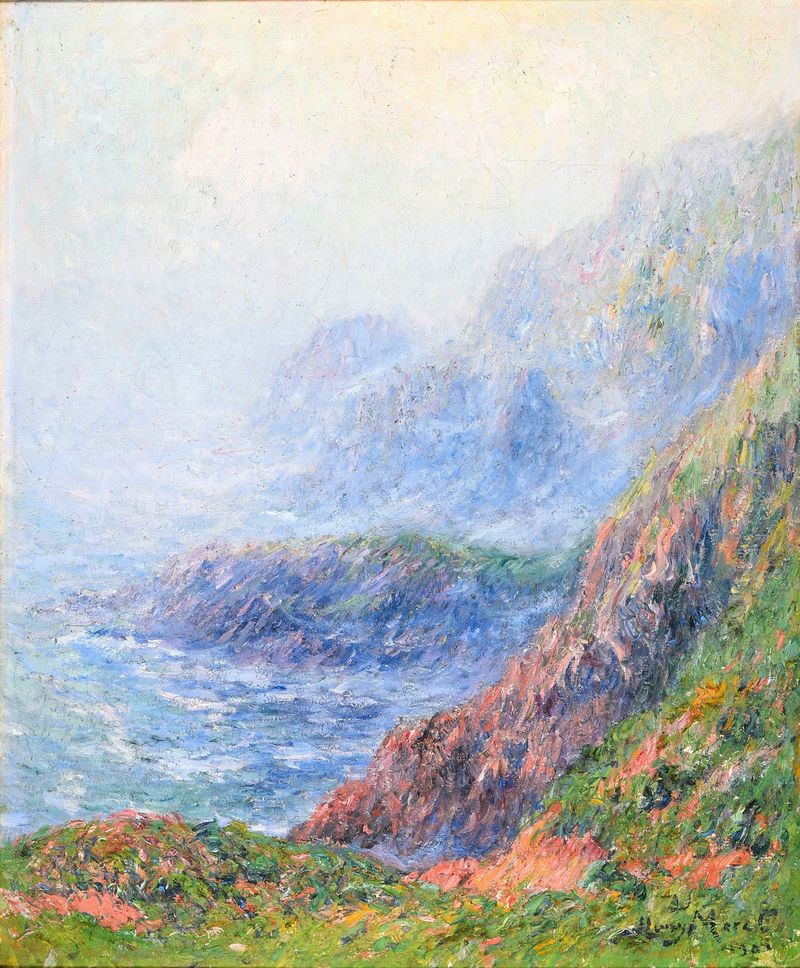
Matinée brumeuse à Ouessant
Henry Moret
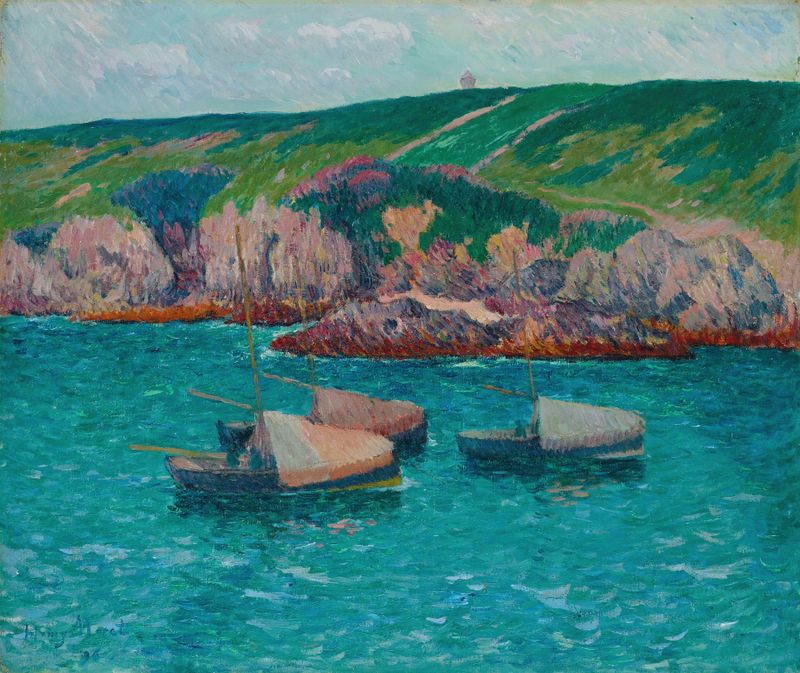
Les Barques à Doëlan
Henry Moret
Pêcheurs au large
Henry Moret
Ile de Groix, Pointe de l’Enfer
Henry Moret
L’Ile de Kerellec (Ouessant)
Henry Moret
Le soir à Douëlan
Henry Moret
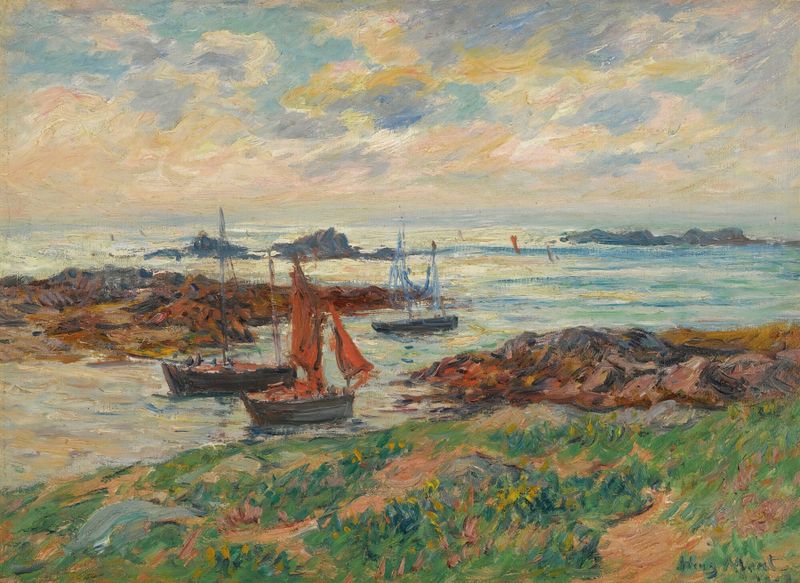
Les Glénans, Finistère
Henry Moret
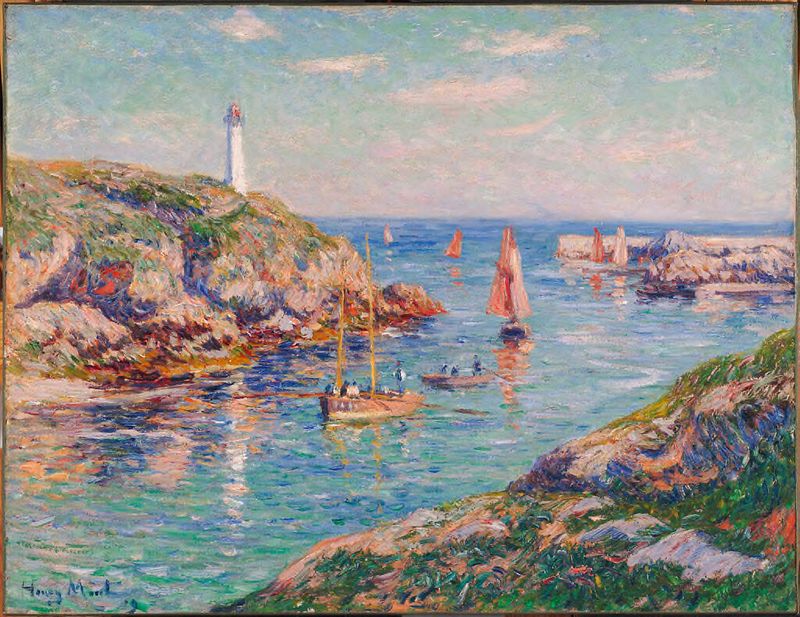
The Port of Douvelan
Henry Moret





