
Les oies à Saint-Mammès — History & Facts
Can beauty exist without sorrow? In Les oies à Saint-Mammès, a scene unfolds that contemplates the weight of fate intertwined with grace. To appreciate this landscape, look first to the tranquil river, where soft hues of blue and green dance together under a gentle sky. Notice how Sisley captures the play of light on water, each stroke reflecting an almost ethereal glow. The white geese, poised near the riverbank, draw the eye, creating a focal point that contrasts vibrantly against the muted tones surrounding them.
The composition is masterful; Sisley uses delicate brushwork to evoke a sense of calm, inviting viewers to linger in this serene moment. Yet, hidden tensions breathe life into the stillness. The geese, symbols of simplicity, seem oblivious to the world beyond their immediate environment, while the softly brooding clouds overhead suggest the inevitable passage of time and fate. This juxtaposition creates an emotional undertone — the beauty of the pastoral scene juxtaposed with the underlying weight of existence.
Each detail, from the rippling reflections to the distant horizon, speaks of transience, hinting that even within idyllic settings, the inexorable march of destiny looms. Alfred Sisley painted this work between 1886 and 1890 while living in the picturesque village of Saint-Mammès, near Paris. During this period, he was immersed in the Impressionist movement, striving for a connection between nature and emotion. His focus on light and atmosphere was both a response to personal struggles and a reflection of the broader artistic exploration of capturing fleeting moments in a rapidly changing world.
More Artworks by Alfred Sisley
Browse all →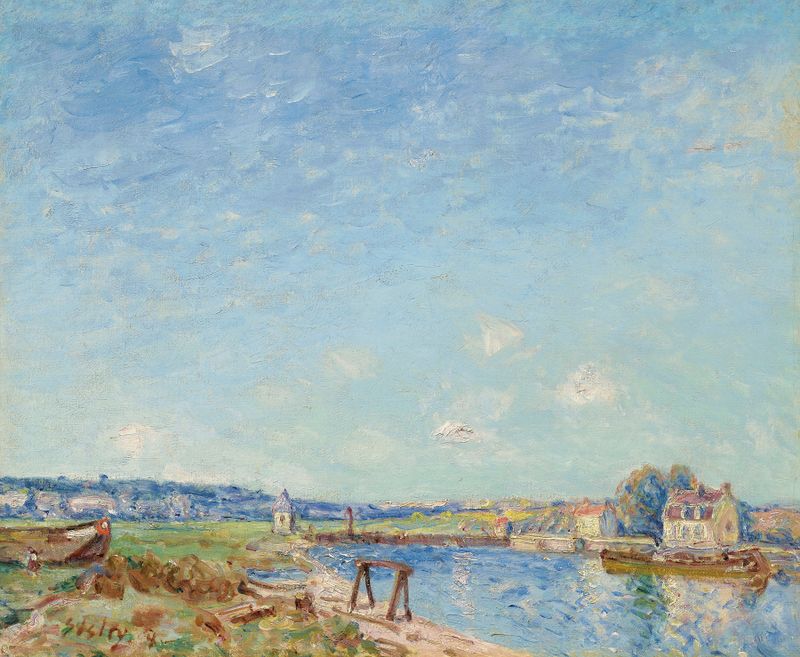
Le Loing à Saint-Mammès
Alfred Sisley
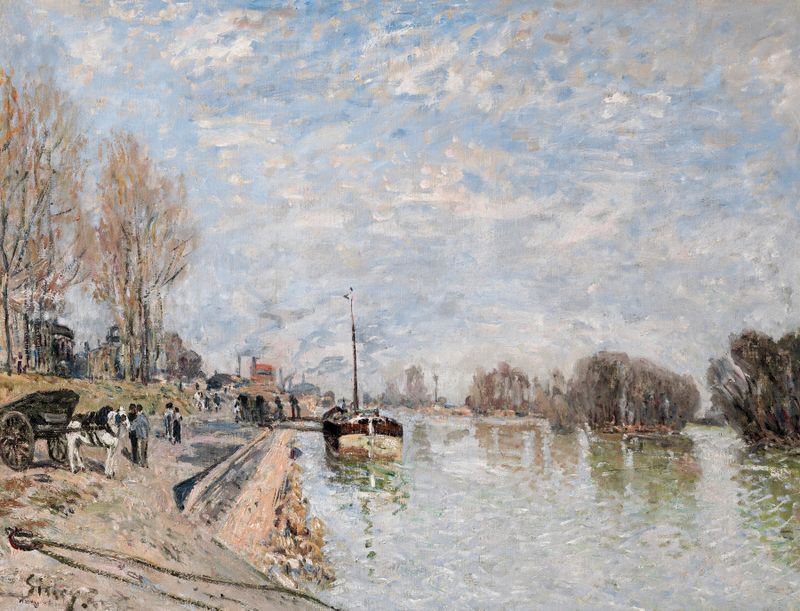
La Seine à Suresnes
Alfred Sisley
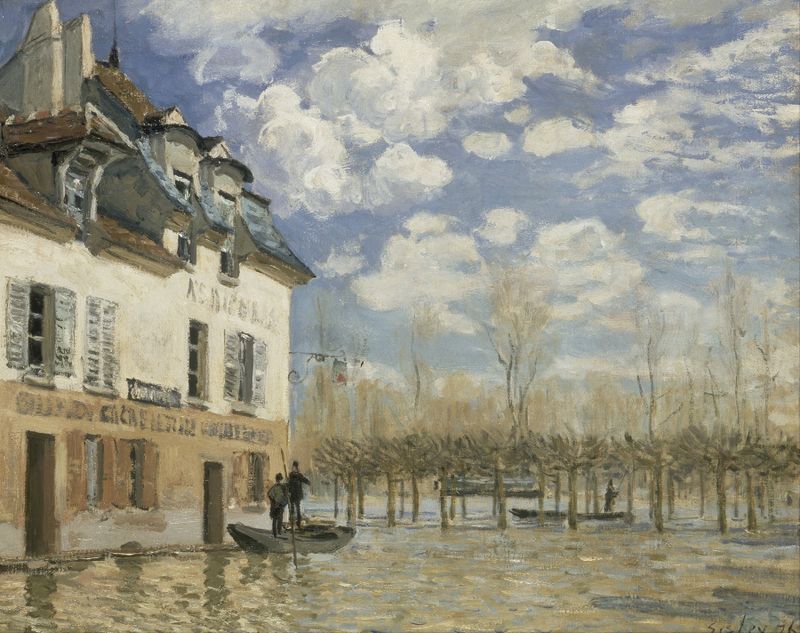
Boat in the Flood at Port Marly
Alfred Sisley
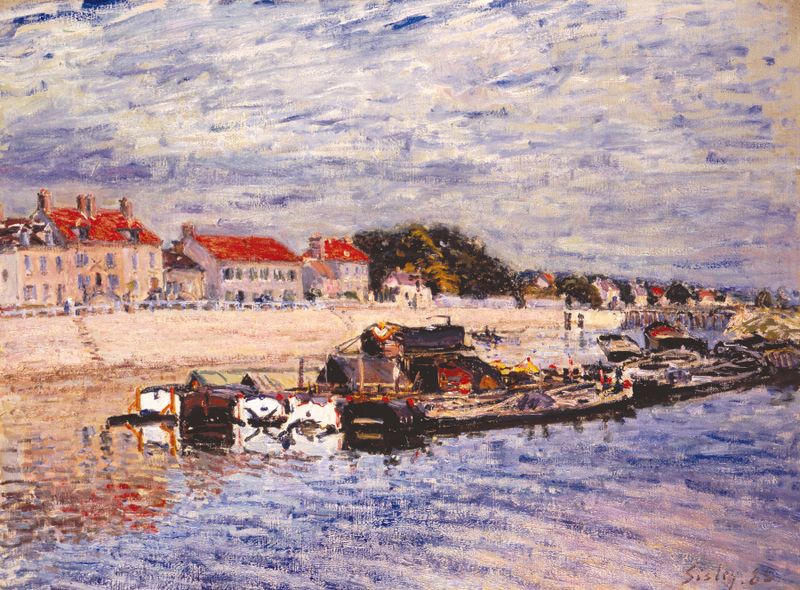
Barges on the Loing at Saint-Mammès
Alfred Sisley

L’allée des peupliers au bord du Loing
Alfred Sisley

Molesey Weir, Hampton Court
Alfred Sisley
Effet De Neige À Louveciennes
Alfred Sisley
Printemps au bord du Loing
Alfred Sisley
Le Loing À Moret, En Été
Alfred Sisley
Les bords du Loing près de Moret
Alfred Sisley





