
Lille PdBA van der meulen prise dole — History & Facts
What first seizes the viewer in this painting is the quiet tension of a meeting at the edge of a captured city, where the landscape and the figures seem to hold their breath together. The eye is drawn to the richly dressed horsemen at the center, their calm authority set against the nervous energy of the foot soldiers and the bare, twisting trees. The city of Dôle stretches across the background, its walls and church tower rendered with the clarity of a distant prize, while the river acts as a natural divide between the conquered and the conquerors.
The painter uses the pale, wintry light to heighten the sense of anticipation, casting long shadows and picking out the gold embroidery on the lead horse’s harness—a signal of rank and triumph. Every gesture and glance is loaded with meaning: the officer on foot gestures upward, perhaps reporting, while the mounted men listen, their posture both relaxed and commanding. Works like this, painted around 1668 by Adam Frans van der Meulen, belong to a world where the fate of cities was decided by siege and negotiation, and where artists were summoned to immortalize such moments for the glory of their patrons. Van der Meulen was renowned for his ability to capture the drama of military campaigns, often accompanying royal armies to record their victories.
This painting, La Prise de Dôle en 1668, is part of that tradition, where the painter’s eye serves as both witness and storyteller, blending documentary detail with the theatricality of the Baroque court. Commissioned scenes of conquest like this were not just records—they were instruments of propaganda, celebrating the might and order of their rulers for posterity. As you look again, notice how the composition balances the chaos of war with the poise of command, inviting you to read the landscape as a stage for power and ambition.
More Artworks by Adam Frans van der Meulen
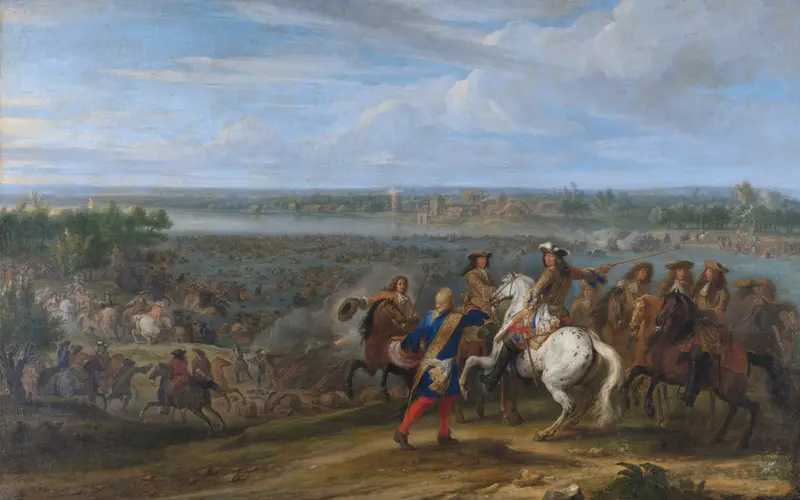
Louis XIV Crossing into the Netherlands at Lobith
Adam Frans van der Meulen
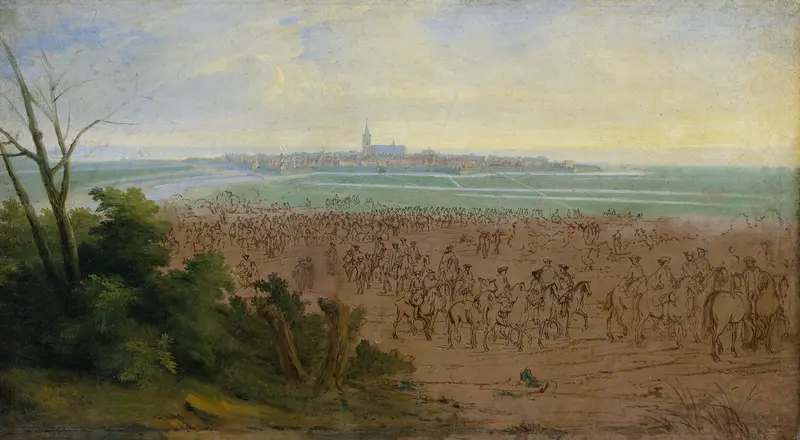
The Troops of Louis XIV before Naarden, 20 July 1672
Adam Frans van der Meulen
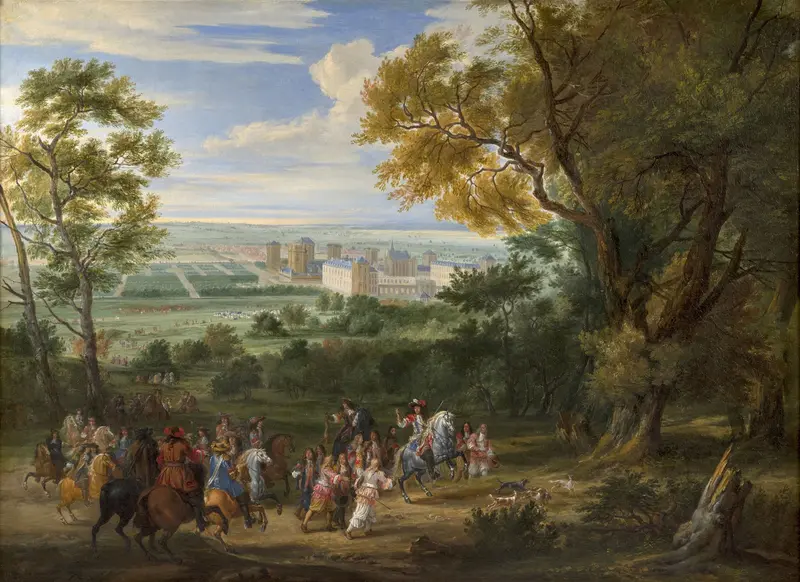
View of the château de Vincennes or The Departure of Louis XIV for the hunt
Adam Frans van der Meulen

A battle scene
Adam Frans van der Meulen
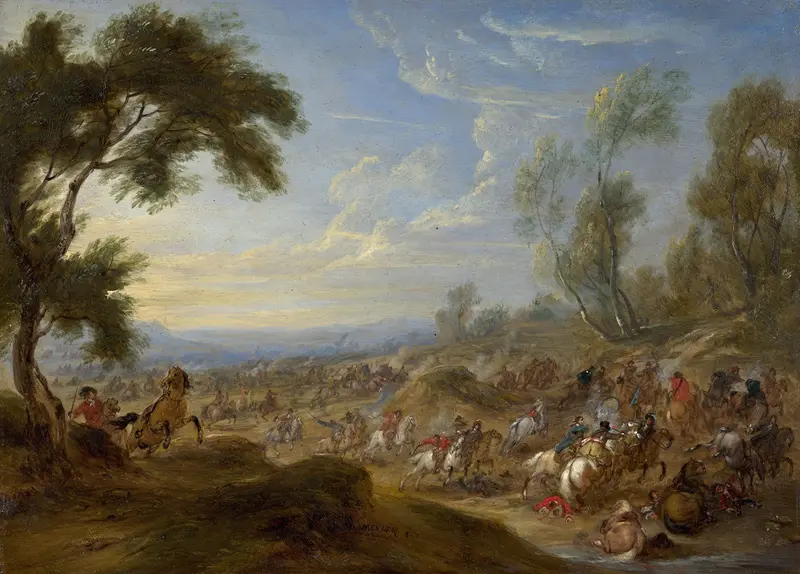
A cavalry charge
Adam Frans van der Meulen
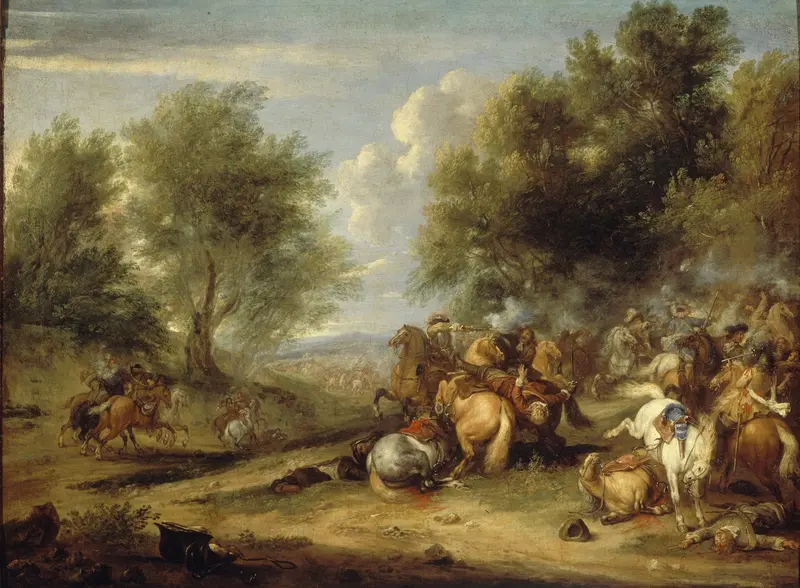
Choc de cavalerie ou Combat de cavalerie
Adam Frans van der Meulen
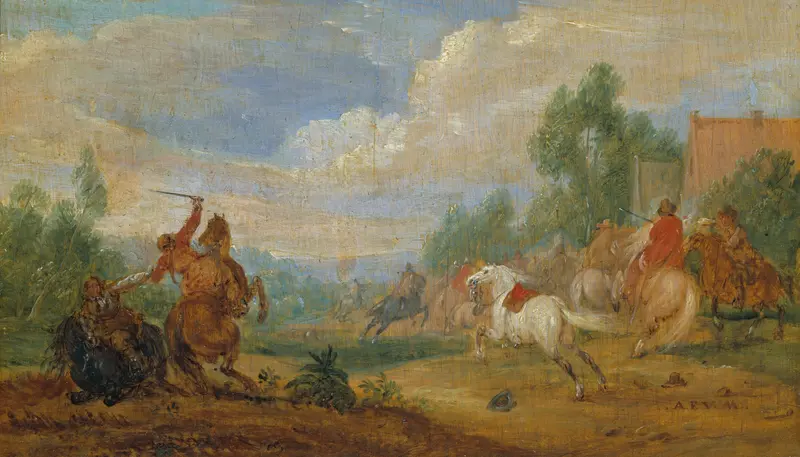
Cavalry Skirmish
Adam Frans van der Meulen
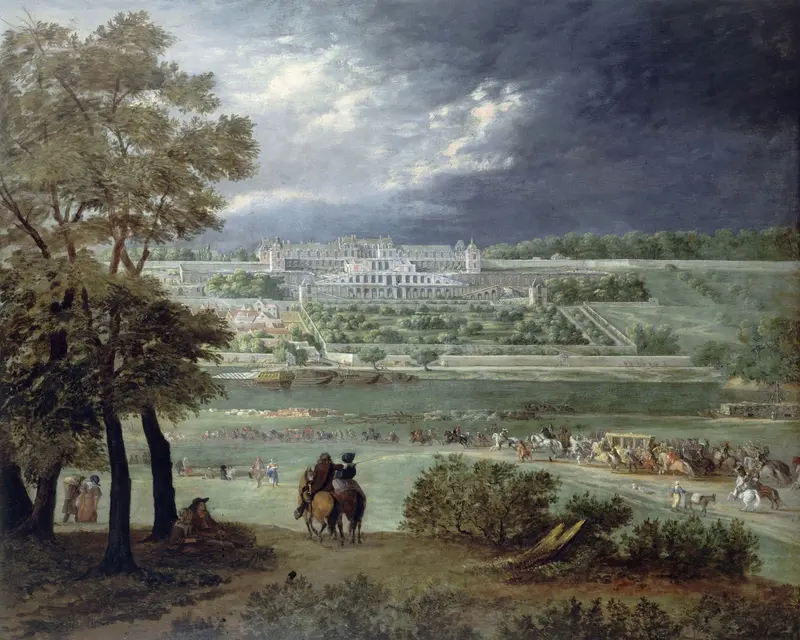
Le Château Neuf de Saint-Germain-en-Laye et les jardins, vus de la rive droite de la Seine
Adam Frans van der Meulen
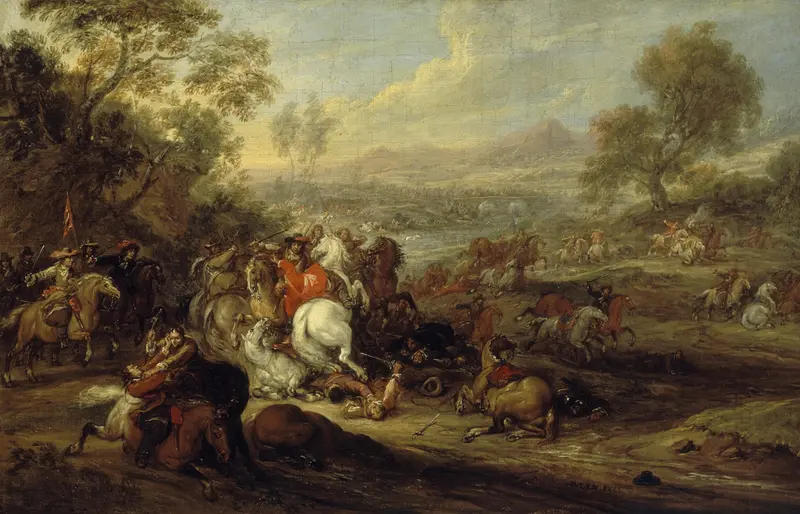
Choc de cavalerie ou Combat de cavalerie
Adam Frans van der Meulen
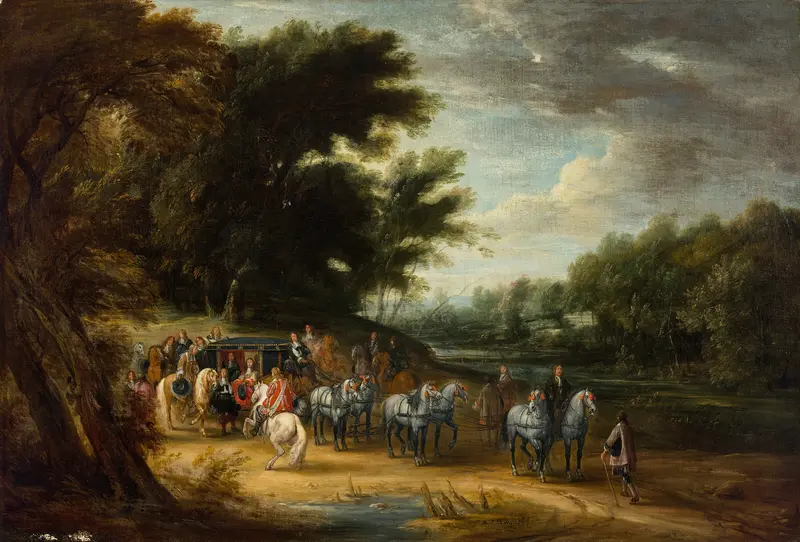
A nobleman in a state coach at rest escorted by his men and horses, with a gentleman on a white horse approaching and landscape beyond
Adam Frans van der Meulen





