
L’Incendie de la Comédie-Française, le 8 mars 1900. — History & Facts
Is this a mirror — or a memory? The haunting scars of time weave through the remnants of a once-illustrious theater, where whispers of past performances mingle with the smell of charred wood and lost hopes. Focus on the foreboding shadows that creep across the canvas, curling around the charred remains of the Comédie-Française. The stark contrast between the ashen gray of the ruins and the vivid bursts of orange and red flickering in the background draws the eye. Notice how light dances on the edges of the destruction, highlighting the skeletal architecture that once echoed with laughter and applause, now a silent witness to its own demise. The decay depicted here speaks not only of physical ruin but of cultural loss — the erasure of artistic legacy.
The chaotic lines of smoke suggest turmoil and the fragility of existence, while the remnants of an audience, imagined or otherwise, linger in a state of lament. This juxtaposition of vibrancy and desolation embodies the tension between creation and destruction, making the viewer ponder what art truly signifies in the face of inevitable decay. In 1900, the artist stood amidst a world transforming rapidly, with contemporary society grappling with modernity’s relentless march. The fire that ravaged the theater on March 8 was not only a tragedy for the arts but also a reflection of a tumultuous era.
Allouard, working in Paris, captured this moment when the fragility of culture was laid bare, and the remnants of beauty were threatened by the ravages of time.
More Artworks by Jean Baptiste Edmond Allouard
Browse all →
Ruines du château de Saint-Cloud; le vestibule.
Jean Baptiste Edmond Allouard
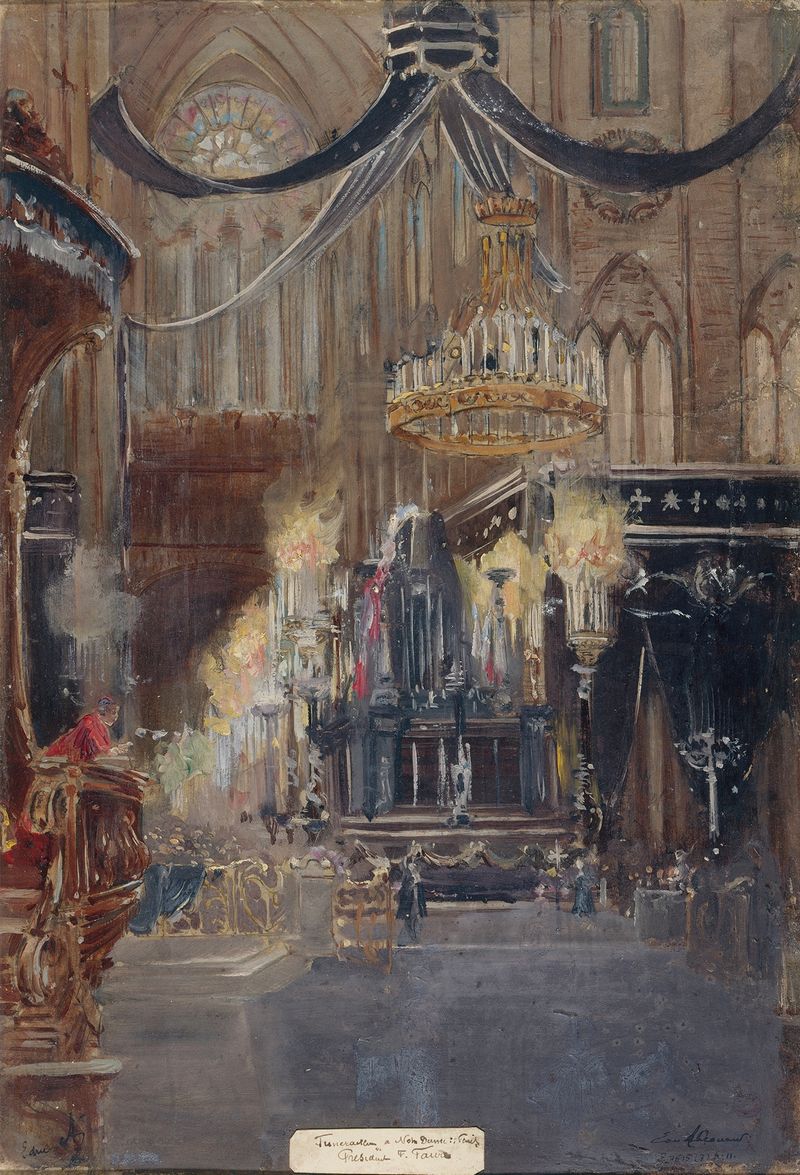
Funérailles du président Félix Faure, à Notre-Dame, le 23 février 1899.
Jean Baptiste Edmond Allouard
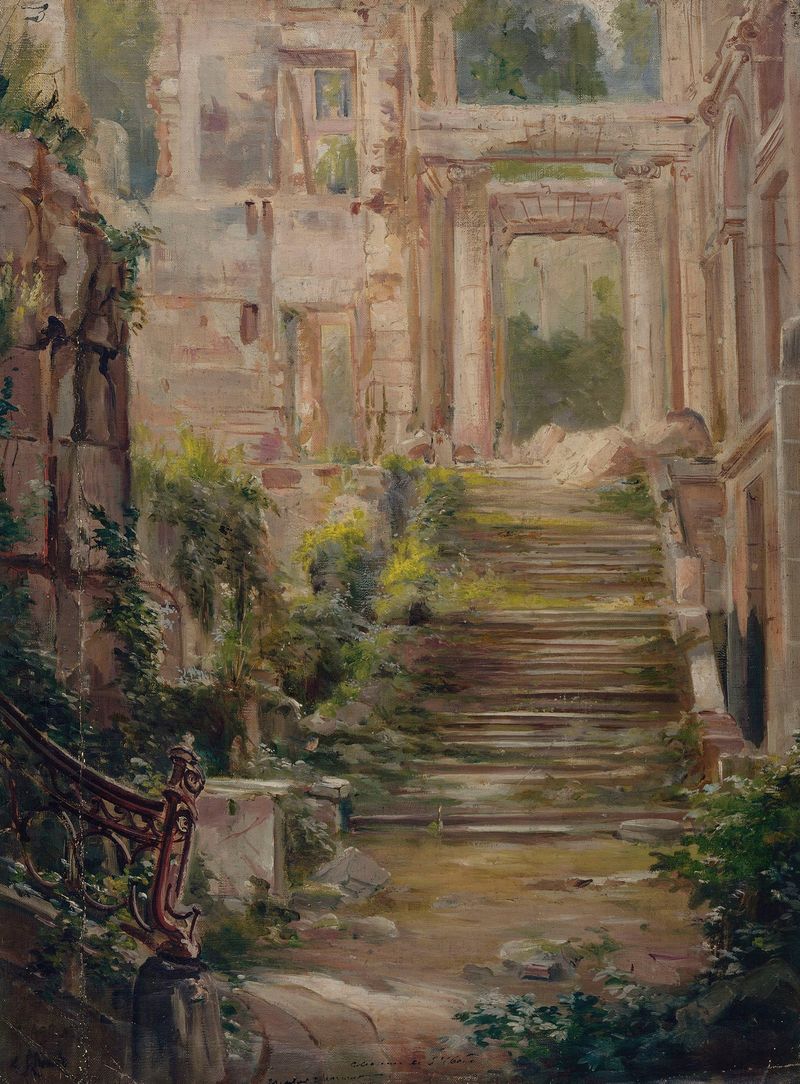
Ruines du château de Saint-Cloud; l’escalier d’honneur.
Jean Baptiste Edmond Allouard

Le château de Saint-Cloud en ruines ; la salle des gardes
Jean Baptiste Edmond Allouard
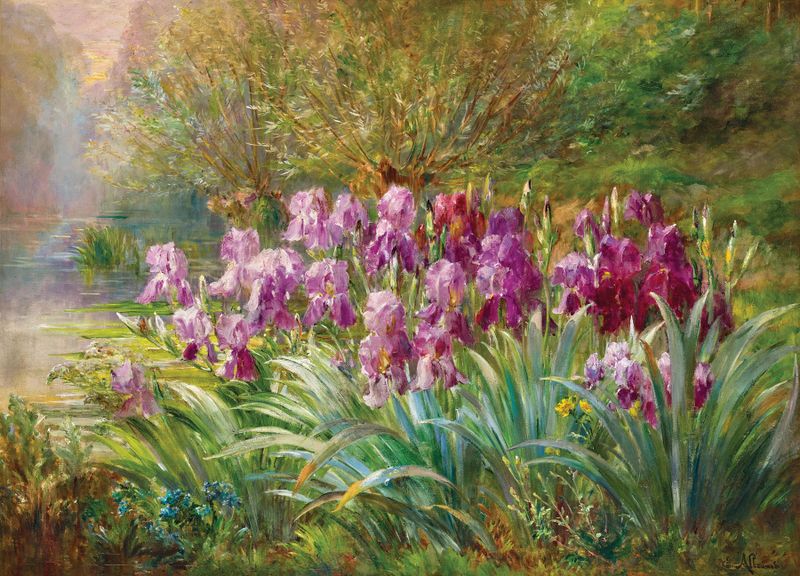
Willows and Irises by a Creek
Jean Baptiste Edmond Allouard
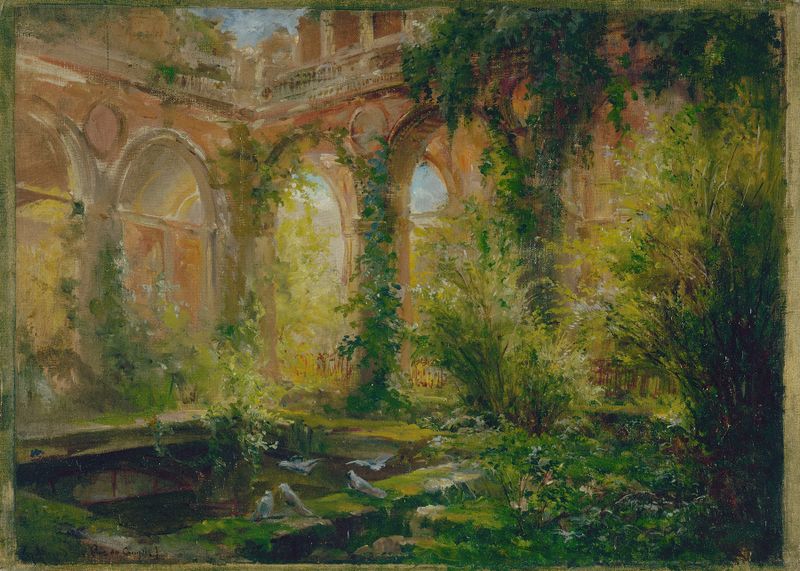
Ruines de la Cour des comptes; la salle des fêtes.
Jean Baptiste Edmond Allouard
More Historical Art
Browse all →
The Night Watch Militia Company of District II under the Command of Captain Frans Banninck Cocq
Rembrandt van Rijn

Lincoln Memorial
Henry Bacon

The Third of May 1808
Francisco de Goya

Isaac and Rebecca, Known as ‘The Jewish Bride’
Rembrandt van Rijn

The Charge of the Mamelukes (1814)
Francisco de Goya

De vier ruiters van de apocalyps
Albrecht Dürer