Lofoten — History & Facts
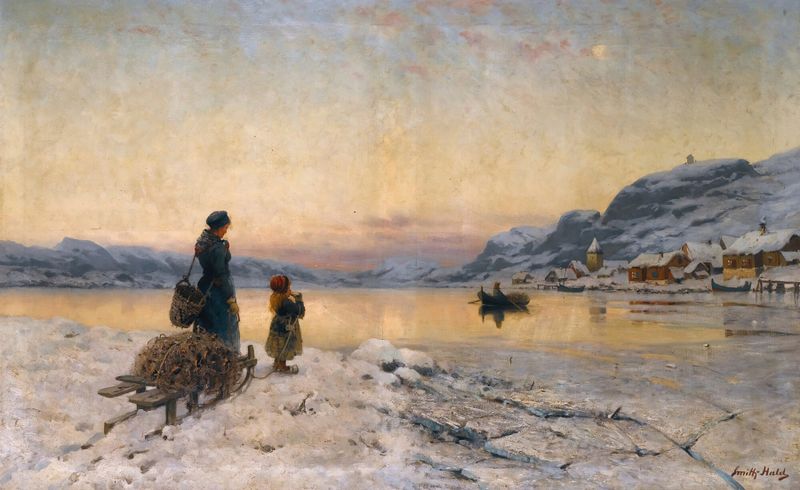
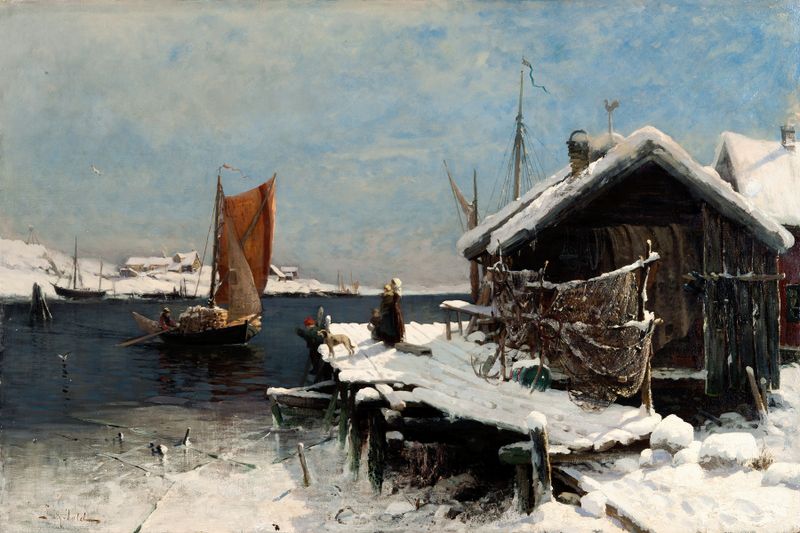
Did the painter know this moment would outlive them? The yearning captured in Lofoten resonates with a desire that transcends time and space, inviting us to ponder our own longing for connection with nature. Look to the vibrant foreground where the jagged peaks of the Lofoten Islands rise majestically against the sky. The artist employs a rich palette of blues and greens, blending them delicately to mimic the dance of water beneath the sun's embrace. Notice how the brushstrokes convey both the solidity of the mountains and the fluidity of the sea, creating a balance that feels both dynamic and serene.
The sharp contrasts between light and shadow draw the eye upward, inviting contemplation of the heights above and the depths below. Amidst the breathtaking natural beauty, the interplay of solitude and aspiration emerges as a profound tension. The islands, though magnificent, stand isolated—a reminder of the distance between humankind and the wildness that envelopes them. The expansive sky, painted with soft wisps of cloud, evokes a sense of freedom yet underscores the vulnerability of the landscape.
This duality of desire and solitude stirs a deep emotional response, connecting the viewer to the experience of yearning for both place and belonging. Created during an era when the artist was evolving his style, Lofoten reflects Smith-Hald’s focus on the interplay between nature’s grandeur and human emotion. He painted this work amid the late 19th century, a time when European artists were increasingly drawn to the raw beauty of the Northern landscapes. The burgeoning Impressionist movement, with its emphasis on capturing fleeting moments, had begun to influence many, including Smith-Hald, as he sought to convey a sense of immediacy and emotional richness in his portrayal of the natural world.