Winter Landscape — History & Facts
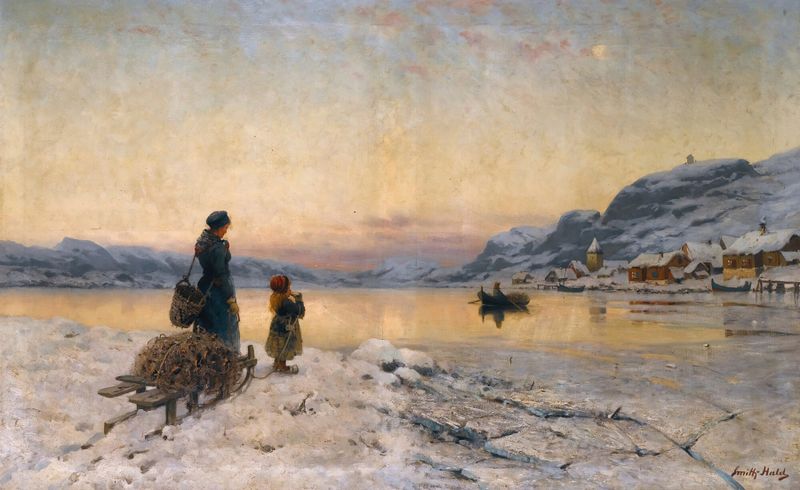
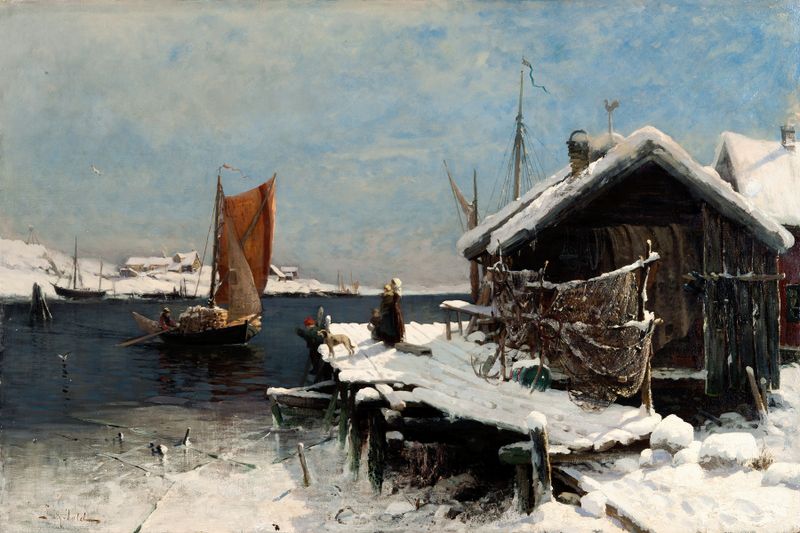
What if beauty was never meant to be finished? In Winter Landscape, a moment suspended in time speaks to the infinite interplay of light and shadow, beckoning us to linger at its edges. Look to the left at the delicate frost-laden branches, their intricate designs captured with an almost reverent detail. Notice how the sun breaks through the heavy clouds, casting a soft glow that dances across the untouched snow. The cool palette—blues and whites—contrasts sharply with the warm hints of amber peeking from the horizon, creating a visual tension that captures both serenity and an impending thaw. Beneath the surface of this tranquil scene lies a narrative of change and impermanence.
The stark white expanses reflect not only the chill of winter but also the fragility of beauty that is destined to melt away. The distant mountains, shrouded in mist, evoke a sense of longing, suggesting that beauty can often be elusive and transitory. Every brushstroke serves as a reminder that even in coldness, warmth exists, and in stillness, there lies potential for movement. Created in 1878, Winter Landscape emerged during a time of transition for the artist, who was establishing his voice in the burgeoning realm of Scandinavian landscape painting.
Smith-Hald was exploring the nuances of nature, in a world that was increasingly being defined by rapid industrialization. This piece encapsulates a moment of reflection amidst these changes, showcasing his keen observation skills and a profound connection to the natural world.