Winter Scene — History & Facts
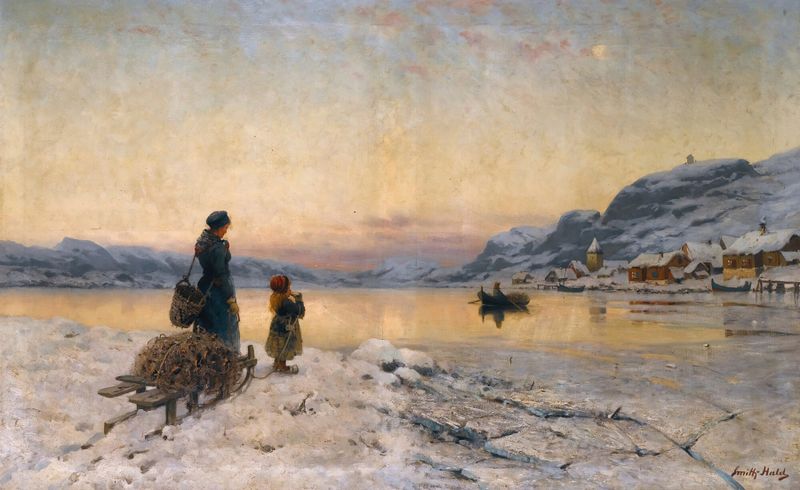
In the heart of winter, a hidden world unfolds, revealing the delicate interplay between nature and the human spirit. Each brushstroke whispers secrets of resilience, beckoning us to explore the profound beauty within stillness. Look to the left where snow blankets the landscape, an untouched expanse shimmering under a pale sun. The cool blues and whites contrast sharply with warm earthy tones of the distant trees, guiding your gaze deeper into the scene.
Notice how the artist captures the soft shadows cast by frosted branches, creating a gentle rhythm that draws your eye across the tranquil expanse. The meticulous details of a solitary figure trudging through the snow evoke a sense of quiet determination, embodying the struggle and grace inherent in winter. At a glance, this artwork represents nature's stark beauty, but delve deeper and discover a narrative of isolation and introspection. The figure, though small against the vastness, carries a heavy cloak—a symbol of both protection and burden.
The stillness of the landscape seems to echo the silence of the heart, inviting contemplation on solitude and human connection. Each element, from the crystalline snowflakes to the distant mountains, reflects the stark contrasts between warmth and cold, presence and absence. Frithjof Smith-Hald painted this scene in 1877, during a time when the art world was embracing realism and the beauty of ordinary life. He worked in Norway, where the harsh yet enchanting winters greatly influenced his artistic vision.
This period in his career marked a critical exploration of landscapes, showcasing his keen observation and emotional engagement with the environment.