
Louis XIV at the Taking of Besancon — History & Facts
The eye is immediately drawn to the poised, almost theatrical figure of a monarch on horseback, his gaze steady and unflinching as he surveys the landscape below. The artist, Adam Frans van der Meulen, has orchestrated the scene so that the king’s richly embroidered coat and the dappled haunches of his horse gleam against the muted greens and blues of the distant hills. The horse, caught in a moment of controlled energy, signals both mastery and readiness, while the king’s calm face and upright bearing declare authority.
In the valley below, the winding river and clusters of tents hint at the machinery of war, their smoke rising in silent testimony to the campaign underway. Every detail, from the glint of the king’s baton to the distant city, is calculated to reinforce the sense of command and spectacle. Painted in 1674, this work stands firmly in the tradition of grand equestrian portraits that flourished in seventeenth-century Europe, when rulers sought to immortalize their victories and virtues on canvas. Artists like van der Meulen were in high demand at the courts of France and the Low Countries, where their scenes of battle and triumph served both as propaganda and as personal commemoration.
Such paintings were not mere records; they were crafted narratives, designed to impress visitors and posterity alike with the might and legitimacy of their subjects. Today, this particular painting resides in the Hermitage in St. Petersburg, a reminder of a time when the image of a king on horseback was as potent a symbol as any crown or scepter.
The viewer is left to wonder how much of the story belongs to history, and how much to the painter’s careful staging.
More Artworks by Adam Frans van der Meulen
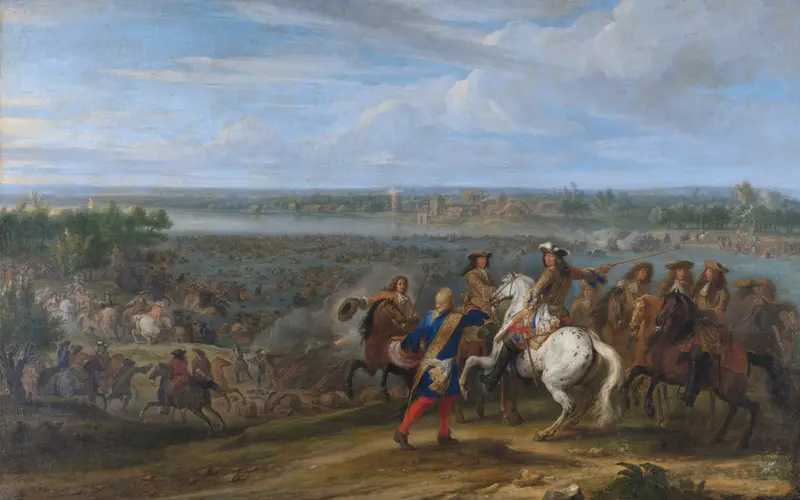
Louis XIV Crossing into the Netherlands at Lobith
Adam Frans van der Meulen
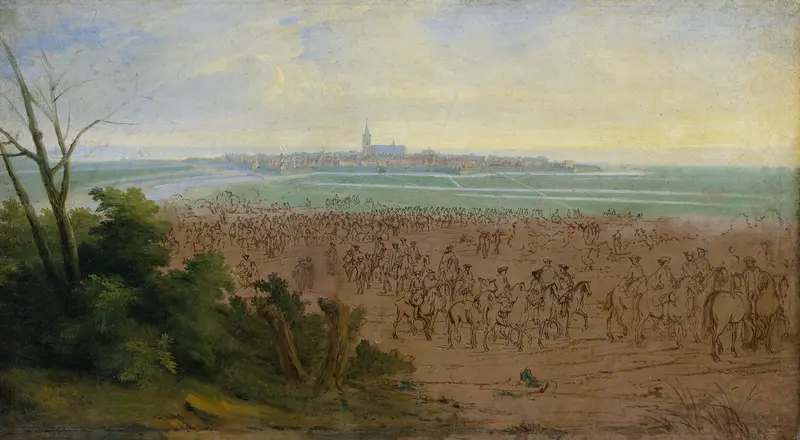
The Troops of Louis XIV before Naarden, 20 July 1672
Adam Frans van der Meulen
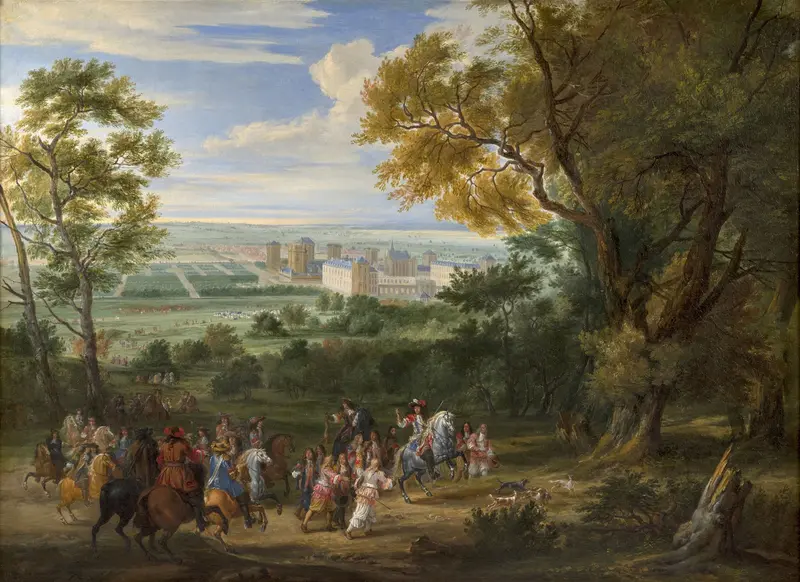
View of the château de Vincennes or The Departure of Louis XIV for the hunt
Adam Frans van der Meulen

A battle scene
Adam Frans van der Meulen
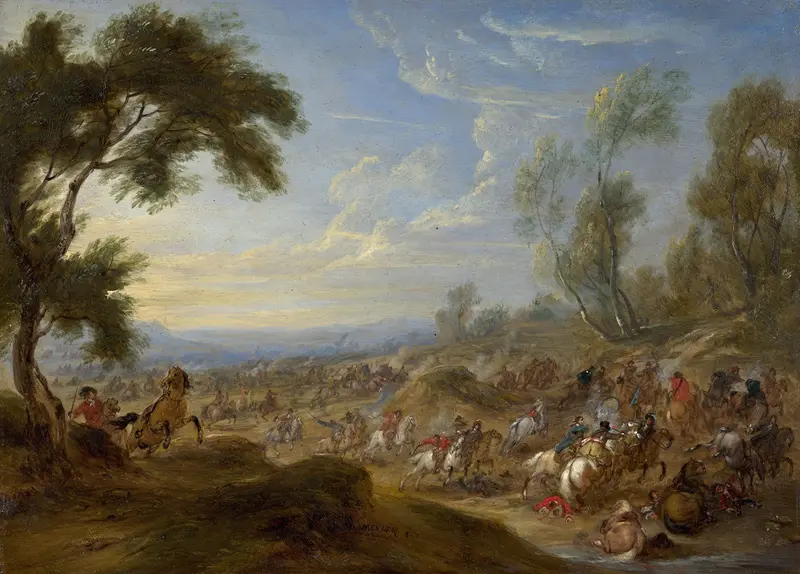
A cavalry charge
Adam Frans van der Meulen
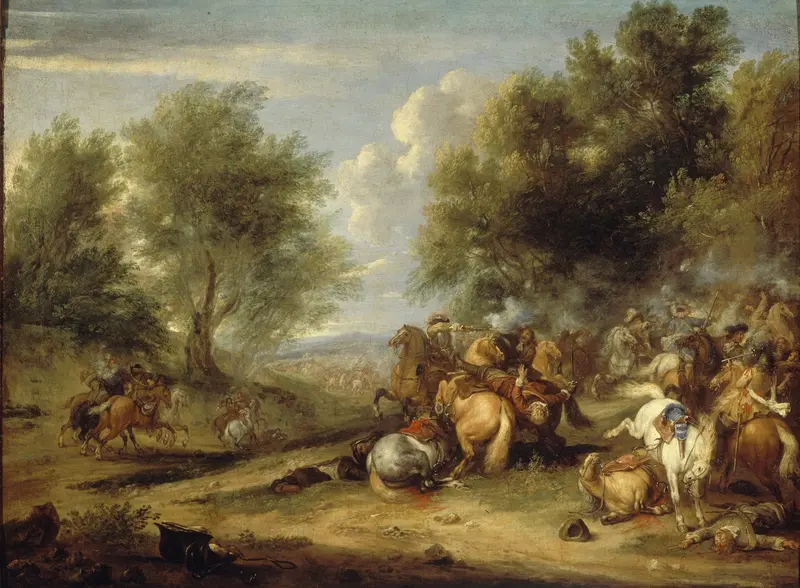
Choc de cavalerie ou Combat de cavalerie
Adam Frans van der Meulen
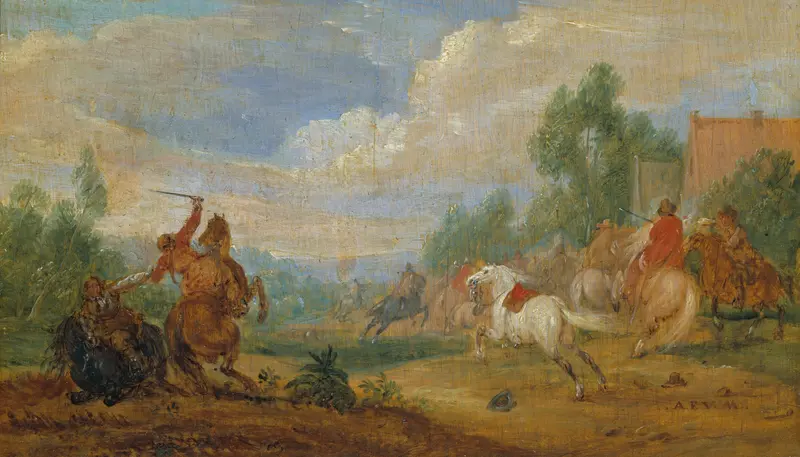
Cavalry Skirmish
Adam Frans van der Meulen
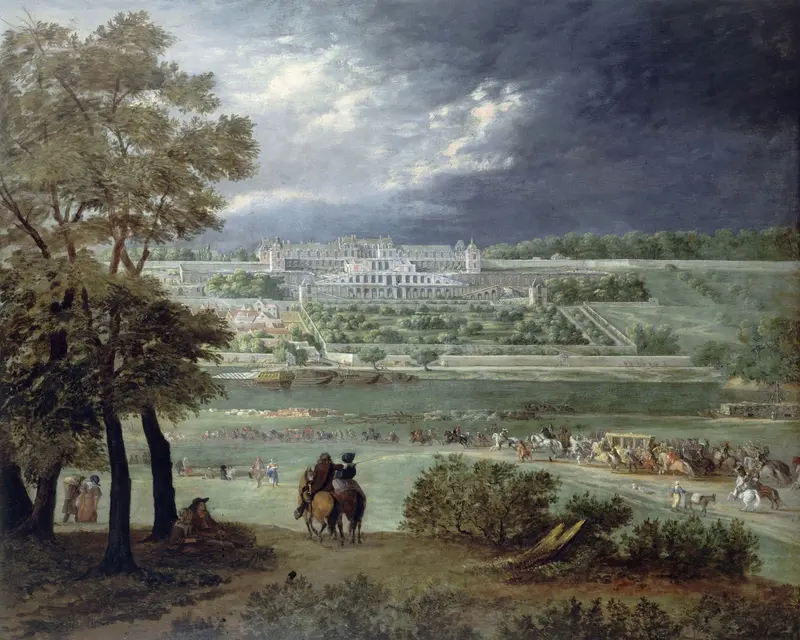
Le Château Neuf de Saint-Germain-en-Laye et les jardins, vus de la rive droite de la Seine
Adam Frans van der Meulen
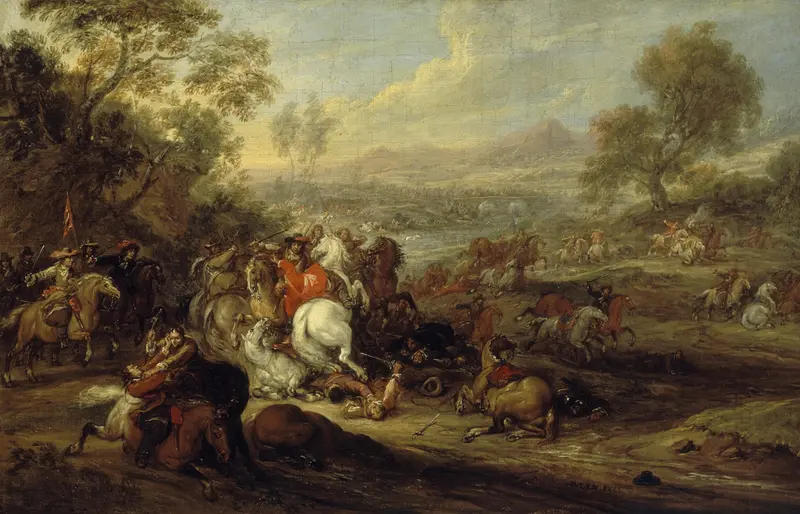
Choc de cavalerie ou Combat de cavalerie
Adam Frans van der Meulen
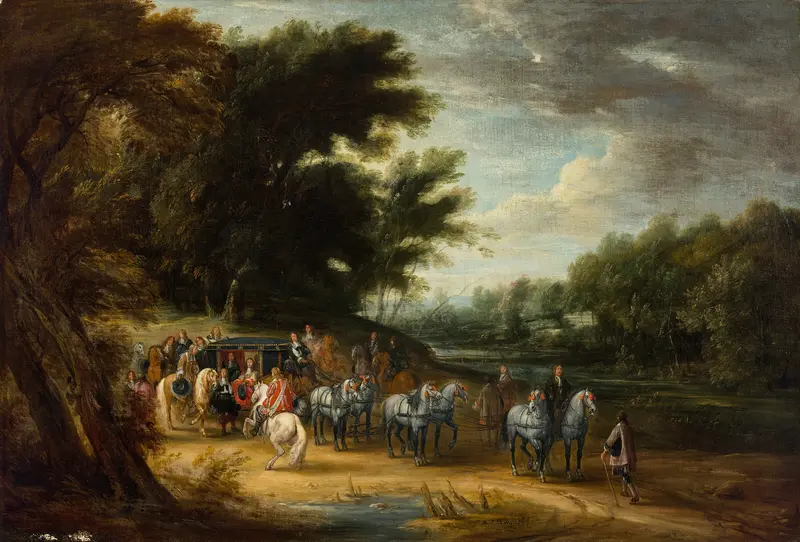
A nobleman in a state coach at rest escorted by his men and horses, with a gentleman on a white horse approaching and landscape beyond
Adam Frans van der Meulen





