
Louis XIV Crossing into the Netherlands at Lobith — History & Facts
The sweep of the river and the mass of men and horses draw the viewer into a moment of spectacle and calculation, where the fate of a campaign seems to hang in the balance. At the heart of the scene, a richly dressed figure—seated high and calm on a white horse—commands the composition, his gesture leading the eye across the water toward the distant town. The artist, Adam-François van der Meulen, has orchestrated a stage of power: the king’s blue and gold cloak catches the light, setting him apart from the sea of officers and soldiers who churn through the river below, their forms dissolving into the haze of smoke and spray.
Cannon fire erupts near the shore, signaling both the violence and the audacity of the crossing, while the broad sky and distant horizon lend a sense of scale that dwarfs even the king’s ambition. Painted in 1690, this work belongs to a world where art and authority marched hand in hand. In the late seventeenth century, battle scenes like this were not mere records—they were tools of memory and myth, commissioned to celebrate victories and immortalize rulers at the very height of their power. Van der Meulen was renowned for such compositions, often working for the French court, and his paintings helped shape the image of Louis XIV as the “Sun King,” master of both battlefield and destiny.
Though history has kept few traces of this particular canvas’s early journey, its presence in a modern collection invites us to look again at how spectacle and strategy, paint and politics, come together on the banks of the Rhine.
More Artworks by Adam Frans van der Meulen
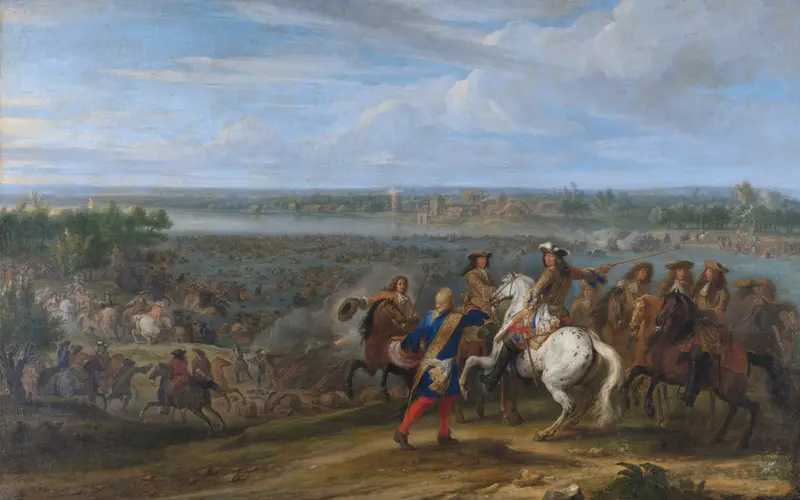
Louis XIV Crossing into the Netherlands at Lobith
Adam Frans van der Meulen
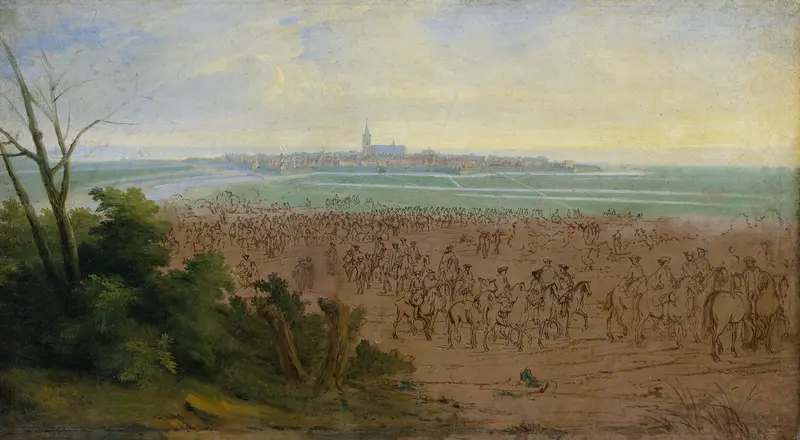
The Troops of Louis XIV before Naarden, 20 July 1672
Adam Frans van der Meulen
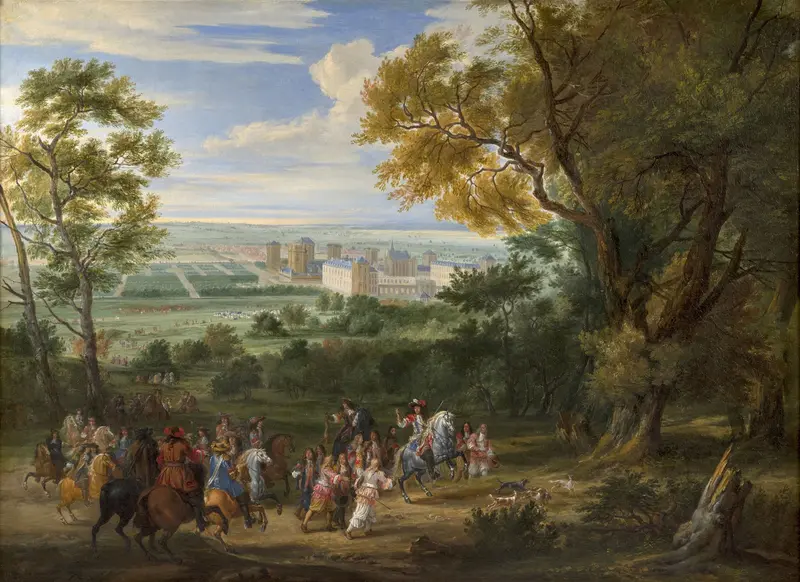
View of the château de Vincennes or The Departure of Louis XIV for the hunt
Adam Frans van der Meulen

A battle scene
Adam Frans van der Meulen
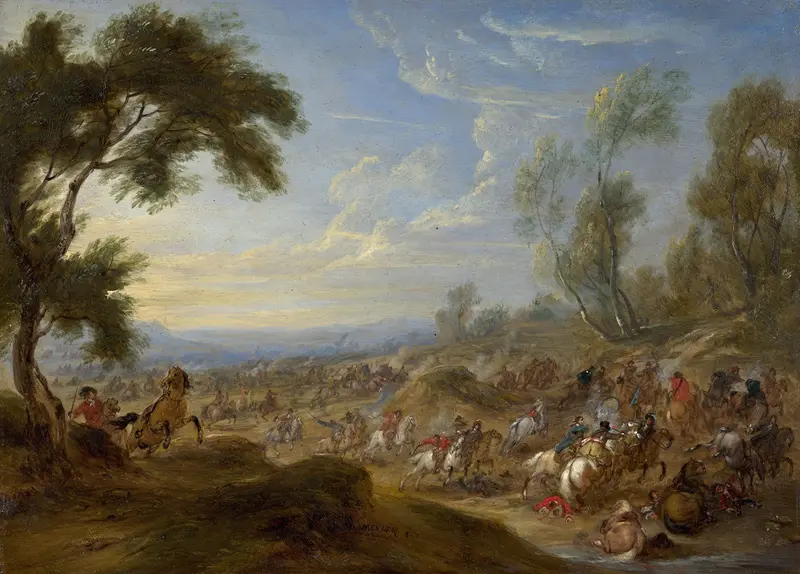
A cavalry charge
Adam Frans van der Meulen
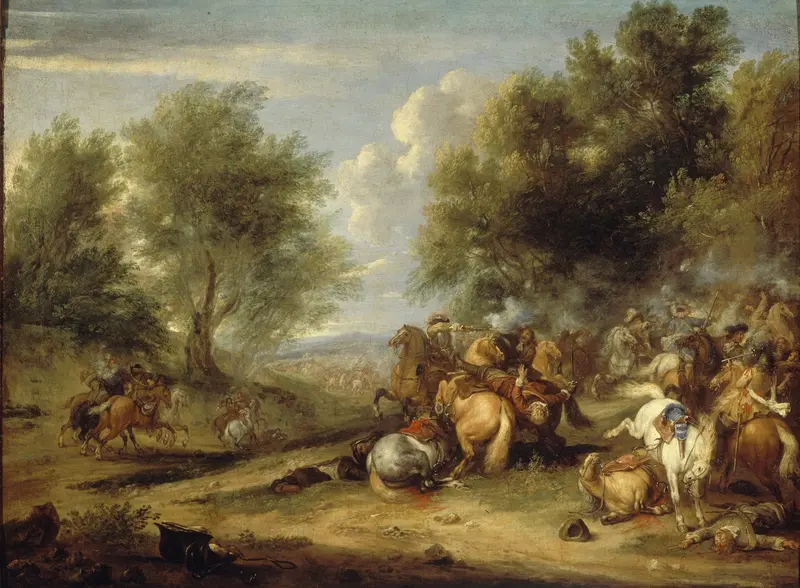
Choc de cavalerie ou Combat de cavalerie
Adam Frans van der Meulen
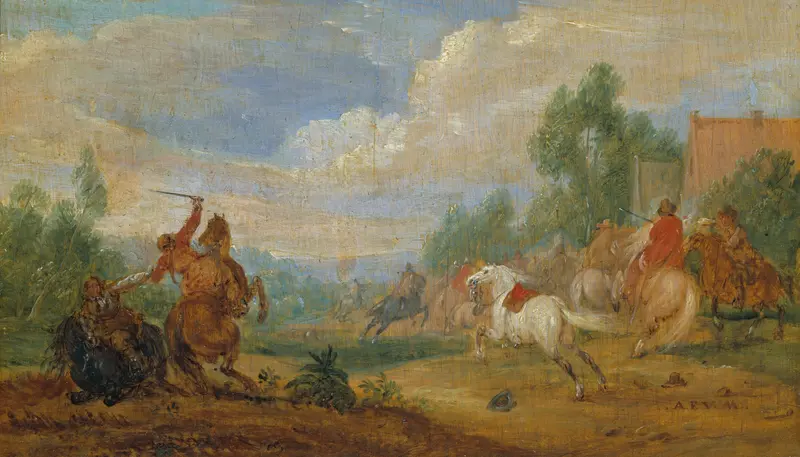
Cavalry Skirmish
Adam Frans van der Meulen
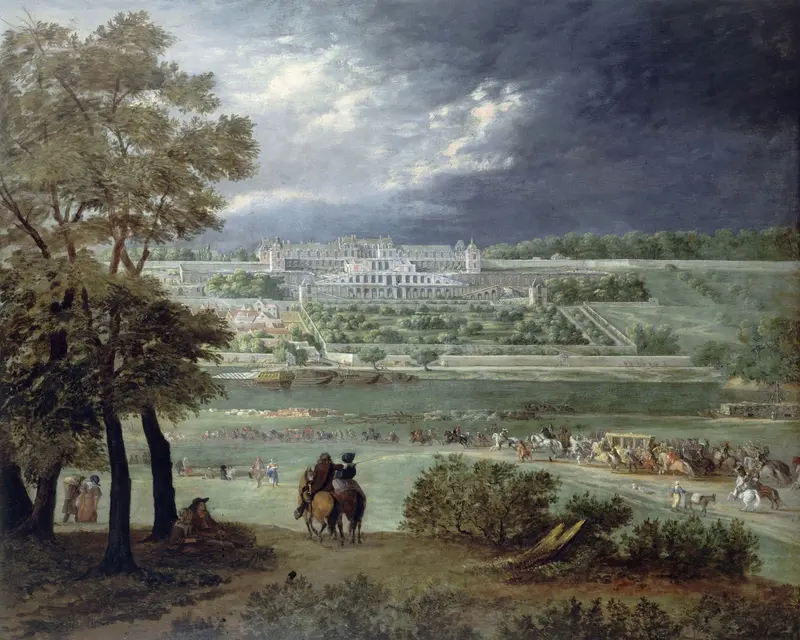
Le Château Neuf de Saint-Germain-en-Laye et les jardins, vus de la rive droite de la Seine
Adam Frans van der Meulen
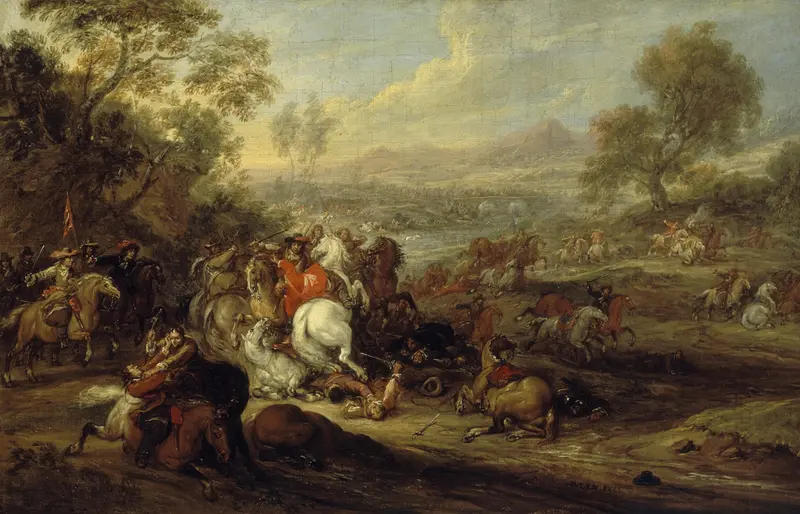
Choc de cavalerie ou Combat de cavalerie
Adam Frans van der Meulen
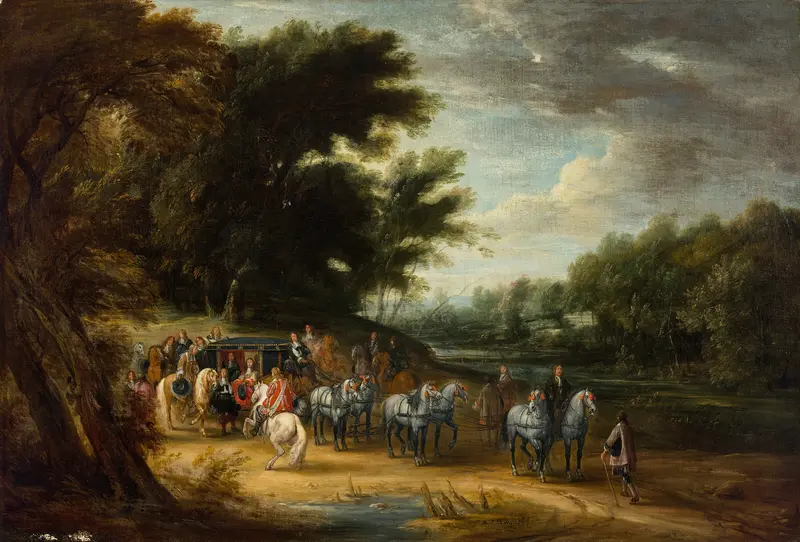
A nobleman in a state coach at rest escorted by his men and horses, with a gentleman on a white horse approaching and landscape beyond
Adam Frans van der Meulen





