
Louis XIV crossing Pont Neuf — History & Facts
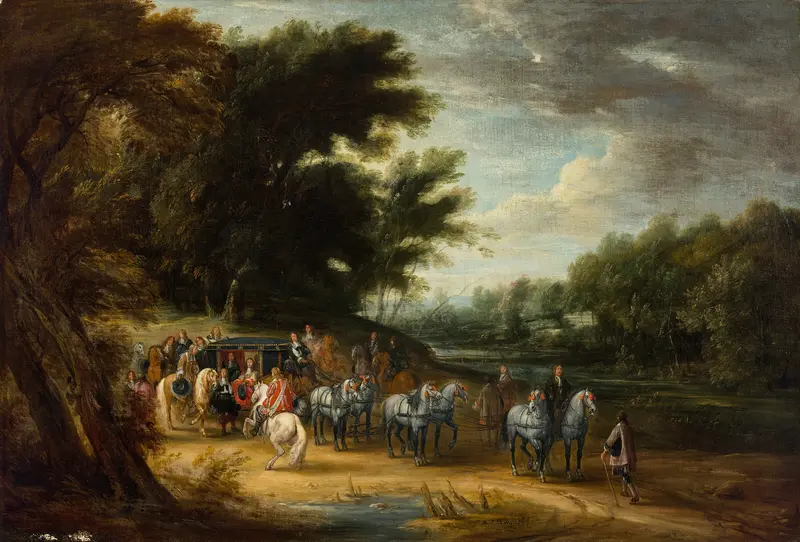
What first catches the eye in Louis XIV crossing Pont Neuf by Adam Frans van der Meulen is the sheer orchestration of spectacle—an entire city seems to pause for the passage of its king. The crowd is not a blur but a living tapestry: soldiers in crisp formation, courtiers in bright finery, and the teeming masses pressed to the edges, all converging on the central drama. The artist draws the viewer’s gaze to the white horse at the painting’s heart, its rider surrounded by a halo of banners and gleaming armor, while the golden carriage and the swelling ranks of guards signal the gravity of the event.
The light, cool and clear, falls evenly across the facades and the river, giving the moment a sense of permanence, as if Paris itself is holding its breath. This painting belongs to the grand tradition of seventeenth-century ceremonial cityscapes, a genre that flourished in the courts of Europe as rulers sought to immortalize their authority and the loyalty of their subjects. In the France of Louis XIV, such works were often commissioned to celebrate royal processions, victories, or public appearances, serving both as propaganda and as records of power. Adam Frans van der Meulen, active in the orbit of the French court, became known for his ability to marshal crowds and architecture into harmonious compositions that glorified the monarchy.
Painted in 1666, this scene—“Marche du roi accompagné de ses gardes passant sur le Pont-Neuf et allant au Palais”—offers a window onto a world where spectacle and sovereignty were inseparable, and where the city itself became a stage for royal display. Look closely, and you can almost hear the trumpets and the murmur of the crowd, the city alive with anticipation.
More Artworks by Adam Frans van der Meulen
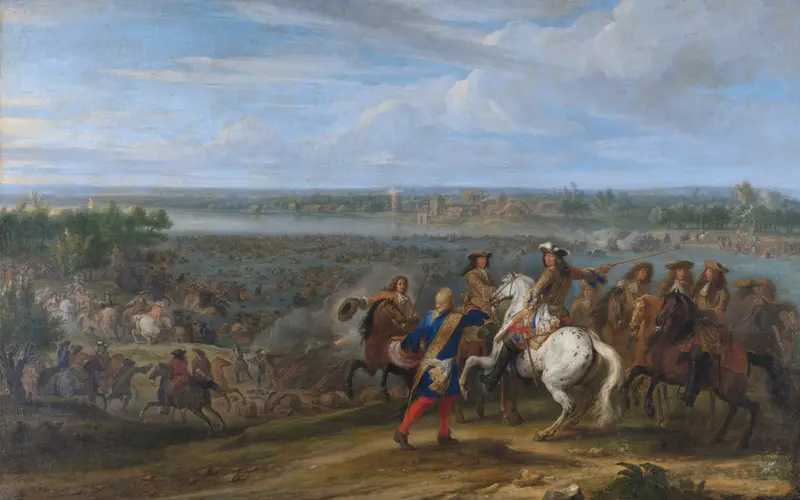
Louis XIV Crossing into the Netherlands at Lobith
Adam Frans van der Meulen
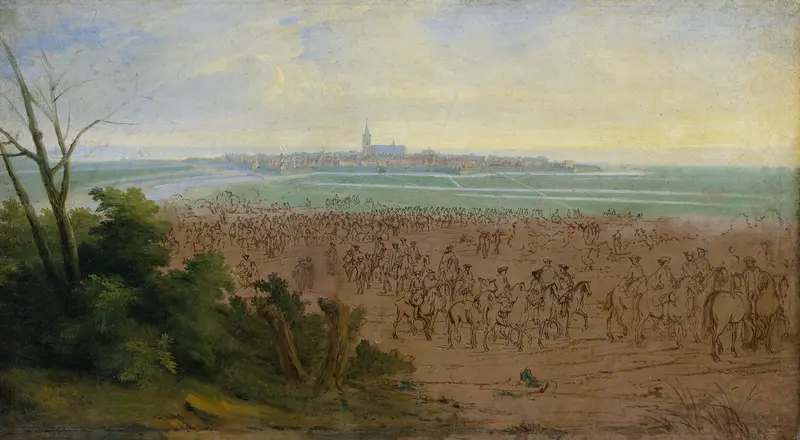
The Troops of Louis XIV before Naarden, 20 July 1672
Adam Frans van der Meulen
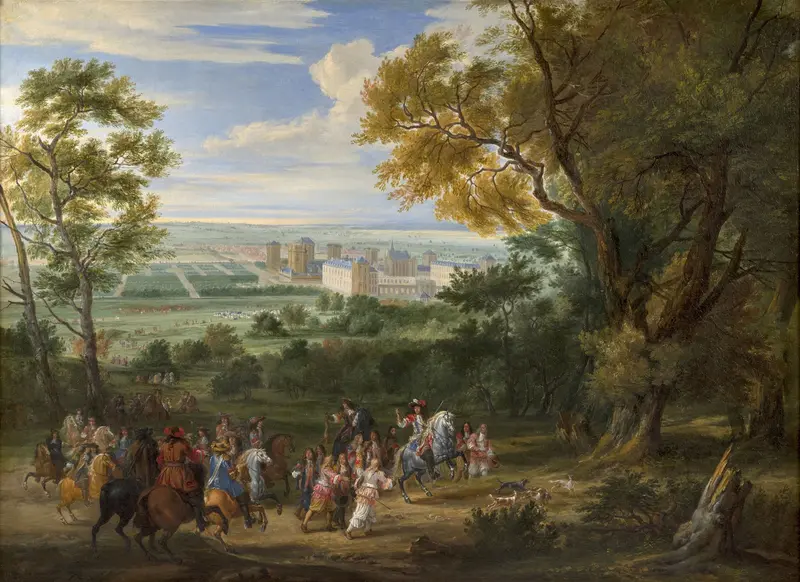
View of the château de Vincennes or The Departure of Louis XIV for the hunt
Adam Frans van der Meulen

A battle scene
Adam Frans van der Meulen
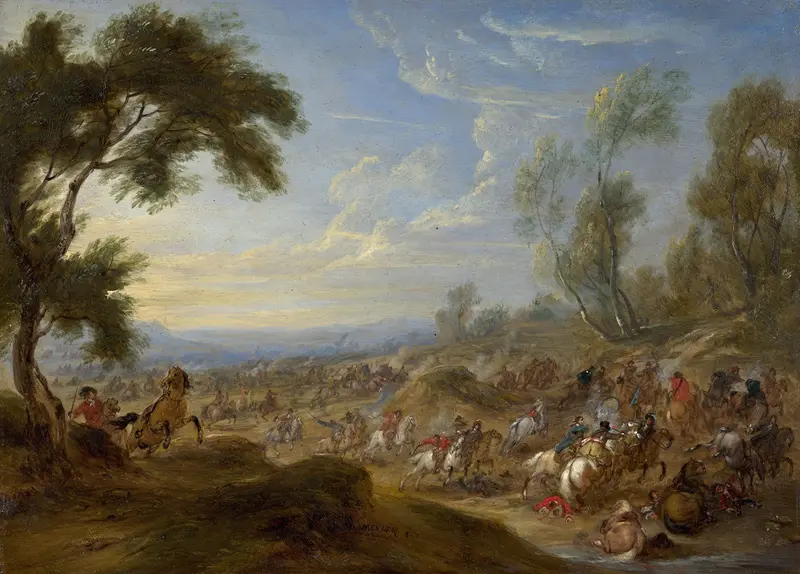
A cavalry charge
Adam Frans van der Meulen
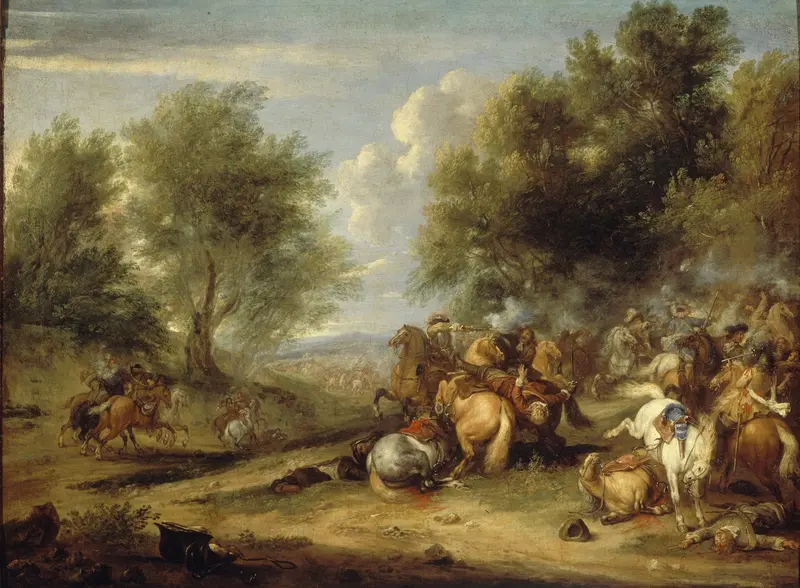
Choc de cavalerie ou Combat de cavalerie
Adam Frans van der Meulen
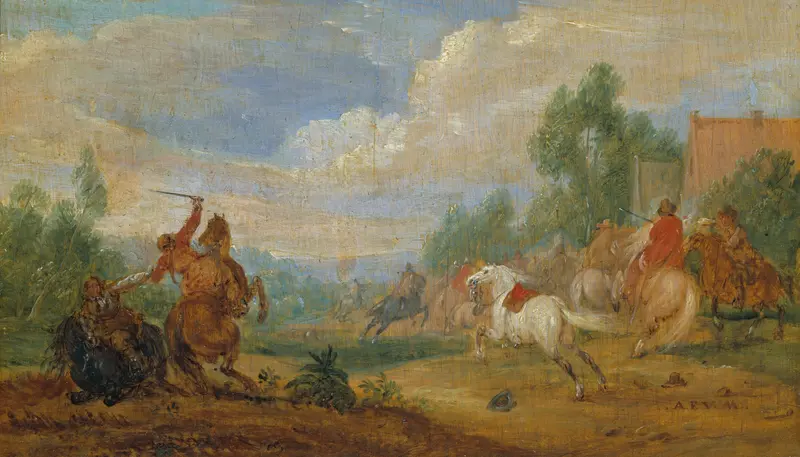
Cavalry Skirmish
Adam Frans van der Meulen
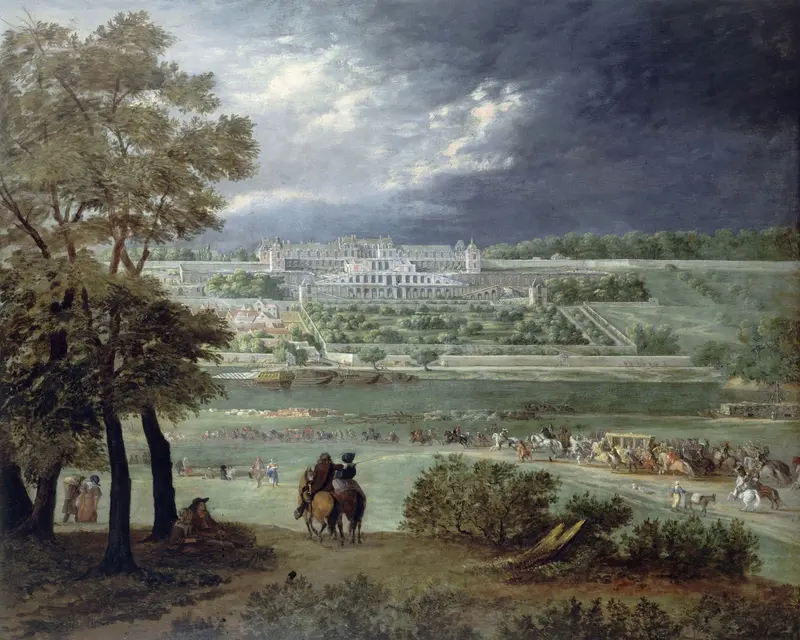
Le Château Neuf de Saint-Germain-en-Laye et les jardins, vus de la rive droite de la Seine
Adam Frans van der Meulen
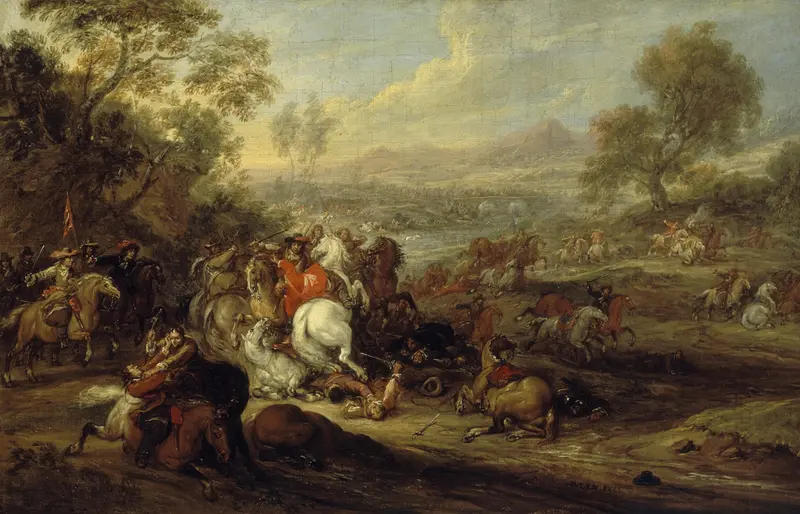
Choc de cavalerie ou Combat de cavalerie
Adam Frans van der Meulen
A nobleman in a state coach at rest escorted by his men and horses, with a gentleman on a white horse approaching and landscape beyond
Adam Frans van der Meulen





