
Louis XIV near Vincennes — History & Facts
A procession winds through a sunlit landscape, and the viewer is drawn first to the gilded carriage surrounded by a swirl of attendants and mounted guards. The artist, Adam Frans van der Meulen, orchestrates the scene so that the eye travels from the richly dressed figures in the foreground up the winding road, past the carriage’s white horses, and into the distant haze where the horizon dissolves into sky. The light falls in broad, golden strokes, picking out silks and plumes, while the shadows of the trees frame the spectacle, suggesting both grandeur and movement.
This is not a static parade but a living moment: the horses rear, courtiers confer, and the carriage—sumptuously detailed—commands attention as the focal point of royal power on the move. Painted in 1664, this work belongs to a world where royal processions were not just events but declarations of authority, orchestrated for both the public and posterity. In the age of Louis XIV, such scenes were often commissioned to celebrate and legitimize the monarchy, and artists like van der Meulen specialized in capturing these displays for the French court and its admirers. The painting’s presence in the Prado collection today is a reminder of the international reach of both French ambition and Flemish artistry in the seventeenth century.
History has kept few traces of this particular episode near Vincennes, but the painting itself invites us to imagine the spectacle and ceremony of a world where every journey was a performance of power.
More Artworks by Adam Frans van der Meulen
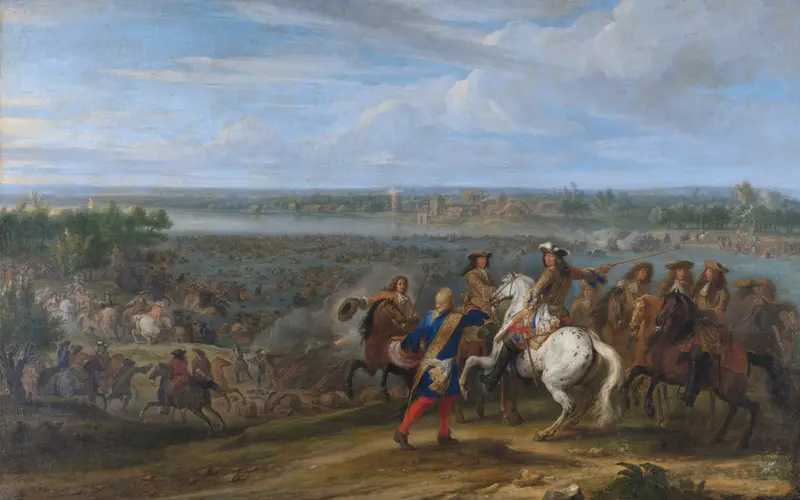
Louis XIV Crossing into the Netherlands at Lobith
Adam Frans van der Meulen
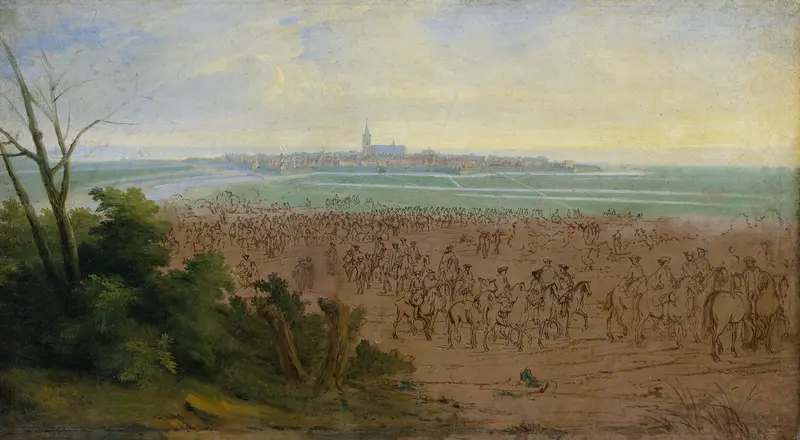
The Troops of Louis XIV before Naarden, 20 July 1672
Adam Frans van der Meulen
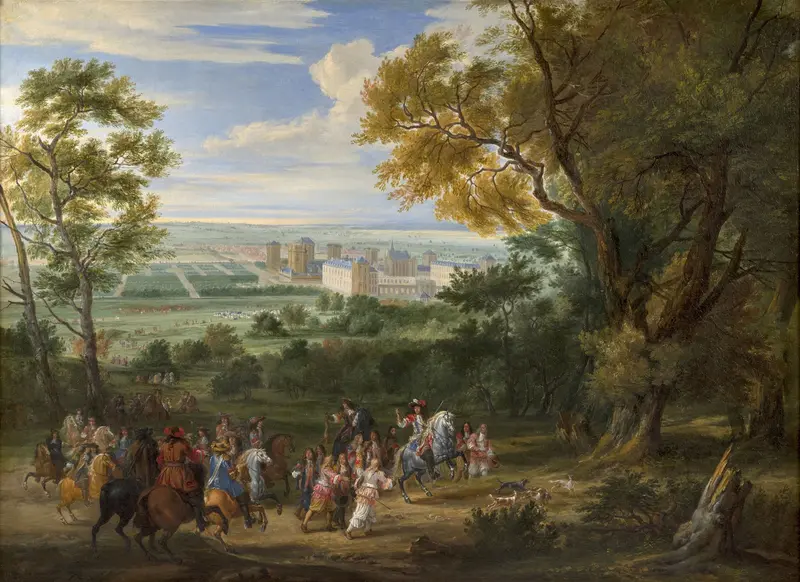
View of the château de Vincennes or The Departure of Louis XIV for the hunt
Adam Frans van der Meulen

A battle scene
Adam Frans van der Meulen
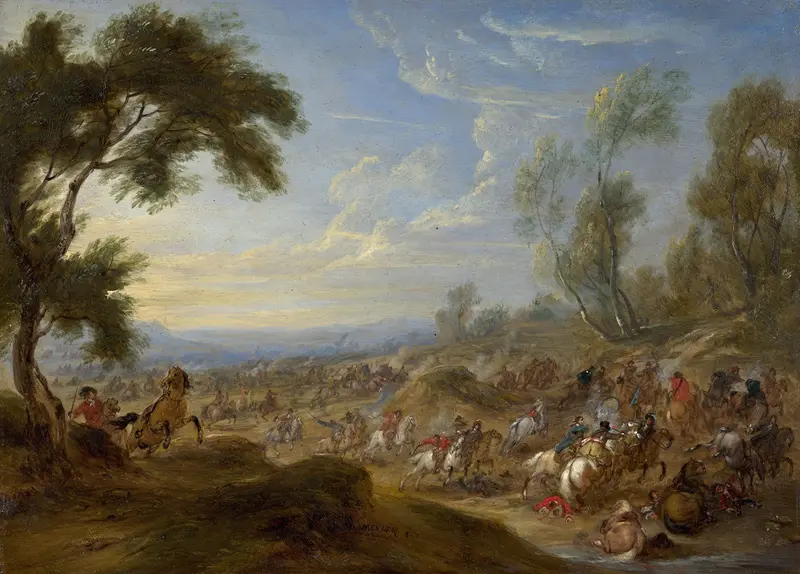
A cavalry charge
Adam Frans van der Meulen
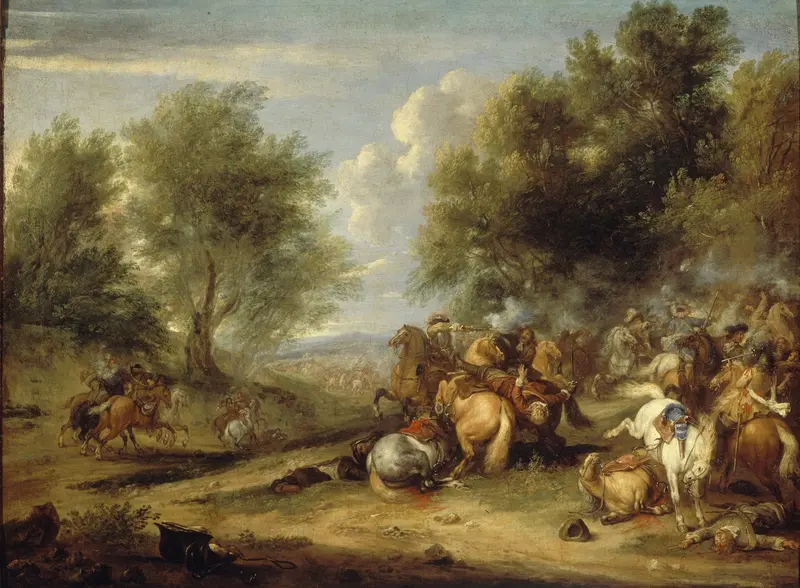
Choc de cavalerie ou Combat de cavalerie
Adam Frans van der Meulen
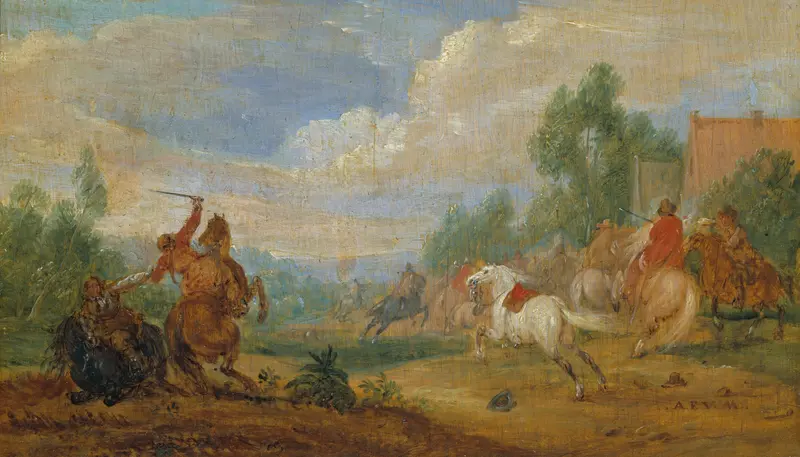
Cavalry Skirmish
Adam Frans van der Meulen
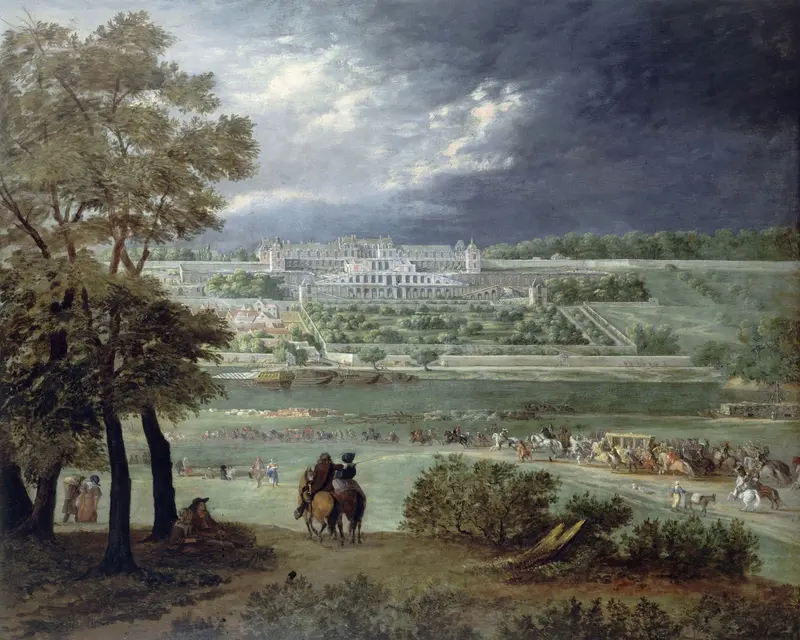
Le Château Neuf de Saint-Germain-en-Laye et les jardins, vus de la rive droite de la Seine
Adam Frans van der Meulen
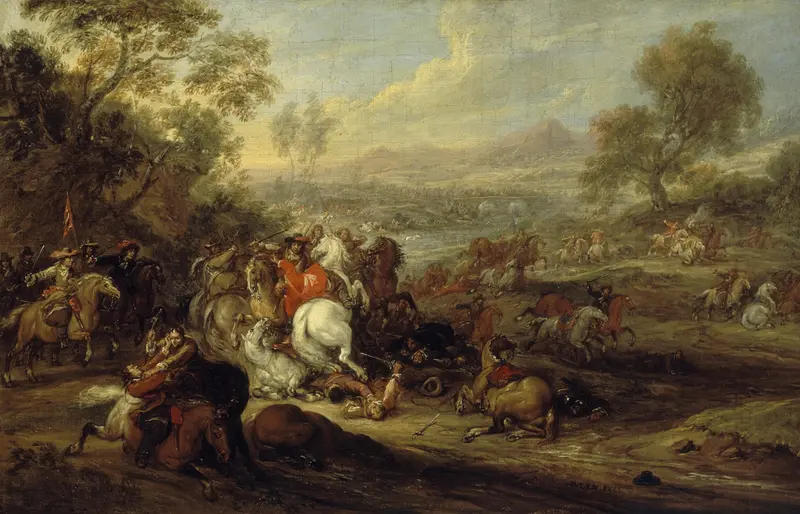
Choc de cavalerie ou Combat de cavalerie
Adam Frans van der Meulen
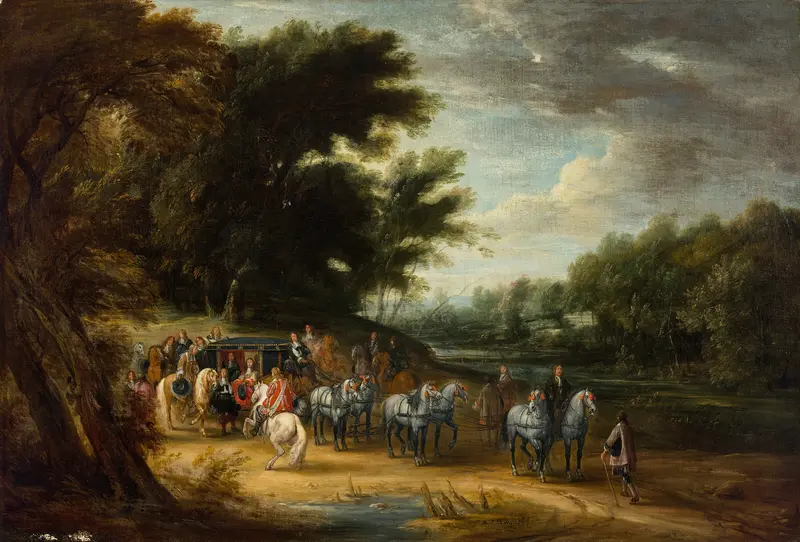
A nobleman in a state coach at rest escorted by his men and horses, with a gentleman on a white horse approaching and landscape beyond
Adam Frans van der Meulen





