
Louise komt bij en bevindt zich alleen in de gevangenis — History & Facts
What if silence could speak through light? In the quiet confinement of a prison cell, innocence hangs heavy in the air, yearning for freedom. Look to the center of the composition where a young woman sits, her delicate features illuminated by a sliver of pale light streaming through a barred window. Her posture is both vulnerable and resolute, hands clasped tightly in her lap, emphasizing her isolation. The muted tones of her simple attire contrast starkly with the stark, oppressive gray of the stone walls, creating a palpable tension between her fragile spirit and the harsh environment surrounding her. Beneath the surface, layers of emotion ripple through the scene—the juxtaposition of her youth against the somber backdrop of imprisonment speaks to the loss of innocence.
A faint shadow cast by the bars encroaches upon her figure, symbolizing the constraints of societal judgement and the weight of her circumstances. The serenity in her expression belies the tumult within, inviting the viewer to ponder her story and the injustices that led her to this desolate moment. During the years 1770 to 1775, the artist created this poignant piece amid a period marked by Enlightenment ideals and a rising sensitivity to human rights. Living in Prussia, Chodowiecki was influenced by the growing discourse around individual liberty and the humane treatment of the imprisoned, reflecting a society grappling with moral complexities.
His work serves as an early commentary on the fragility of innocence within a system that often misjudges and condemns.
More Artworks by Daniel Nikolaus Chodowiecki
Browse all →
Louise en haar vader Johann Ludwig bezoeken Alexis in de gevangenis
Daniel Nikolaus Chodowiecki
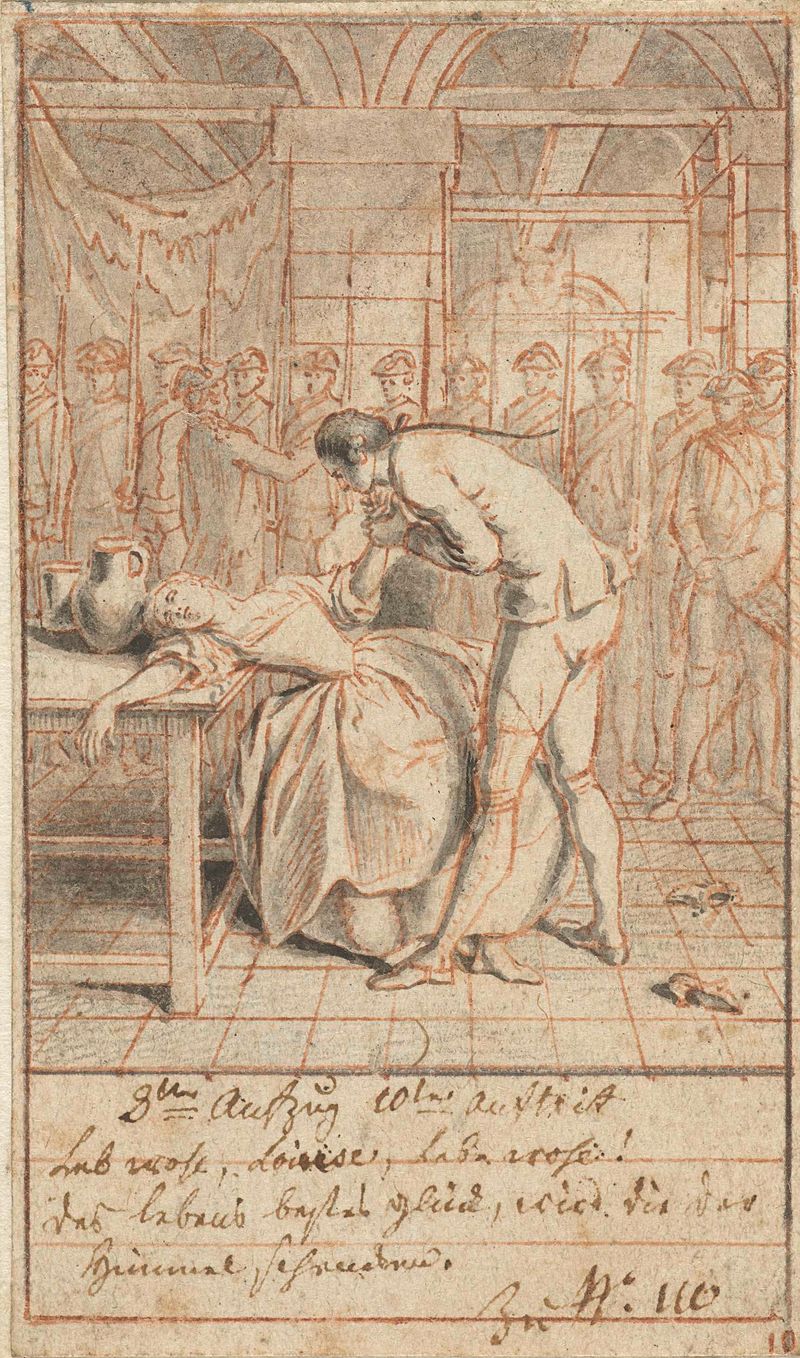
Alexis buigt zich over de flauwgevallen Louise
Daniel Nikolaus Chodowiecki

Lotte overhandigt pistolen aan Werthers bediende
Daniel Nikolaus Chodowiecki

Louise en Alexis omhelzen elkaar op een plein
Daniel Nikolaus Chodowiecki
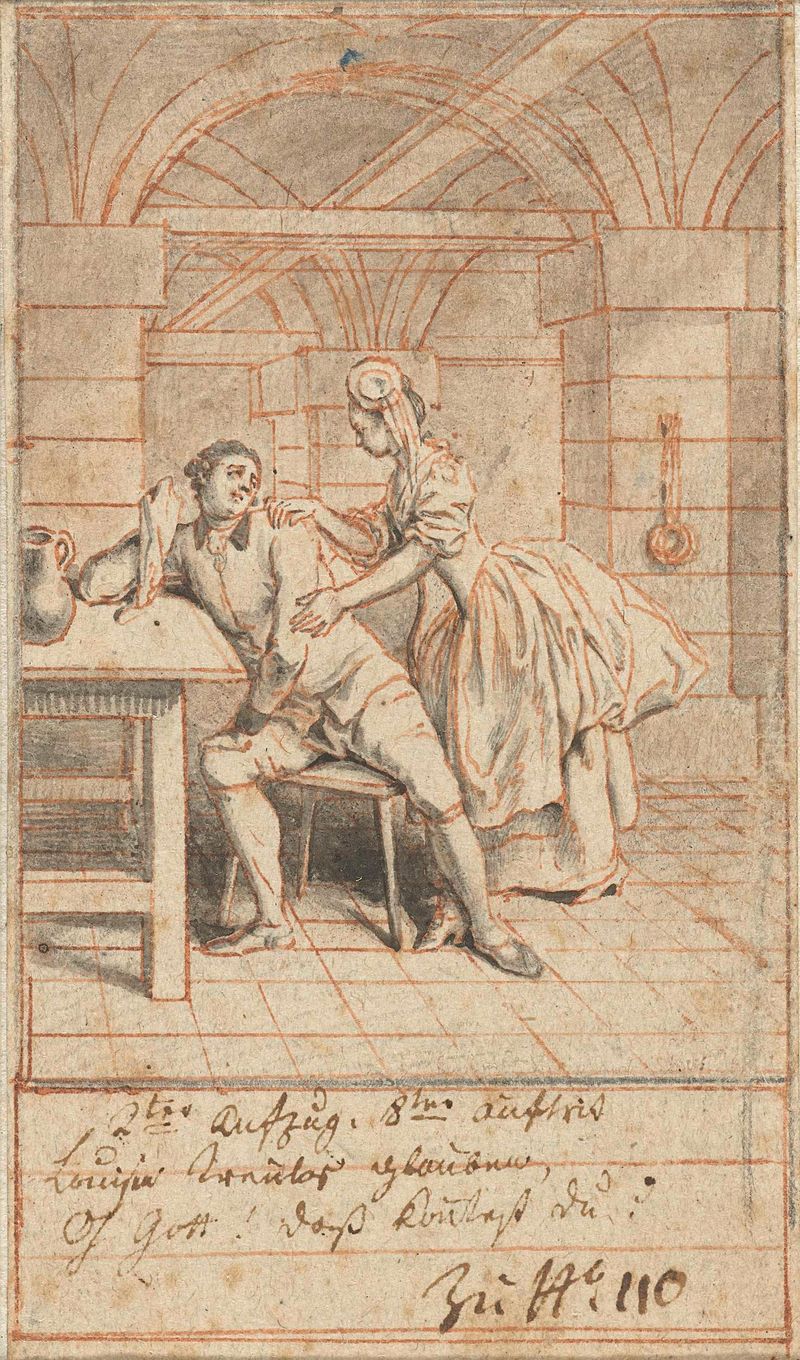
Louise bezoekt Alexis in de gevangenis
Daniel Nikolaus Chodowiecki

Louise staande onder een lindeboom
Daniel Nikolaus Chodowiecki
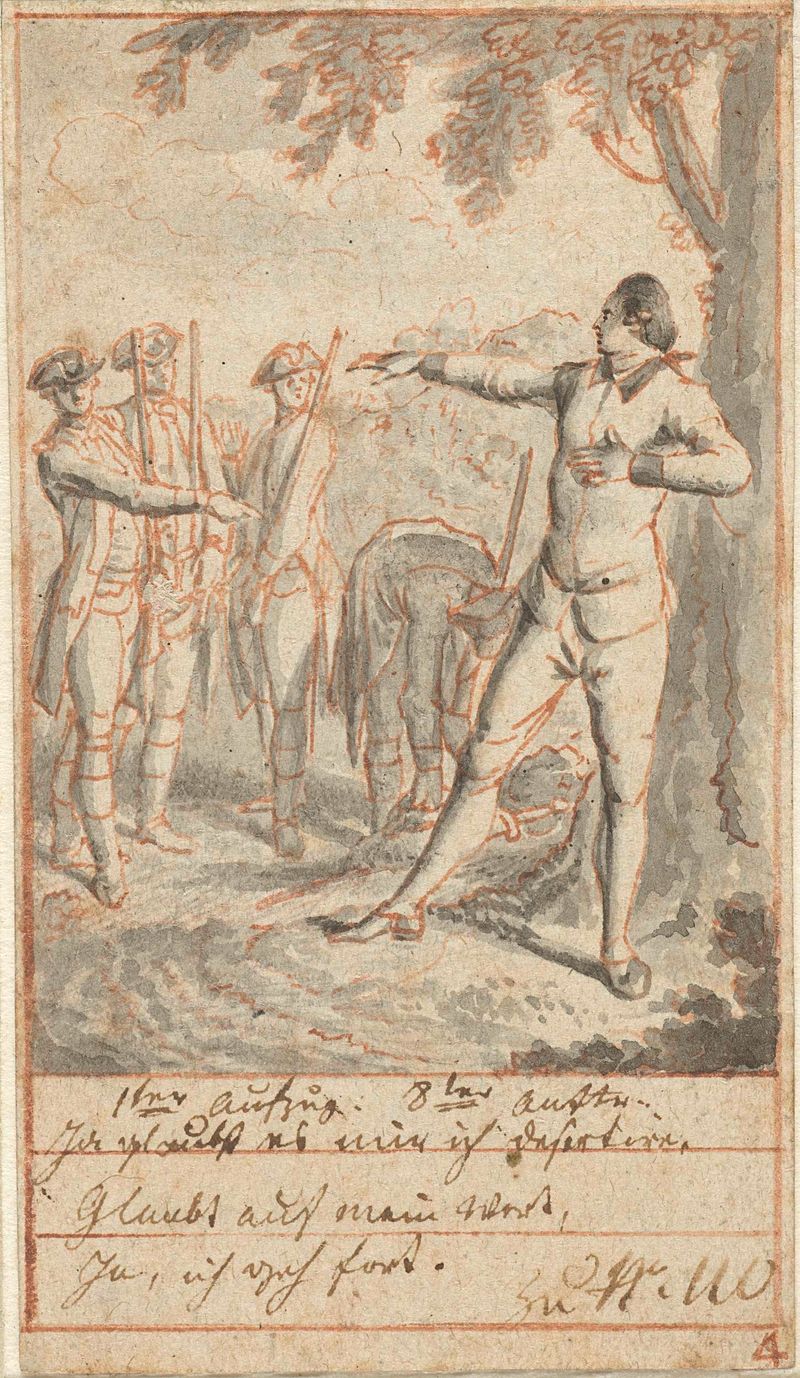
Alexis en brigadier Courchemin met soldaten bij lindeboom
Daniel Nikolaus Chodowiecki
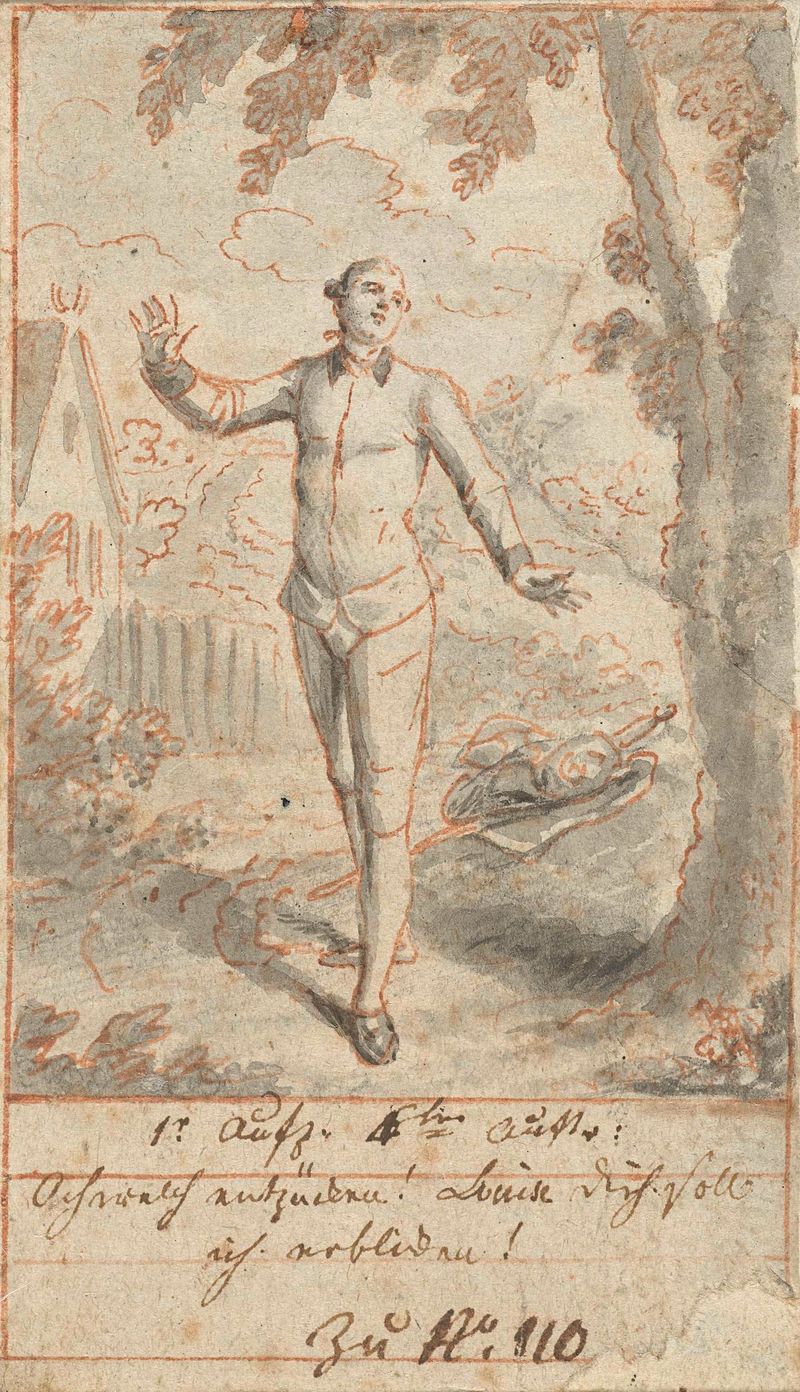
Alexis bij de lindeboom
Daniel Nikolaus Chodowiecki
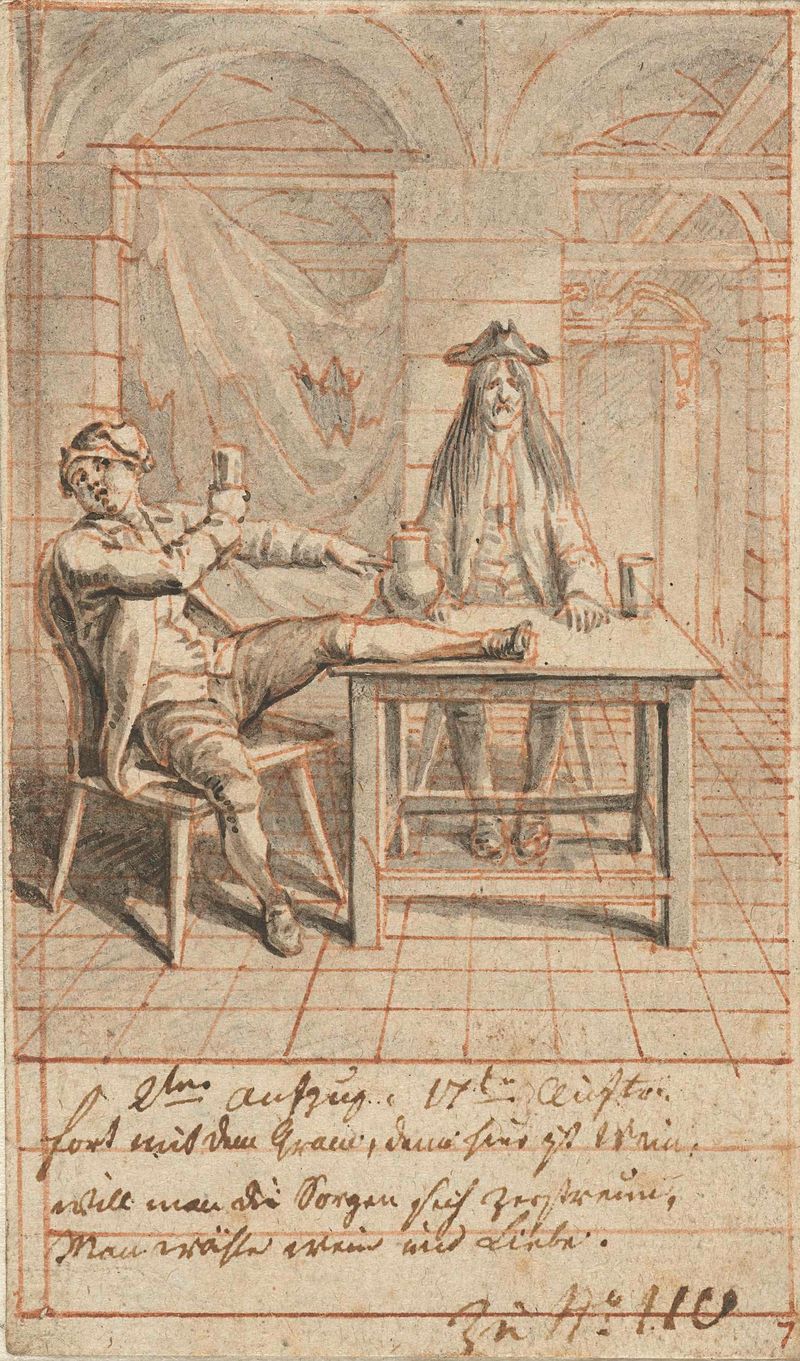
Himmelsturm en Bertram
Daniel Nikolaus Chodowiecki

Courchemin met Himmelsturm en cipier
Daniel Nikolaus Chodowiecki





