
Louise en haar vader Johann Ludwig bezoeken Alexis in de gevangenis — History & Facts
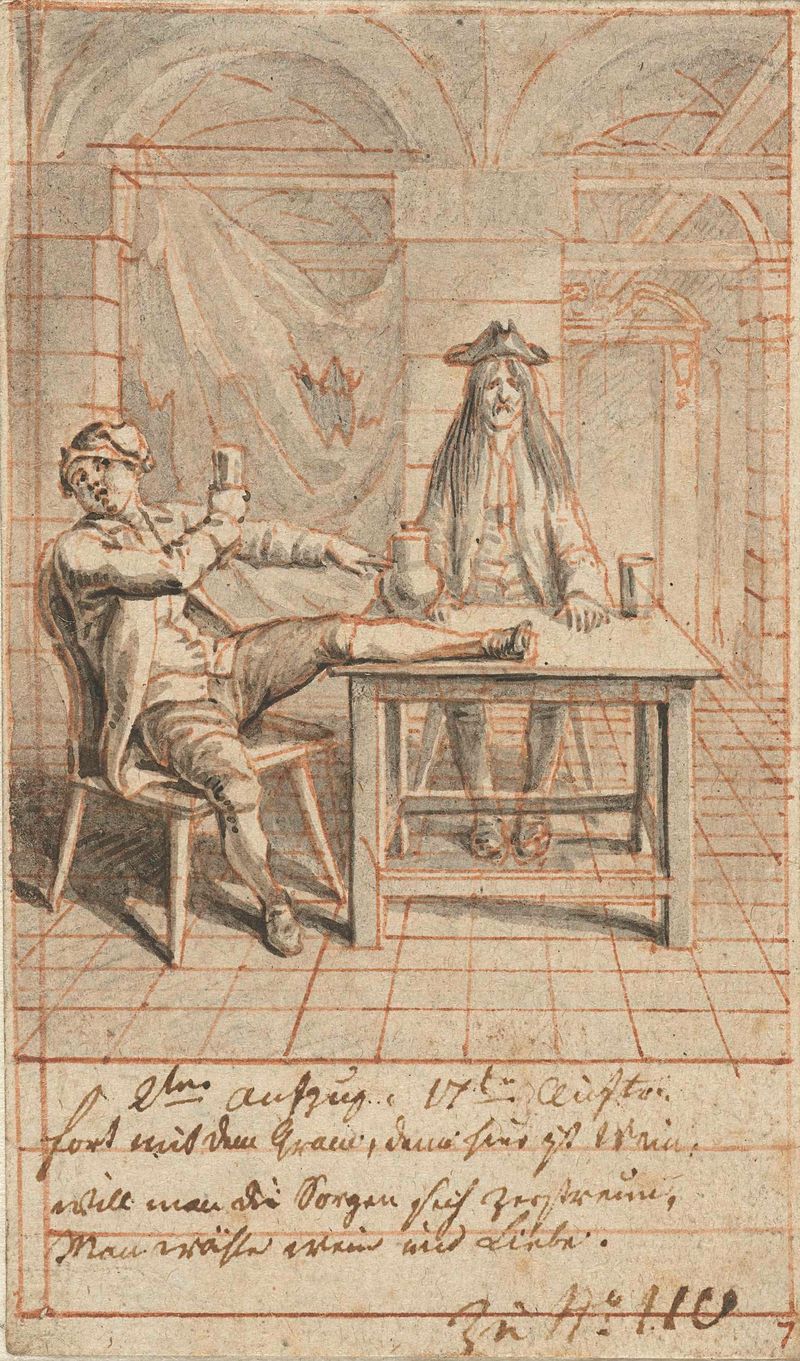
This poignant truth resonates deeply within the heart of the human experience, reflecting a haunting intertwining of joy and sorrow. In this artwork, the viewer is beckoned into a moment that captures not merely an event but the essence of familial bonds strained by circumstance. Look to the left at the figures of Louise and her father, their postures both tender and heavy with unspoken words. The contrasting light spills over them from a nearby window, illuminating their expressions while casting shadows that hint at a deeper sadness.
Notice how the delicate details of their clothing — the rich fabric interwoven with vibrant colors — stand in stark contrast to the stark walls of the prison behind them, emphasizing the weight of their emotional state amid a harsh reality. The scene breathes with an undercurrent of melancholy, where gestures speak louder than dialogue. Louise’s hesitant reach towards her father, coupled with his somber gaze, conveys a shared grief that transcends the physical barriers of imprisonment. There is a delicate balance at play; the vibrancy of their attire juxtaposed against the cold rigidity of the cell, revealing a poignant struggle between hope and despair, intimacy and isolation. Created between 1770 and 1775, during a period of personal and artistic exploration for the artist, this piece reflects Chodowiecki's response to the societal changes surrounding him.
As a prominent figure in the German Enlightenment, he captured the emotional complexities of human relationships, often weaving themes of suffering and compassion into his works. At this time, the art world was embracing new ideas of empathy and representation, and this painting stands as a testament to those evolving sentiments.
More Artworks by Daniel Nikolaus Chodowiecki
Browse all →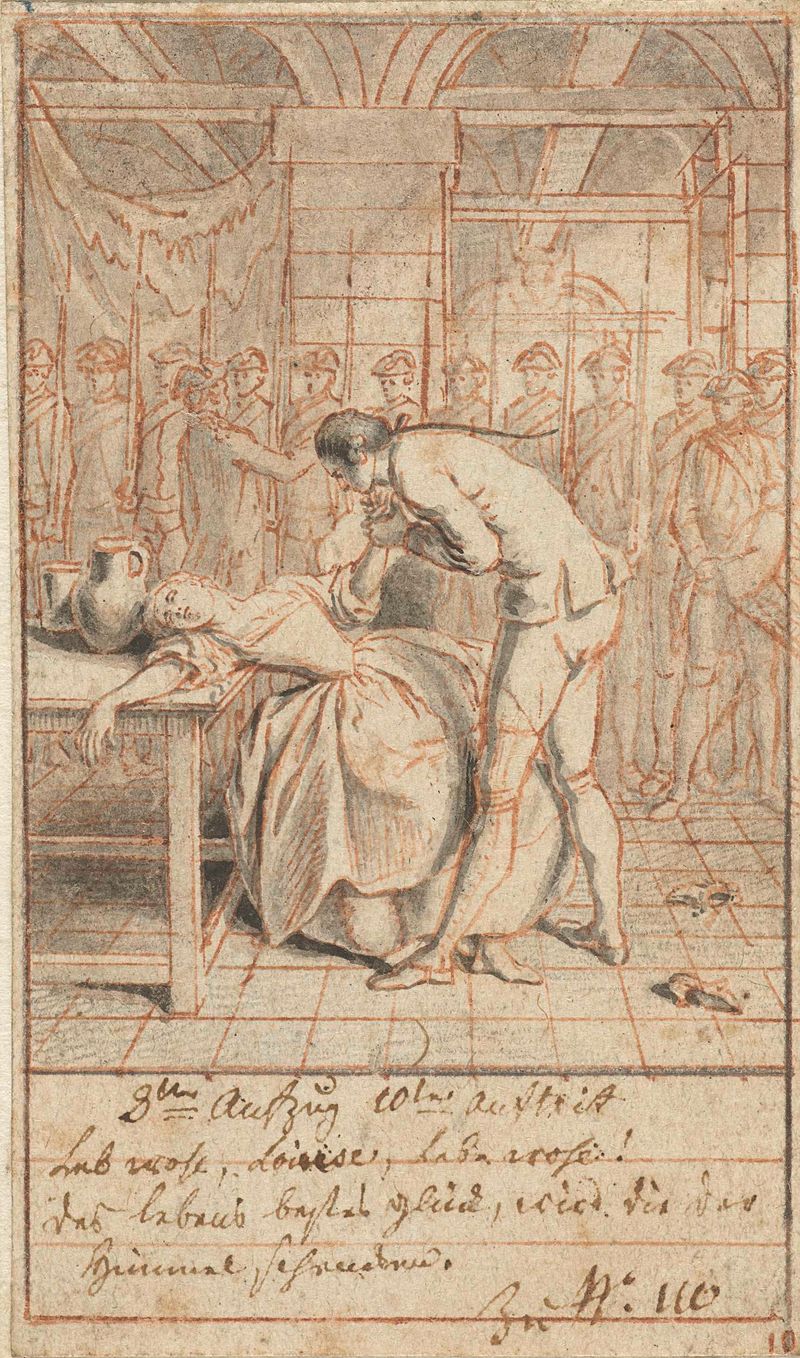
Alexis buigt zich over de flauwgevallen Louise
Daniel Nikolaus Chodowiecki

Louise komt bij en bevindt zich alleen in de gevangenis
Daniel Nikolaus Chodowiecki

Lotte overhandigt pistolen aan Werthers bediende
Daniel Nikolaus Chodowiecki

Louise en Alexis omhelzen elkaar op een plein
Daniel Nikolaus Chodowiecki
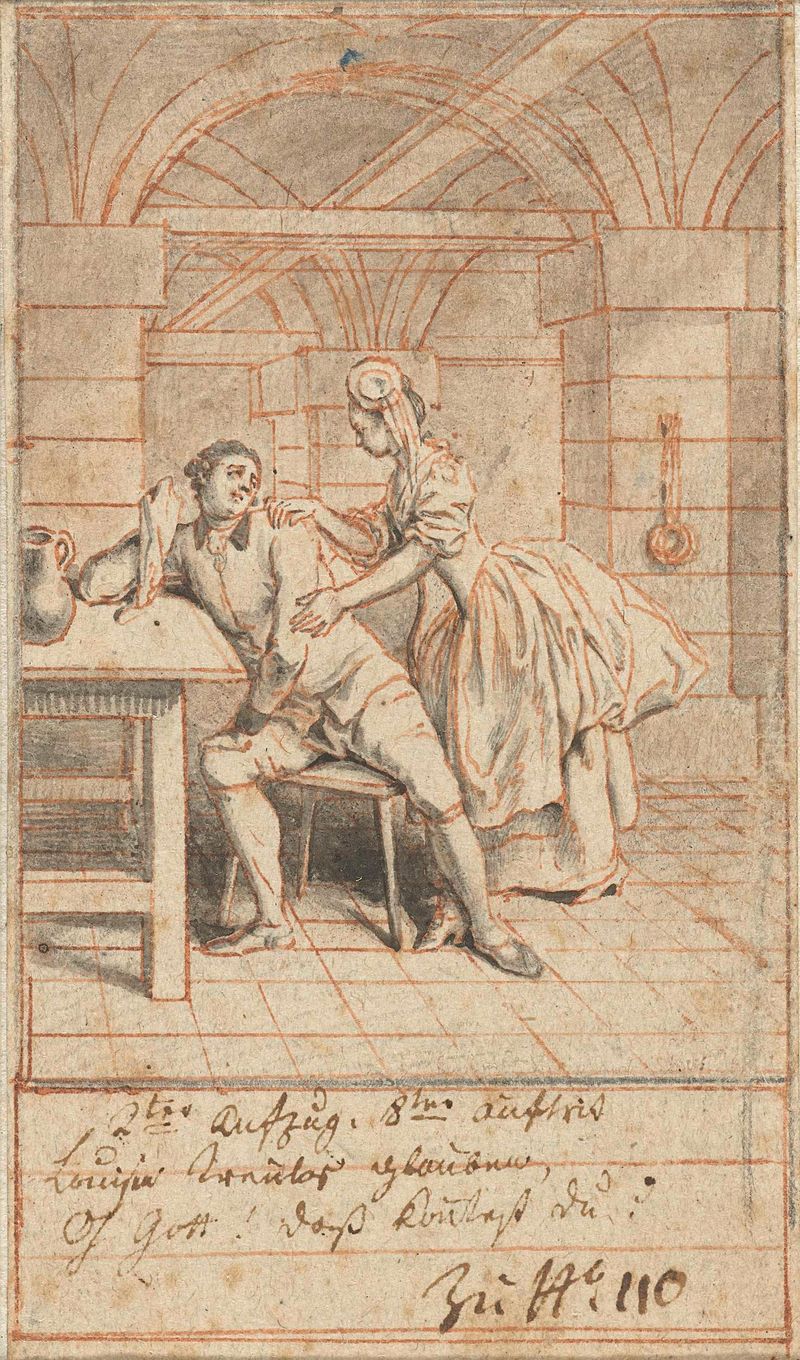
Louise bezoekt Alexis in de gevangenis
Daniel Nikolaus Chodowiecki

Louise staande onder een lindeboom
Daniel Nikolaus Chodowiecki
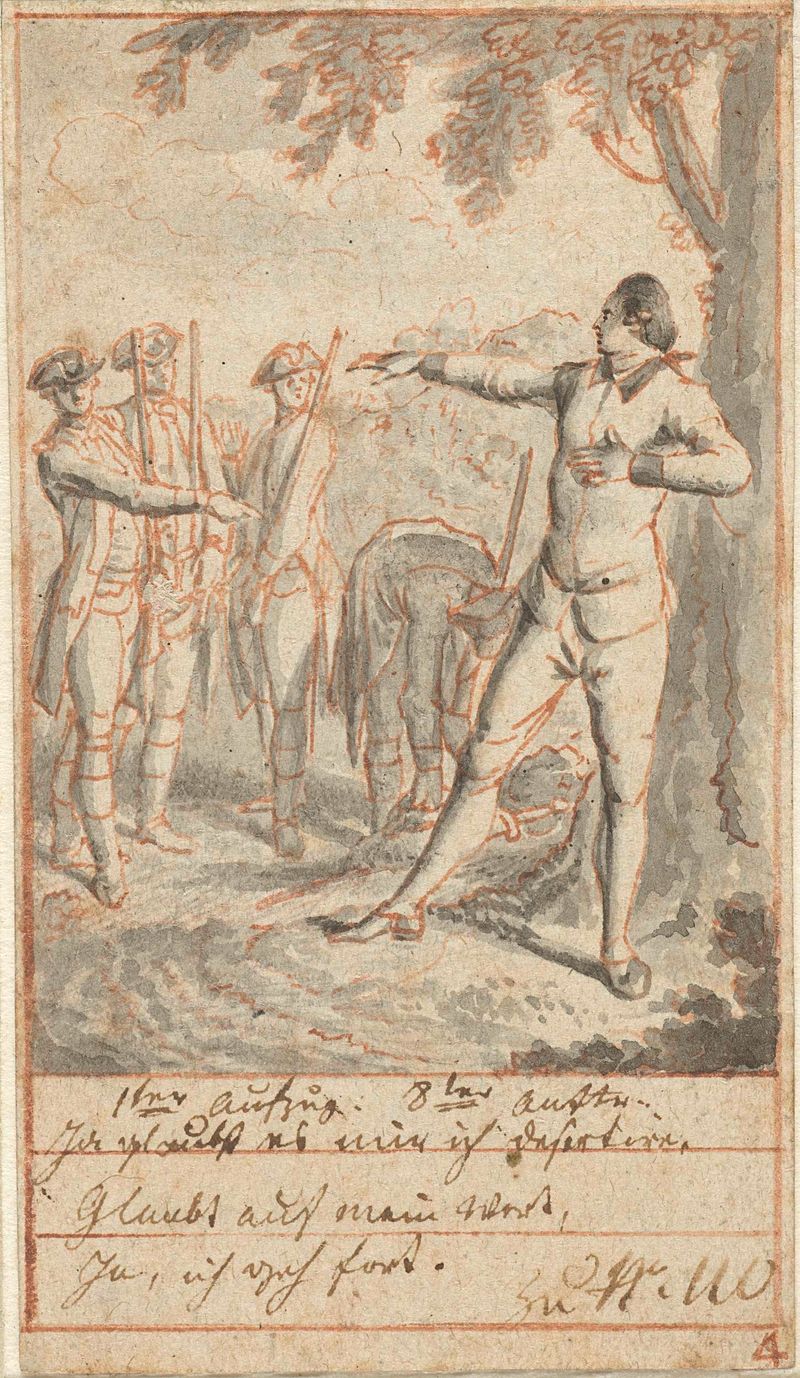
Alexis en brigadier Courchemin met soldaten bij lindeboom
Daniel Nikolaus Chodowiecki
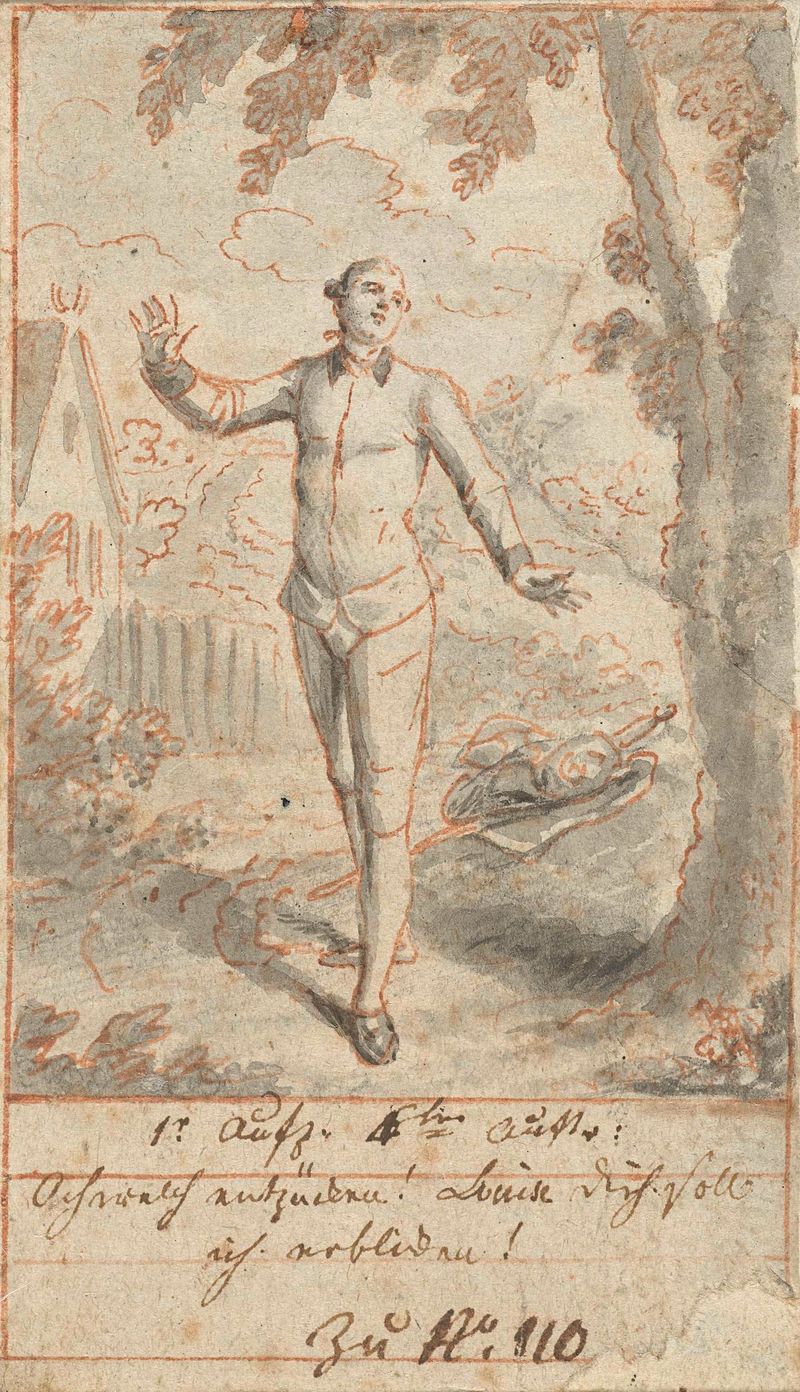
Alexis bij de lindeboom
Daniel Nikolaus Chodowiecki
Himmelsturm en Bertram
Daniel Nikolaus Chodowiecki

Courchemin met Himmelsturm en cipier
Daniel Nikolaus Chodowiecki
More Historical Art
Browse all →
The Night Watch Militia Company of District II under the Command of Captain Frans Banninck Cocq
Rembrandt van Rijn

Lincoln Memorial
Henry Bacon

The Third of May 1808
Francisco de Goya

Isaac and Rebecca, Known as ‘The Jewish Bride’
Rembrandt van Rijn

The Charge of the Mamelukes (1814)
Francisco de Goya

De vier ruiters van de apocalyps
Albrecht Dürer