
Maisaka — History & Facts
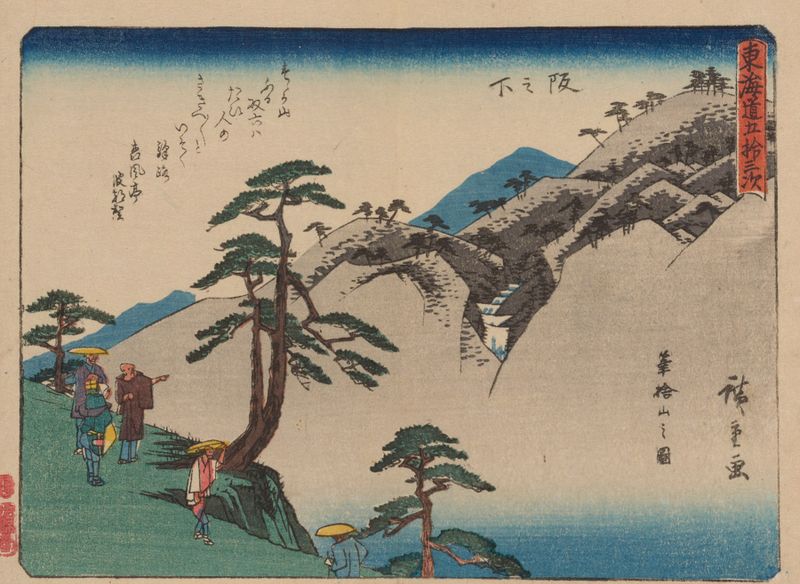
When did color learn to lie? In the vibrant hues of a landscape, one can glimpse not just the physical realm but something beyond — an ethereal quality that beckons the soul. Focus on the flowing lines of the river that winds through the center of the composition, guiding your gaze across the scene. Notice how Hiroshige employs delicate strokes to depict the trees, their branches stretching gracefully, interwoven with a palette that ranges from deep blues to soft greens. The subtle gradation of colors not only captures the essence of nature but also evokes an emotional landscape, where every shade feels alive with possibility. As you explore further, pay attention to the way light dances across the water's surface, creating a shimmering effect that transcends mere representation.
The juxtaposition of the tranquil setting against the billowing clouds overhead conveys a sense of harmony and tension. Amidst this beauty, one can sense a fleeting moment — a balance between the serene and the tumultuous, emblematic of life itself and the impermanence that comes with it. In the early 1840s, during a period of significant change in Japan, Hiroshige painted this piece as part of his series capturing the fifty-three stations of the Tōkaidō road. This was a time of burgeoning cultural exchange, with the artist drawing inspiration from both traditional and contemporary influences.
Striving to elevate the ukiyo-e genre, he sought to transcend simple representation, aiming instead for a profound connection between viewer and scenery.
More Artworks by Utagawa Hiroshige
Browse all →
Sudden Shower over Shin Ohashi Bridge and Atake (Ohashi Atake no yudachi), from the series "One Hundred Famous Views of Edo (Meisho Edo hyakkei)"
Utagawa Hiroshige
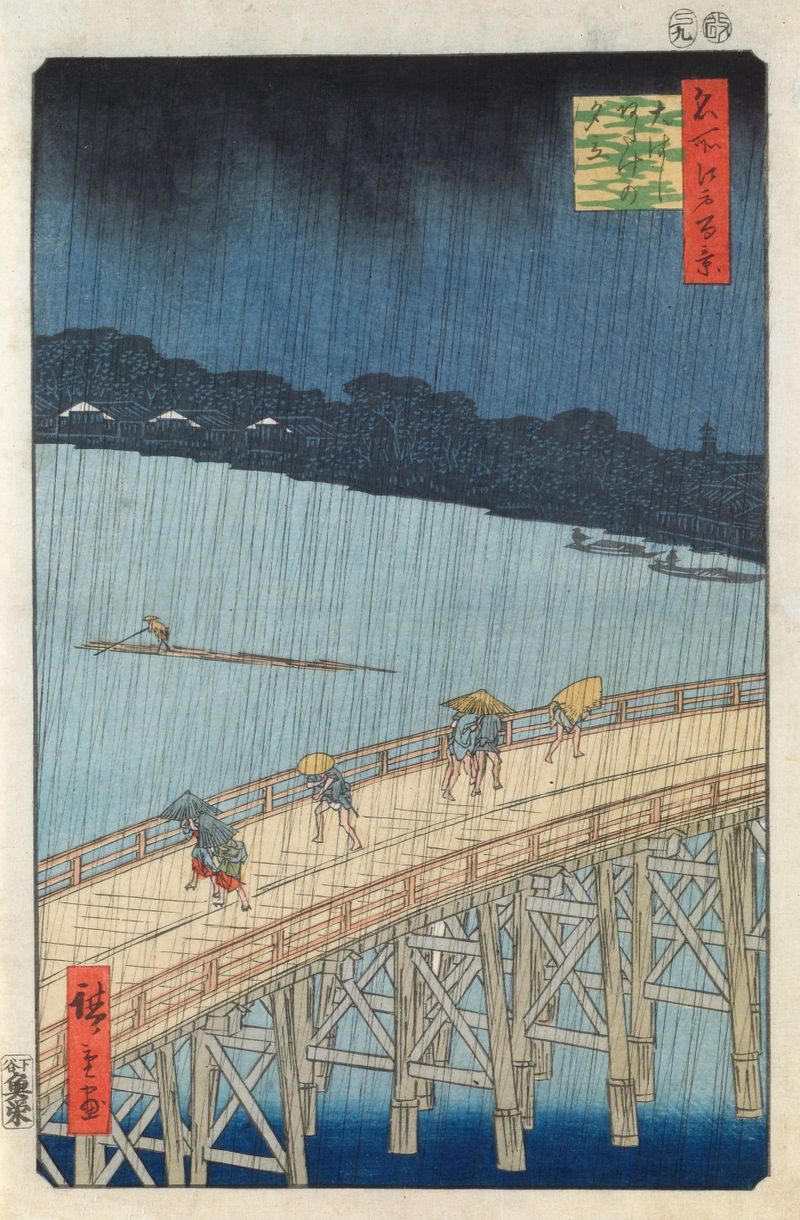
Sudden Shower Over Ohashi Bridge and Atake
Utagawa Hiroshige
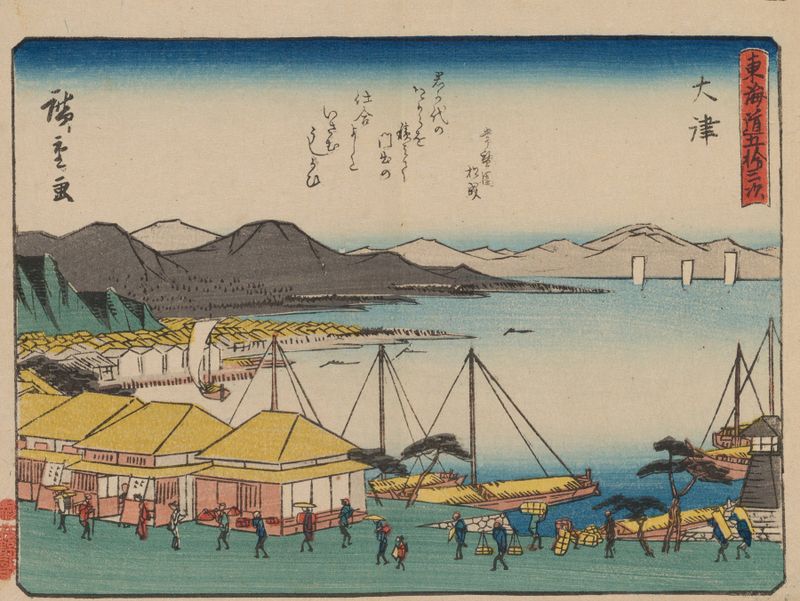
Tokaido gojusantsugi, Pl.54
Utagawa Hiroshige
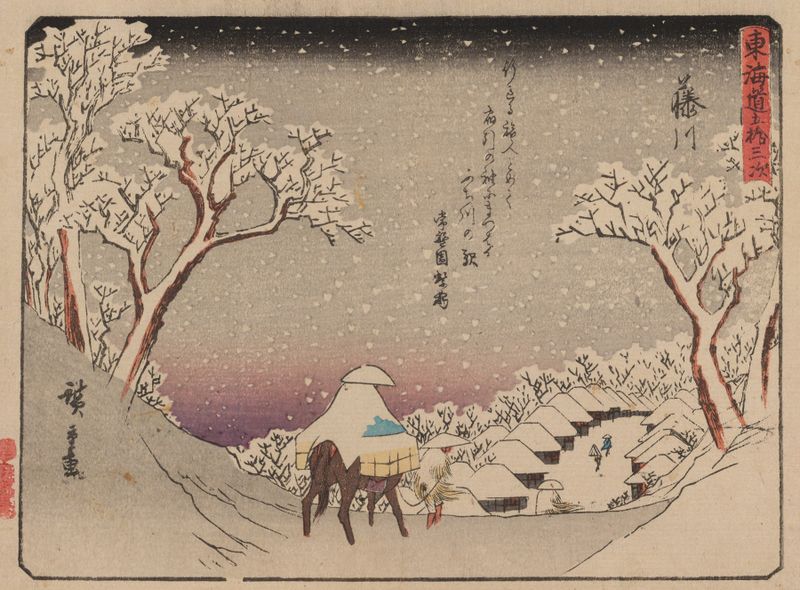
Tokaido gojusantsugi, Pl.38
Utagawa Hiroshige
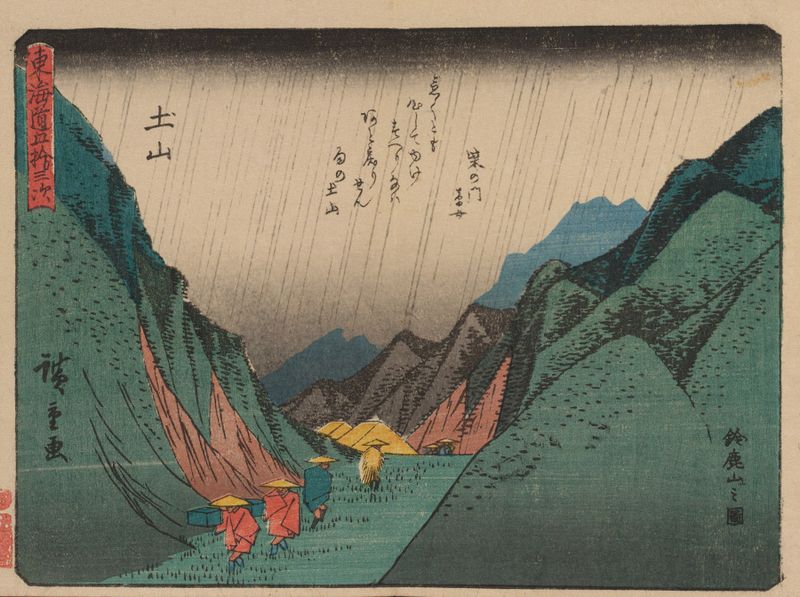
Tokaido gojusantsugi, Pl.50
Utagawa Hiroshige
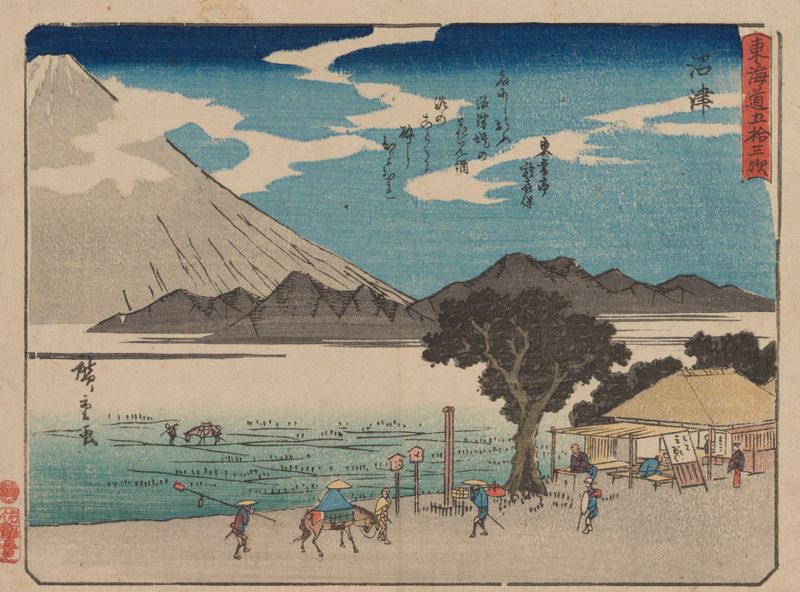
Tokaido gojusantsugi, Pl.13
Utagawa Hiroshige
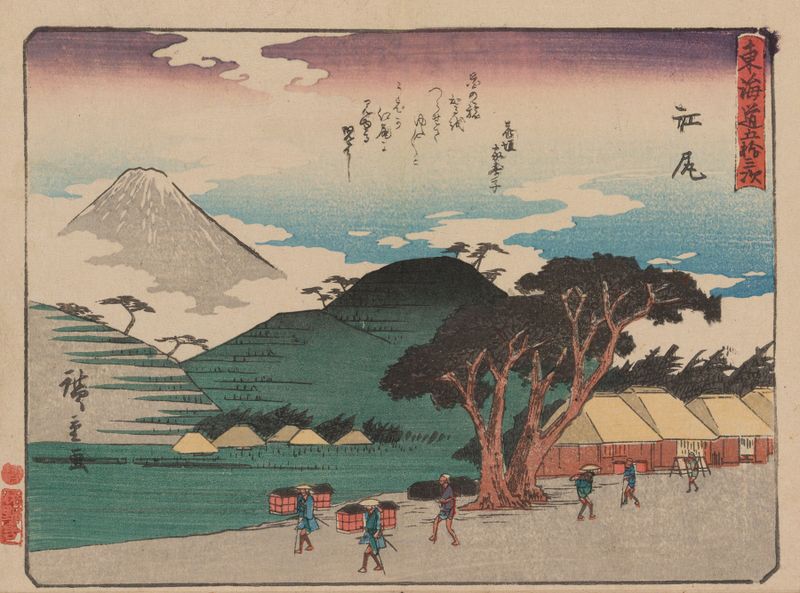
Tokaido gojusantsugi, Pl.19
Utagawa Hiroshige
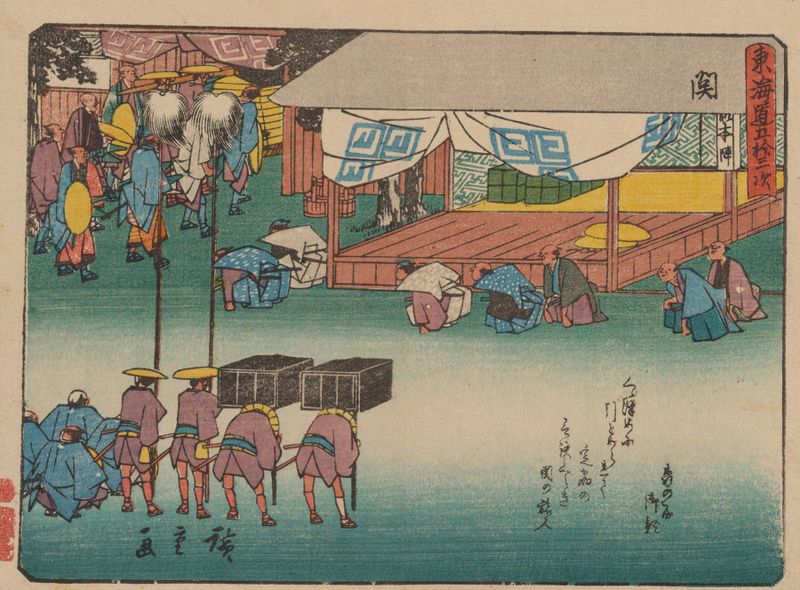
Tokaido gojusantsugi, Pl.48
Utagawa Hiroshige
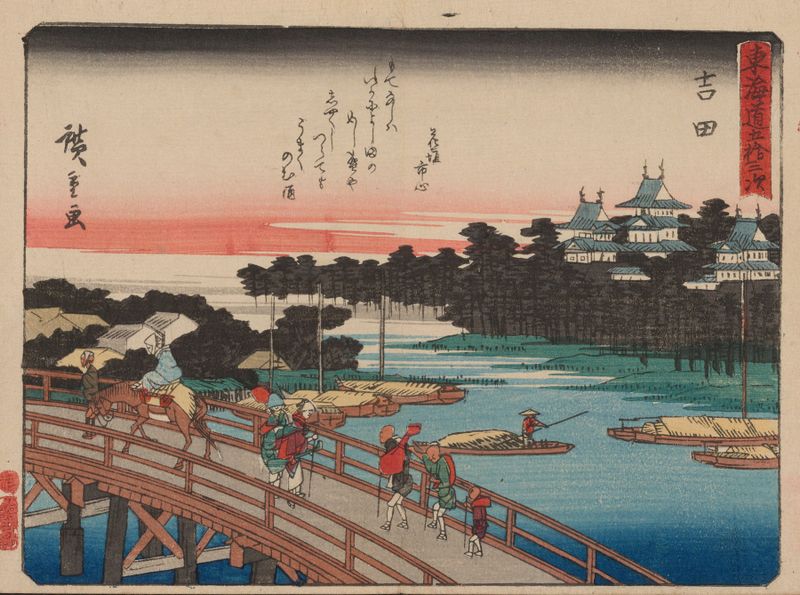
Tokaido gojusantsugi, Pl.35
Utagawa Hiroshige
Tokaido gojusantsugi, Pl.49
Utagawa Hiroshige





