Maison De Campagne, Algiers — History & Facts
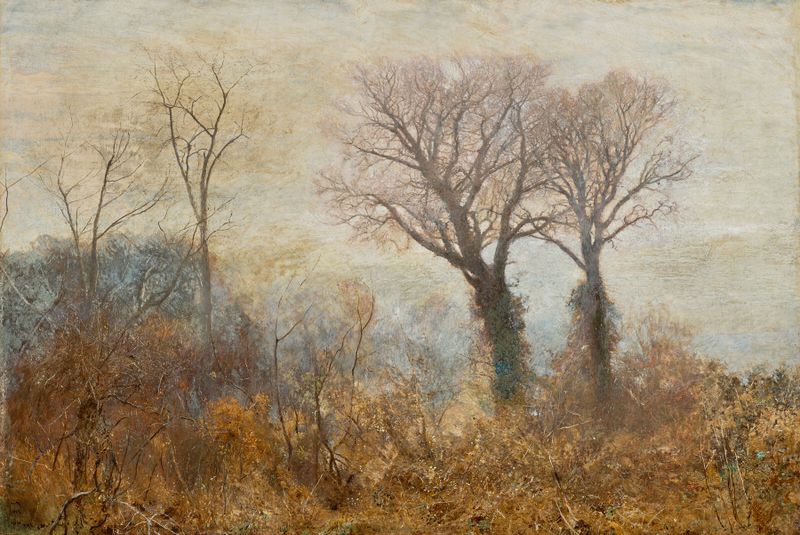
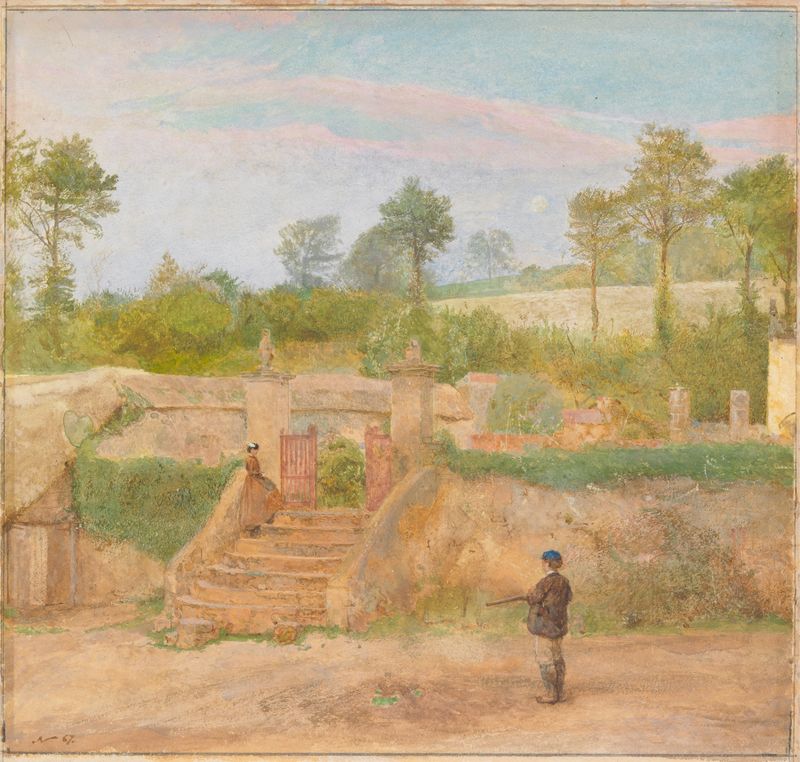
How does a single moment captured in time convey the essence of absence? In John William North's Maison De Campagne, Algiers, the void resonates through ethereal layers of color and light, inviting reflection. Look to the center of the canvas, where the rustic house stands serene and solitary beneath the expansive sky. Notice how the warm, golden hues of the walls contrast gently with the cooler tones of the surrounding landscape, creating an inviting yet poignant atmosphere. The soft brushwork captures the gentle play of sunlight filtering through the trees, wrapping the structure in a tender embrace that feels both nostalgic and haunting. Delve deeper into the interplay of elements: the quiet expanse of the empty garden frames the house, evoking an overwhelming sense of isolation.
Each detail, from the delicate shadows cast by the foliage to the subtle hints of decay in the architecture, speaks to a past filled with life now faded into memory. This contrast between vibrant natural beauty and the stillness of abandonment invites a contemplation of what once was and what remains unoccupied — a testament to the passage of time. In 1875, while residing in England, North painted this piece during a period when European artists were increasingly drawn to the allure of the Orient. His fascination with the light and landscapes of North Africa reflects broader trends in art, where the search for new inspiration marked a shift towards capturing personal experience and emotional truth.
The artist's brushwork here reveals not just a scene but the complexities of existence itself, echoing a longing for connection in the face of solitude.