When winter’s wasteful spite was almost spent — History & Facts
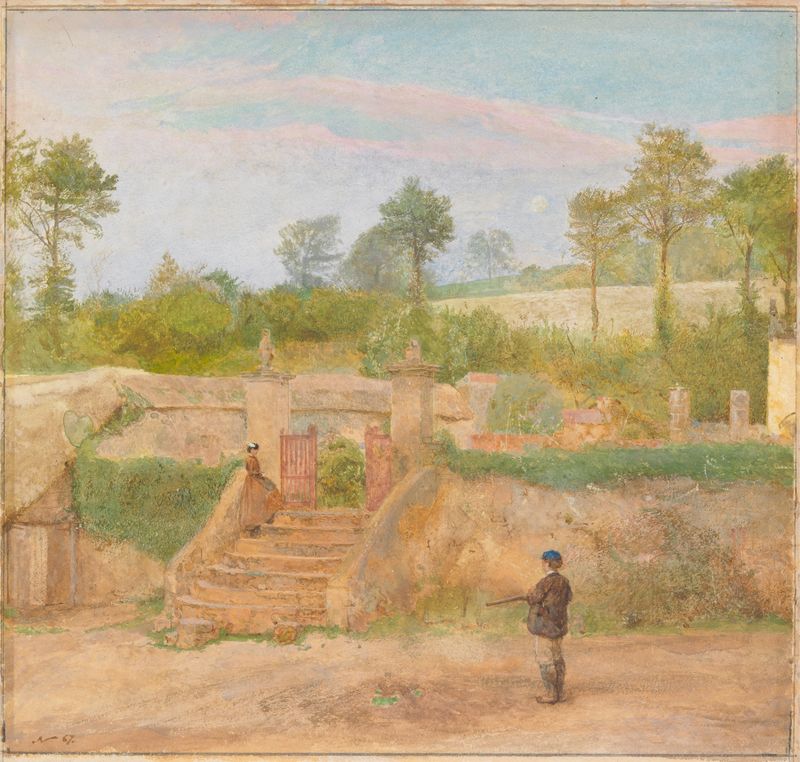
Could a single brushstroke hold eternity? In John William North's When winter’s wasteful spite was almost spent, the answer lies in the delicate interplay of soft hues and the poignant awakening of nature. Look to the left at the tender greens peeking through the melting snow, each stroke a whisper of spring’s arrival. Notice the gentle transition of colors, where cool blues and grays of winter gradually yield to the soft pastels of early blossoms. The composition invites your gaze to travel across the canvas, from the stark branches, stripped of their leaves, to the burgeoning life that promises renewal.
Light dances subtly, catching the thawing landscape in a gentle embrace, transforming despair into hope. Within this quiet scene, contrasts abound. The remnants of winter's harsh grip cling to the edges, yet the warmth of approaching spring breaks through with vibrant vitality. The juxtaposition of barren trees and budding flora symbolizes resilience, a testament to nature's cyclical journey.
Each element reveals a broader narrative: the struggle between desolation and rejuvenation, echoing the emotional landscape of human experience. In 1892, North painted this piece during a period of personal and artistic reflection. Stationed in the artistic circles of London, he found inspiration in the Pre-Raphaelite ethos that celebrated nature and emotional depth. The world was embracing new movements in art, yet North remained dedicated to an ideal that highlighted the simple yet profound beauty of life’s transitions.