The Wood Gatherers — History & Facts
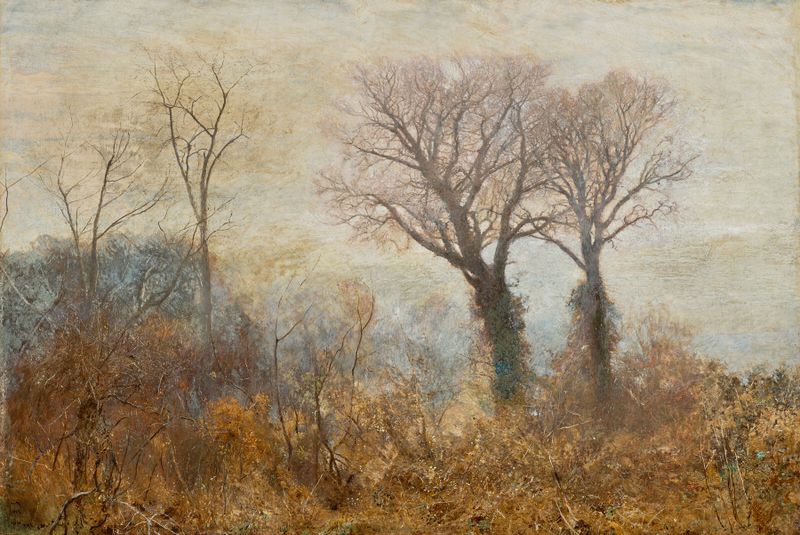
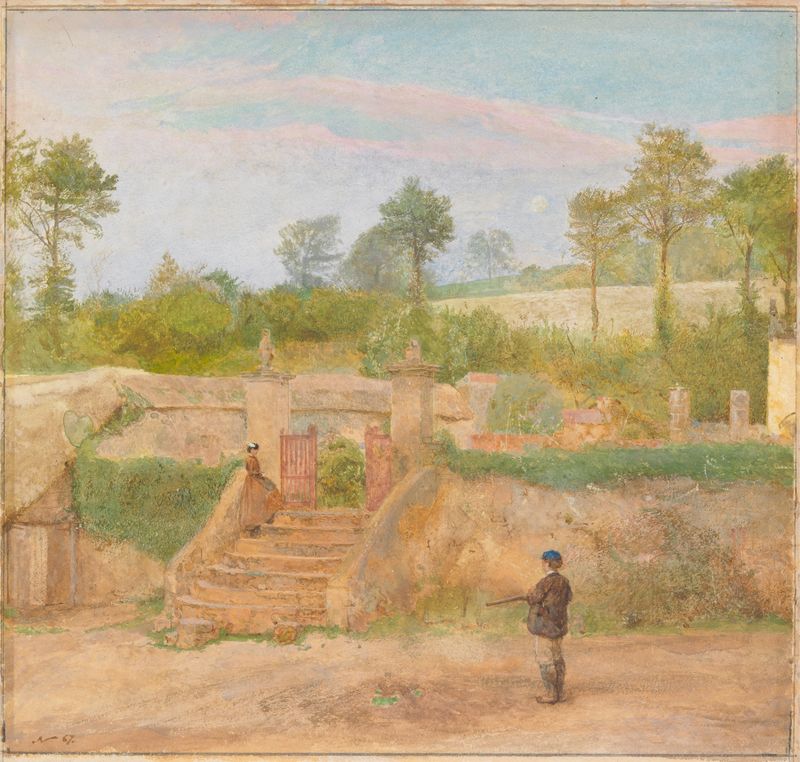
What if silence could speak through light? In the tranquil embrace of nature, an intimate moment unfolds, where every brushstroke whispers serenity. Look to the left at the two figures, poised with gathered wood, their bodies harmoniously aligned with the gentle curve of the landscape. Notice how the warm hues of ochre and earthy greens envelop them, while dappled sunlight spills softly across the canvas, illuminating their faces with a golden glow. The painter’s meticulous attention to detail draws you into the texture of the bark and the delicate leaves that flutter nearby, creating a rich tapestry of life. Beneath the surface, a deeper narrative reveals itself.
The juxtaposition of labor and tranquility evokes a sense of balance between humanity and nature. The way the figures are positioned speaks to their connection to the earth—rooted yet free, engaged yet contemplative. The surroundings exude a sense of timelessness, suggesting that these moments of quietude are fleeting yet essential, offering both refuge and reflection. In 1869, during a transformative period in the art world, the artist crafted this piece while exploring the themes of pastoral life and the English countryside.
North, a prominent member of the Pre-Raphaelite Brotherhood, was immersed in a burgeoning appreciation for naturalism and the beauty of rural existence. His work reflects the cultural shift towards a deeper connection with nature, at a time when industrialization threatened to overshadow such serene landscapes.