
Maori war canoe approaching Taranaki — History & Facts
In this moment of stillness, longing pulses beneath the surface, evoking the quiet desperation of connections we yearn for yet cannot grasp. Focus first on the vibrant hues of the sky that envelop the painting, casting a warm glow over the war canoe as it approaches the shore. The artist skillfully blends rich oranges and soft yellows, contrasting them with the darker, turbulent blues of the ocean. Look closely at the details of the canoe—each figure poised with purpose, their gazes fixed ahead, embodying both determination and hope.
The craftsmanship of their adornments stands out, hinting at a rich cultural narrative that speaks of identity and heritage. Notice the tension between the serene natural landscape and the intensity of human emotion embodied in the figures. The canoe, a vessel of both journey and conflict, serves as a symbol of the struggles faced by the Māori people, caught between tradition and change. The shoreline looms inviting yet distant, suggesting unattainable aspirations.
This juxtaposition captures the essence of longing, where every stroke of paint tells a story of resilience and the search for belonging. In 1879, the artist created this work while living in Australia, having arrived from Europe a few years prior. This period marked a burgeoning interest in colonial narratives and Indigenous cultures within the art scene. With the world around him undergoing rapid transformation, Chevalier sought to capture the spirit of the Māori people, positioned at the crossroads of history, inviting viewers to reflect on their own sense of place and connection within a changing landscape.
More Artworks by Nicholas Chevalier
Browse all →
Coast near Dunedin
Nicholas Chevalier
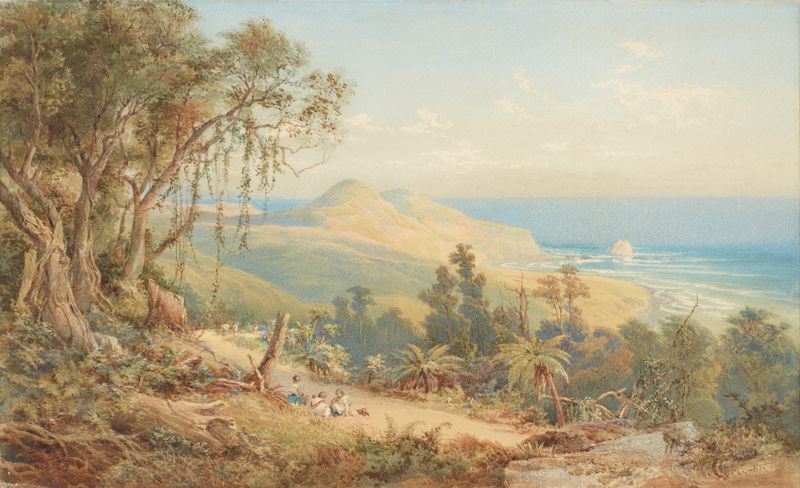
Sandfly Bay, Otago
Nicholas Chevalier

Buckler Burn at the head of Wakatipu Lake
Nicholas Chevalier

Mr MacKellar’s Station, the Waimea Plains, Southland
Nicholas Chevalier
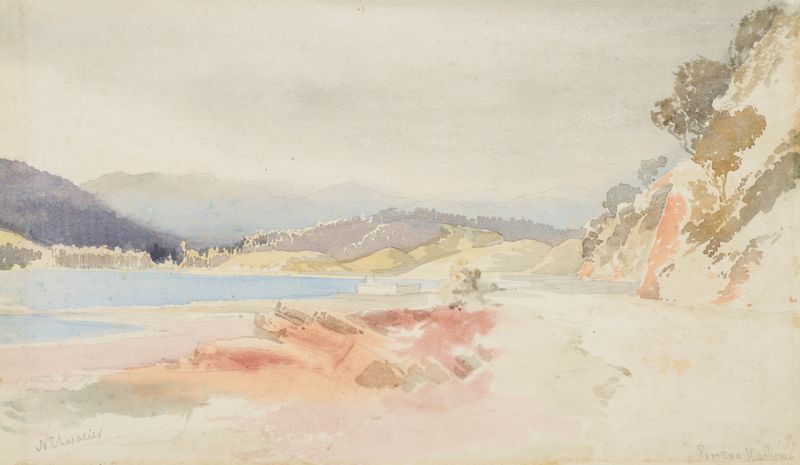
Porirua Harbour
Nicholas Chevalier
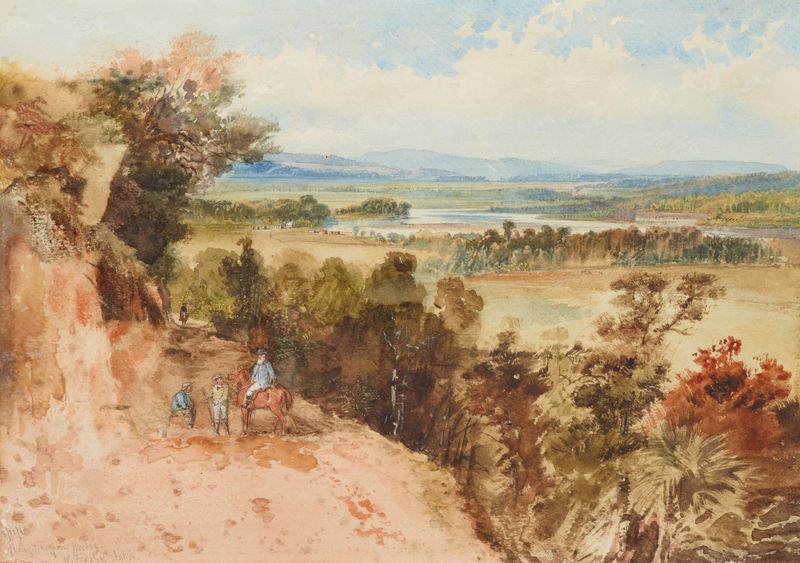
Rangitikei from Westoe, W. Fox Esq’s Station
Nicholas Chevalier

The Upper Rangitikei
Nicholas Chevalier
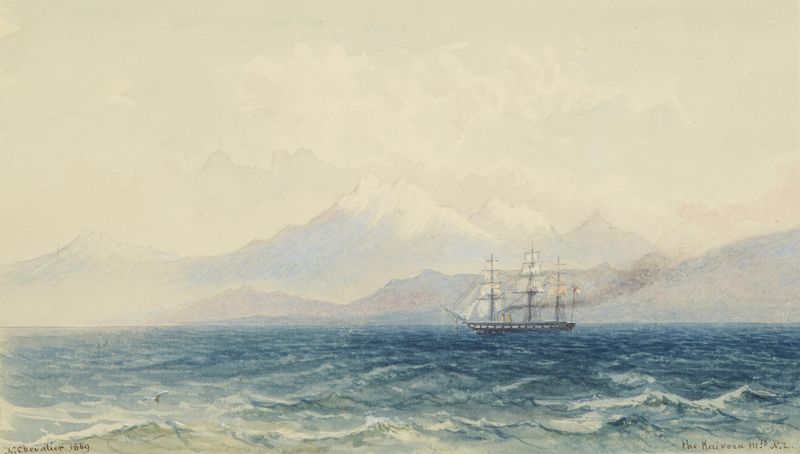
The Kaikoura Mountains, N.Z.
Nicholas Chevalier

Upper Hutt Valley
Nicholas Chevalier

The Tararua Mountains and the Waipoua River
Nicholas Chevalier





