Marchlandschaft — History & Facts
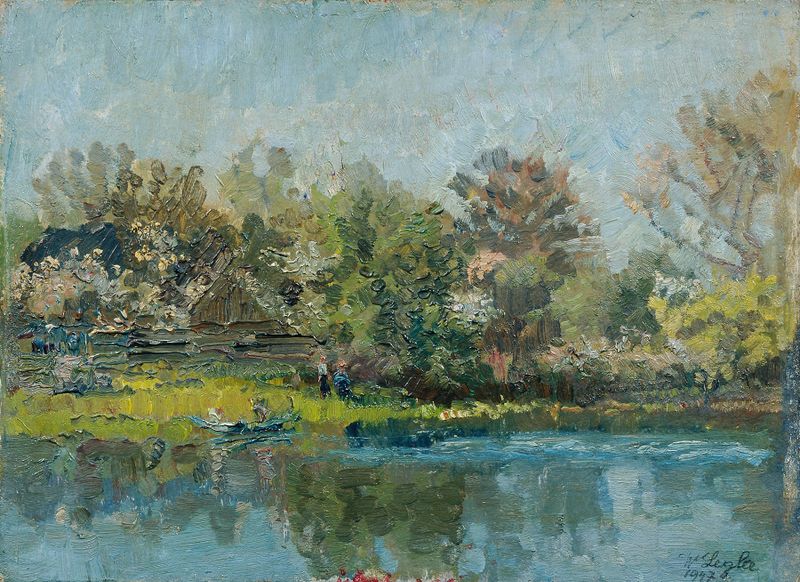
When did color learn to lie? In Marchlandschaft, awe strikes as nature reveals its rich palette, teetering between reality and illusion, inviting contemplation of the world beyond the canvas. Look to the foreground, where vibrant greens and browns intertwine, creating a lush meadow that stretches into the distance. The brushstrokes are deliberate yet fluid, capturing the essence of early spring. Notice how the gentle hues of the sky transition from cerulean blues to soft pastels as they touch the horizon, suggesting the fleeting moments of dawn.
This composition draws the eye inward, allowing the viewer to wander through the landscape while the rhythmic waves of color emulate the whispers of the wind. Beneath the surface, there is a palpable tension between the warmth of burgeoning life and the lingering chill of winter’s grasp. The delicate blooms hint at renewal, yet their muted tones reveal the fragility of existence. The play of light and shadow matters here too, as it suggests the duality of hope and uncertainty that pervades the season.
Each element holds significance, weaving together a narrative about resilience, where beauty coexists with transience. Wilhelm Legler created Marchlandschaft during a period in which he sought to capture the essence of nature in a rapidly changing world. While the exact date is unknown, his work emerged in a time when the art scene was shifting towards more personal interpretations of landscapes. Legler, influenced by his surroundings and the Romantic ideals of his time, aimed to evoke emotion through his vibrant representations of the natural world.