Alte Donau — History & Facts
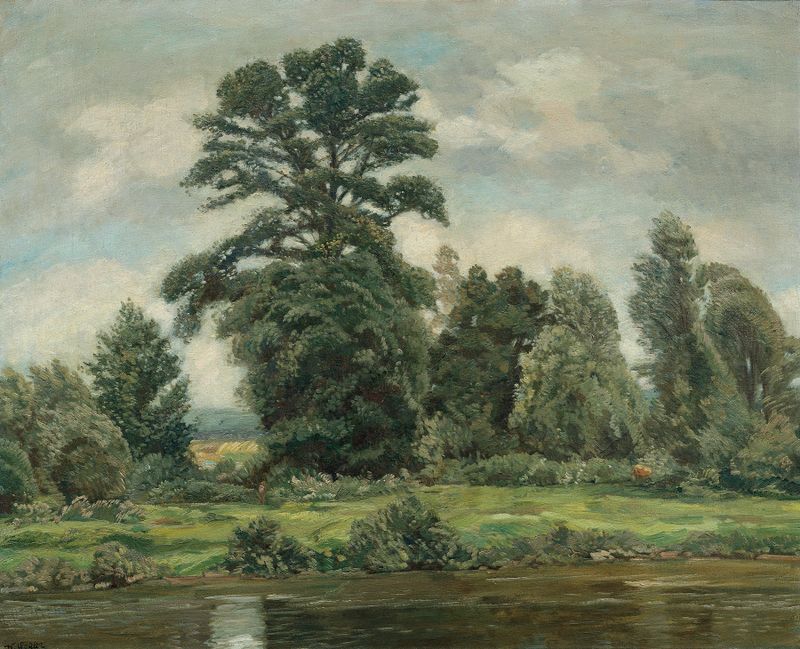
In Alte Donau, a shimmering landscape blurs the line between reality and illusion, inviting viewers to question what is truly present before them. Look to the center of the canvas, where the radiant waters reflect a soft palette of blues and greens. The gentle strokes convey a serene surface, yet the underlying brushwork hints at hidden depths and unseen currents. Notice how the light dances across the water, creating an ethereal glow that suggests both tranquility and an elusive mystery, framing the nostalgic essence of this moment in time. Hidden within the calm is a tension that speaks to fleeting memories and the passage of life.
The subtle movement of the water evokes a sense of change, while the distant trees stand as silent witnesses, embodying permanence amidst the ever-flowing river. The juxtaposition of light and shadow hints at unseen stories—forgotten moments suspended in this idyllic scene, whispering of the past that lingers just beyond the surface. Wilhelm Legler painted Alte Donau in 1947, post-World War II, a period marked by reflection and reconstruction in Europe. Living in Vienna, he navigated a world of artistic revival, embracing the beauty of nature as a counterpoint to the tumult of his times.
This work reflects both personal and collective memories, capturing a moment where art serves as a vessel for remembrance and hope amidst the chaos of history.