Marine Au Crépuscule — History & Facts
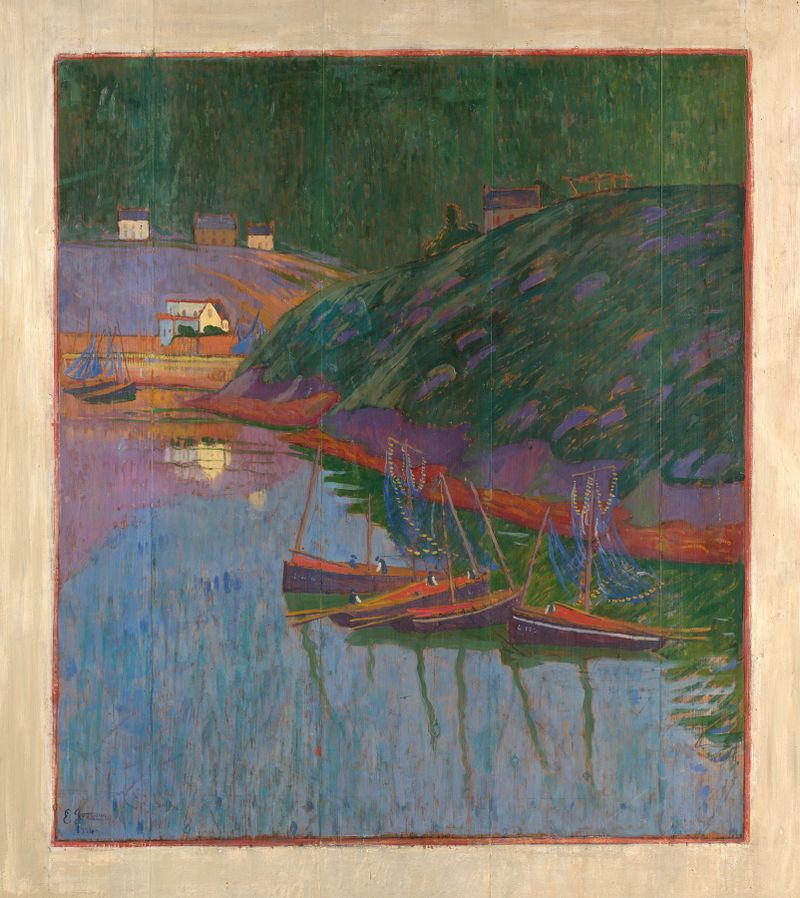
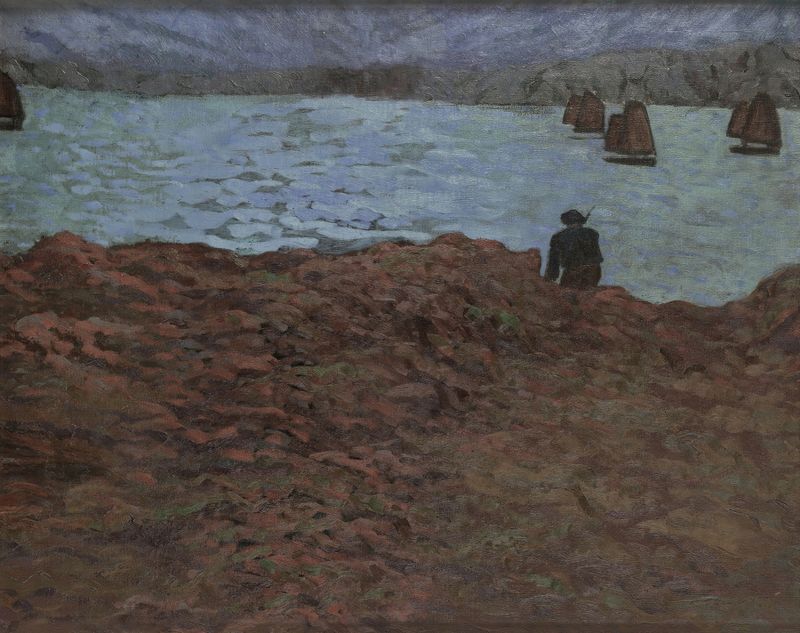
Could a single brushstroke hold eternity? In Marine Au Crépuscule, there lies a haunting stillness that belies a deeper turmoil, inviting contemplation of the violence hidden within tranquility. Look to the horizon first, where dark clouds gather ominously against a fading light. The brushstrokes, fluid yet commanding, create a turbulent seascape that oscillates between calm and chaos. The deep blues and muted grays evoke a somber atmosphere, while the hints of orange and gold from the setting sun cast an eerie glow across the water's surface, hinting at an impending storm.
Here, every wave seems alive, each curl and crash pulsating with the weight of unspoken stories. Delve deeper into the emotional resonance of the piece. The juxtaposition of serene beauty and the tempestuous sea speaks to the fragility of peace. The presence of light, softly diffused through thickening clouds, suggests both uncertainty and hope, while the turbulent water reflects the inner violence of nature and humanity alike.
This duality invites viewers to reflect on their own battles, both external and internal, locked in a dance between serenity and strife. Émile Jourdan painted Marine Au Crépuscule between 1890 and 1892 during a period marked by a shift towards Impressionism and Symbolism in art. Living in France, Jourdan was influenced by the changing landscapes and the emotional weight of the times. The late 19th century saw artists explore themes of nature and the human condition, setting the stage for Jourdan to encapsulate this complex interplay of tranquility and violence in his work.